April is when Japan shifts gears. The country moves from the tail end of winter into full spring, and for a few weeks, the entire landscape changes color. Cherry blossoms are the headline act, but April also brings some of Japan's best festivals, the reopening of mountain routes that have been buried under snow all winter, and a wave of seasonal food that only appears for a short window.
This guide covers what to prioritize during an April trip, organized by when things actually happen so you can plan around the calendar rather than just a map.
Cherry Blossom Season: Where to Go Week by Week
Cherry blossom timing in Japan is not a single event. The bloom moves from south to north over roughly six weeks, so where you should go depends heavily on when in April you arrive.
Early April (April 1 to 10)
By the start of April, Tokyo and most of the Kanto region are usually past peak bloom. You will still find plenty of petals, though. Late-blooming trees at Shinjuku Gyoen (which has over 60 varieties, some blooming into mid-April) and Ueno Park still put on a good display. The real appeal of early April in Tokyo is hanami culture itself: office workers on blue tarps in the park with konbini bento and canned highballs, families under the trees, couples along the Meguro River watching petals drift on the water.
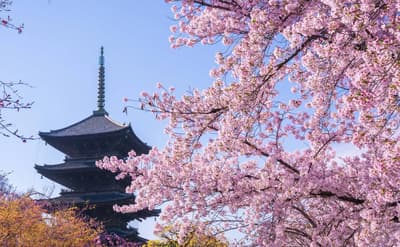
In Kansai, early April is prime time. Kyoto typically hits full bloom around March 31 to April 2, and the first week of April is when spots like Maruyama Park, the Philosopher's Path, and the canal at Keage Incline are at their best. Osaka Castle Park and the Kema Sakuranomiya Park along the river usually peak around the same dates.
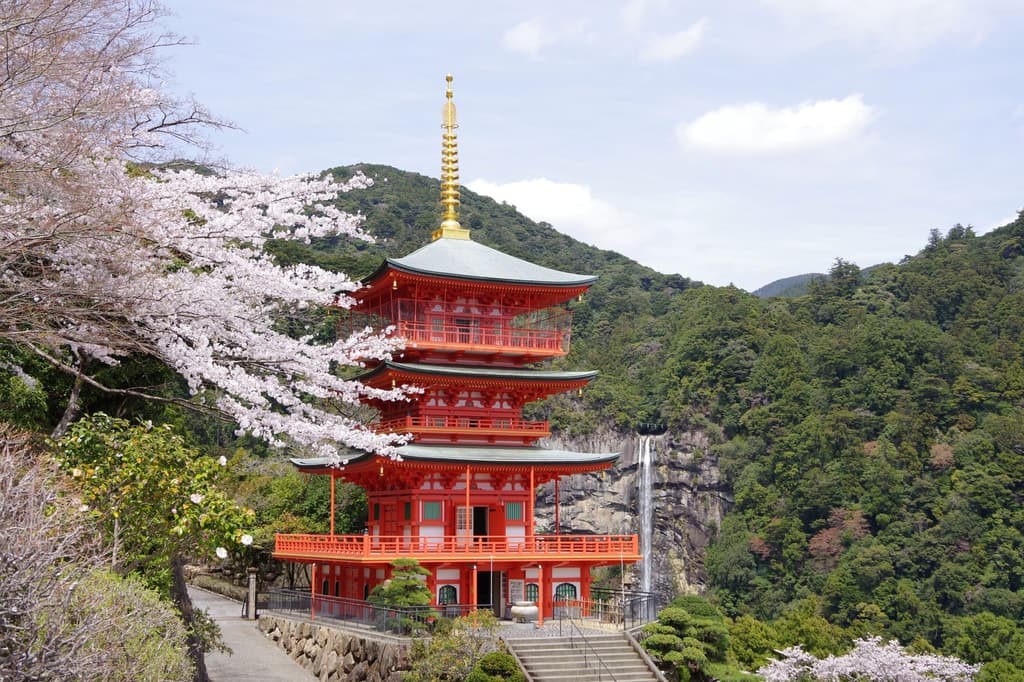
The Yoshino area in Nara Prefecture is another strong option for early April. Mount Yoshino has roughly 30,000 cherry trees planted across four elevation zones. The lower section (Shimo-senbon) blooms first, and the bloom works its way up the mountain over two to three weeks, so even if you miss peak in one zone, another is likely hitting its stride.
Mid-April (April 10 to 20)
As the bloom front moves north, mid-April is the window for Tohoku. Sendai's Tsutsujigaoka Park and the banks of the Hirose River typically see full bloom around April 7 to 10, with petals lasting into mid-April. Kakunodate in Akita Prefecture — known for its samurai district lined with weeping cherry trees — usually peaks around April 20 to 25 depending on the year.
Takada Park in Niigata is an underrated pick. It holds one of Japan's top three night cherry blossom viewing events, with about 4,000 trees lit up along the moat of a former castle. Full bloom there usually falls between April 10 and 15.
Late April (April 20 to 30)
For late April, head to Aomori. Hirosaki Park is frequently cited as one of Japan's best cherry blossom spots, and for good reason. The park has about 2,600 trees, and the way the petals fall into the moat — creating a pink carpet on the water — is something you will not see anywhere else. The Hirosaki Cherry Blossom Festival for 2026 runs from April 23 to May 5. Full bloom usually hits around April 21 to 25.
If you are in Hokkaido, cherry blossoms arrive in late April to early May. Matsumae, at the southern tip, blooms first, followed by Hakodate's Goryokaku Fort (star-shaped and spectacular from the observation tower) around late April.
Spring Festivals Worth Planning Around
April is a strong month for traditional festivals across Japan. These three are worth adjusting your itinerary for.
Takayama Spring Festival (April 14 to 15)
The Takayama Festival is widely regarded as one of Japan's three most beautiful festivals (alongside Kyoto's Gion Matsuri and Chichibu Night Festival), held twice yearly in the mountain town of Takayama in Gifu Prefecture. The spring edition, called Sanno Matsuri, takes place around Hie Shrine in the old town.
Twelve elaborately decorated yatai floats are paraded through the narrow streets, some dating back to the 17th century. Three of the floats feature karakuri — mechanical puppet performances that are surprisingly sophisticated for technology developed centuries ago. The puppets swing between perches, transform from one figure into another, and pour tea, all powered by strings and springs.
On the evening of April 14, the night festival (yoimatsuri) sees the floats lit by hundreds of paper lanterns and carried through town. The effect against the backdrop of Takayama's old wooden merchant houses is hard to forget.
Access: Takayama is about 2 hours 20 minutes from Nagoya by JR Hida limited express, or about 5 and a half hours from Tokyo (Shinkansen to Nagoya, then transfer).
Miyako Odori in Kyoto (April 1 to 30)
Miyako Odori is a formal dance performance by Kyoto's geiko and maiko (geisha and apprentice geisha) of the Gion Kobu district. It has been running since 1872 and takes place throughout April at the Gion Kobu Kaburenjo theater near Yasaka Shrine.
Performances happen multiple times daily and last about an hour. The choreography changes each year, typically telling a story that moves through the seasons, with elaborate kimono and stage sets. Reserved seats run from about 4,000 to 8,000 yen depending on the seat grade. Some ticket levels include a brief tea ceremony before the performance.
For visitors interested in geisha culture, this is one of the most accessible ways to see a real performance. No special connections or reservations at expensive ryotei restaurants needed — just buy a ticket.
Kanamara Matsuri in Kawasaki (First Sunday of April)
This one catches most visitors off guard. The Kanamara Matsuri at Kanayama Shrine in Kawasaki is, to put it directly, a fertility festival centered around a certain anatomical shape. The festival dates back to an era when sex workers visited the shrine to pray for protection from disease.
Today it has become a major draw for both Japanese and international visitors, with a festive atmosphere, themed food vendors, and a procession carrying large mikoshi (portable shrines) through the streets. The festival also serves as a fundraising event for HIV research. It is held on the first Sunday of April each year.
Access: Kawasaki-Daishi Station on the Keikyu Daishi Line, about 10 minutes' walk from the shrine. The station is roughly 20 minutes from Shinagawa.
Tateyama Kurobe Alpine Route: Walking Between Walls of Snow
The Tateyama Kurobe Alpine Route is a mountain crossing between Toyama and Nagano prefectures that uses a sequence of six different transport modes — cable car, highland bus, trolleybus, ropeway, funicular, and regular bus — to traverse the 3,000-meter-class peaks of the Northern Alps.
The route opens for the 2026 season on April 15 and runs through November 30. The main draw in April and May is the Snow Wall (Yuki no Otani) near the Murodo terminal at 2,450 meters elevation. Road crews carve a corridor through snow that can reach up to 20 meters high, and visitors walk through it on a dedicated pedestrian path. Peak snow wall height is usually in the last two weeks of April.
The full one-way crossing from Tateyama Station (Toyama side) to Ogizawa (Nagano side) costs about 12,360 yen per adult. Private cars are not allowed on the route. From Tokyo, the Toyama approach takes about 3 hours 30 minutes total (Hokuriku Shinkansen to Toyama, then Toyama Chiho Railway to Tateyama Station).
A few practical notes: temperatures at Murodo in April hover around minus 5 to 5 degrees Celsius even on sunny days. Sunglasses and sunscreen are essential because the snow reflection is intense. Wear waterproof shoes with good grip. The route can get very crowded on weekends, especially during Golden Week (late April to early May), so weekday visits are strongly recommended.
Wisteria and Other Spring Flowers
Cherry blossoms get most of the attention, but April has other flowers worth a detour.
Ashikaga Flower Park (Tochigi Prefecture)
Ashikaga Flower Park is home to several massive wisteria trellises, including a 150-year-old Great Wisteria that covers about 1,000 square meters — the tree canopy alone is bigger than some Tokyo apartments. The wisteria festival for 2026 runs from April 11 to May 20, with night illuminations starting April 18.
Peak bloom for the wisteria depends on the variety. Light purple wisteria (fuji) typically peaks in late April, while the famous Great Wisteria usually hits full bloom in the last week of April to the first week of May.
Admission during the festival ranges from 1,200 to 2,300 yen for adults, with prices changing based on bloom conditions (they actually adjust daily). The park has its own JR station — Ashikaga Flower Park Station on the Ryomo Line — making access straightforward from Tokyo (about 80 minutes by train via the Tohoku/Utsunomiya Line transfer).
Hitachi Seaside Park (Ibaraki Prefecture)
While not a traditional Japanese flower, the nemophila fields at Hitachi Seaside Park are one of the most photographed spring sights in Japan. About 5.3 million baby blue eye flowers bloom across Miharashi Hill from mid-April to early May, creating a seamless gradient between the blue flowers and the sky.
The park is about 2 hours from Tokyo by train and bus (JR to Katsuta Station, then a bus). Admission is 450 yen for adults during the regular season, but rises to 800 yen during the Nemophila Harmony event period.
Seasonal Food and Drinks You Can Only Get in April
Spring in Japan brings ingredients that restaurants and convenience stores treat as events. These are worth seeking out:
Sakura mochi appears everywhere in March and April. There are two main styles: the Kansai version (Domyoji) wraps pink-tinted mochi rice around red bean paste, while the Kanto version (Choumei-ji) uses a thin pink crepe. Both are wrapped in a salted cherry leaf that you can eat (most people do).
Takenoko (bamboo shoots) are at their peak in April. Look for takenoko gohan (rice cooked with bamboo shoots and dashi) and wakatake-ni (simmered bamboo shoots with wakame seaweed) at izakaya and restaurants. Freshly dug bamboo shoots have a sweetness and crunch that disappears within hours of harvesting, so the closer to the source, the better.
Sakura-flavored everything fills convenience stores and cafes. Sakura lattes, sakura KitKats, sakura-flavored beer — some of it is genuinely good, some is more about the novelty. Starbucks Japan's spring sakura drinks are a reliable choice. For something less tourist-oriented, try sakura-flavored sake or a sakura cream soda at a kissaten (old-school Japanese coffee shop).
Shincha (new tea) starts becoming available in late April. This is the first harvest of green tea for the year, and it has a distinctly sweet, mellow flavor compared to tea from later harvests. Tea shops across Japan stock it seasonally, and it makes a good souvenir.
If you want to dive deeper into Japan's food scene during your trip, a guided bar-hopping tour is one way to try multiple spots in one evening with a local who knows what to order.
What to Wear and Pack for Japan in April
April weather in Japan varies a lot depending on where you are and which week of the month you are visiting.
Tokyo and Kansai (Osaka/Kyoto): Daytime temperatures in early April typically range from 13 to 20 degrees Celsius, rising to 17 to 23 degrees by late April. Mornings and evenings can still feel cool, especially if you are sitting outside for hanami. A light jacket or layers you can remove during the day work well. Rain is fairly common — April averages about 10 rainy days in Tokyo — so a compact umbrella or packable rain jacket is worth having.
Tohoku (Sendai, Aomori): Count on temperatures 3 to 5 degrees cooler than Tokyo. Early April in Sendai feels like early spring; Aomori in late April can still have cold snaps. A medium-weight jacket and a scarf for evenings are reasonable.
Alpine areas (Tateyama, Hakone): If you are visiting the Snow Wall or any mountain routes, winter gear is still necessary. Temperatures at 2,400 meters in April sit around freezing, and wind chill makes it feel colder. Waterproof boots, thermal layers, sunglasses, and sunscreen are not optional.
General tips: Comfortable walking shoes matter more than anything else. Most April sightseeing involves a lot of walking on park paths, temple grounds, and festival streets. Japanese streets and train stations are generally clean, so white sneakers survive fine if that is your preference.
Golden Week: Opportunity or Obstacle?
Golden Week is a cluster of national holidays that runs from April 29 (Showa Day) through May 5 (Children's Day). In 2026, April 29 falls on a Wednesday, so the main holiday rush starts in the last days of April and peaks in the first week of May.
What this means for visitors:
Prices go up. Hotel rates in popular destinations can double or triple compared to early April. Domestic flights and Shinkansen trains sell out well in advance. If your trip overlaps with Golden Week, book accommodation and transport as early as possible.
Crowds increase significantly. Popular spots like Kyoto temples, Tokyo theme parks, and national parks see their highest visitor numbers of the spring. If you can visit major attractions before April 25 or so, you will have a noticeably more comfortable experience.
Some things are only available during Golden Week. Many parks and attractions run special events, extended hours, and limited-time food offerings specifically for the holiday period. Koinobori (carp streamers) go up across the country for Children's Day on May 5, and the sight of hundreds of colorful fish-shaped banners streaming in the wind along a river is one of those distinctly Japanese scenes.
The flip side: Some restaurants, shops, and smaller businesses close for several days during Golden Week, since it is also a major vacation period for Japanese workers. Check ahead for closures if you have specific places on your list.
Getting Around Japan in April
Japan Rail Pass: If you plan to move between multiple cities (for example, Tokyo to Kyoto to Hiroshima, or Tokyo to Tohoku), the Japan Rail Pass is usually worth the cost. The 7-day pass covers unlimited rides on most JR trains, including the Shinkansen. You can purchase it online through the official website and pick it up at a JR counter when you arrive, or buy an exchange order through an overseas travel agency before your trip.
IC Cards (Suica/Pasmo): These rechargeable transit cards work on virtually all trains, buses, and subways in major cities, and they also work at convenience stores and vending machines. Get one on arrival at any major airport or station.
Cherry blossom chasing by train: If your primary goal is following the bloom, the Shinkansen network makes it possible to cover significant distance in a day. Tokyo to Sendai is about 90 minutes. Tokyo to Shin-Aomori (for Hirosaki) is about 3 hours. You can base yourself in Tokyo and take day trips north as the bloom front advances.
Airport note: If arriving at Narita or Haneda and heading directly to Kyoto or Osaka, consider booking a domestic flight from Haneda to Itami (Osaka) — it takes about 75 minutes and can be cheaper than the Shinkansen if booked in advance.
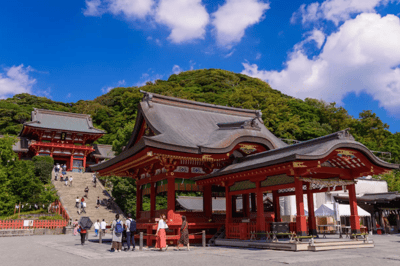
For a closer look at Kamakura, a popular day trip from Tokyo that is particularly good in early April when cherry blossoms line the Dankazura approach to the main shrine:
Quick Reference: April at a Glance
| What | When | Where |
|---|---|---|
| Cherry blossoms (Kansai) | Early April | Kyoto, Osaka, Nara |
| Cherry blossoms (Tohoku) | Mid-April | Sendai, Kakunodate |
| Cherry blossoms (Aomori) | Late April | Hirosaki, Aomori city |
| Takayama Spring Festival | April 14 to 15 | Takayama, Gifu |
| Miyako Odori | April 1 to 30 | Gion, Kyoto |
| Tateyama Alpine Route opens | April 15 | Toyama/Nagano border |
| Ashikaga Wisteria Festival | April 11 to May 20 | Ashikaga, Tochigi |
| Nemophila at Hitachi Seaside Park | Mid-April to early May | Hitachinaka, Ibaraki |
| Golden Week begins | April 29 | Nationwide |