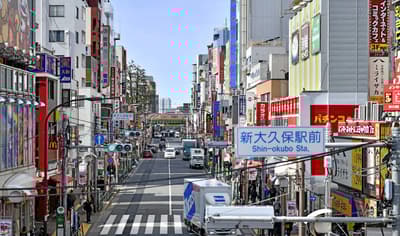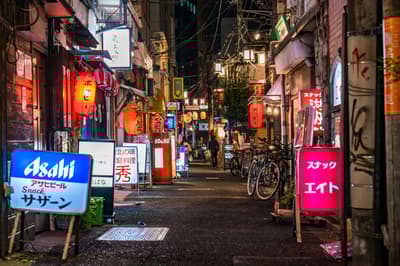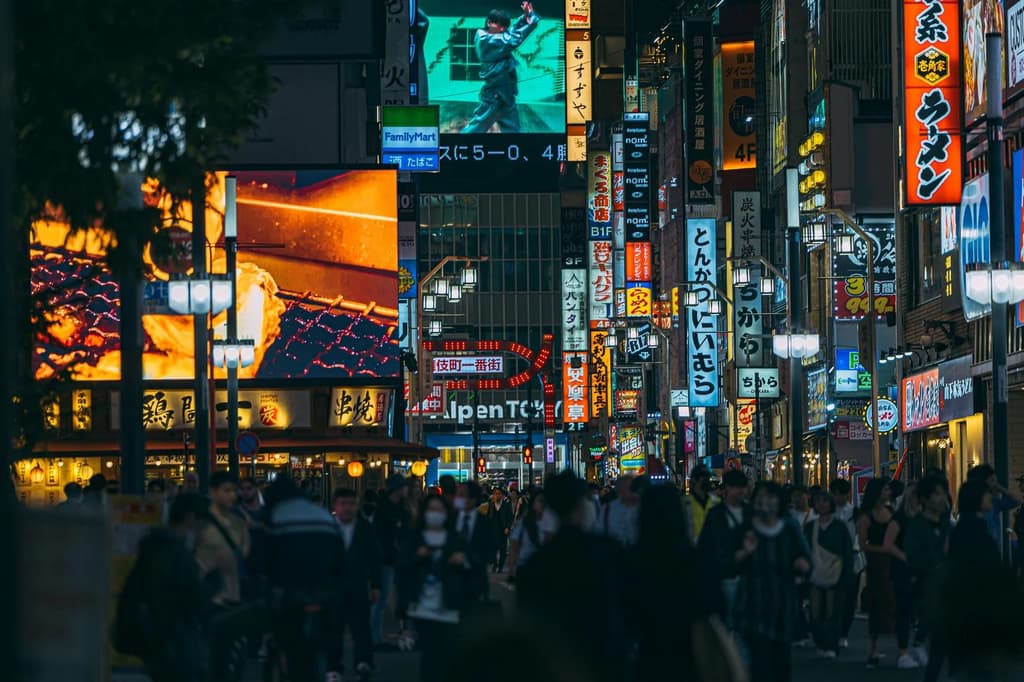
Shinjuku is one of those neighborhoods that runs on its own clock. The west side has corporate towers and a free observation deck with city views. The east side has neon-soaked alleys, tiny bars, and some of the best late-night food in Tokyo. And right in the middle sits Shinjuku Station, which handles over 3 million passengers on an average day.
Whether you have a half-day layover or a full evening to explore, this guide covers what is actually worth your time in Shinjuku right now.
Free City Views from the Tokyo Metropolitan Government Building
The observation decks on the 45th floor of the Tokyo Metropolitan Government Building are free, and they deliver some of the best panoramic views in Tokyo. On clear days, you can spot Mount Fuji to the west and Tokyo Skytree to the east.
Practical details:
- South Observatory: 9:30 AM to 10:00 PM (closed 1st and 3rd Tuesday)
- North Observatory: 9:30 AM to 5:30 PM (closed 2nd and 4th Monday)
- Last entry is 30 minutes before closing
- If a closure day falls on a public holiday, it closes the following day instead
- Address: 2-8-1 Nishi-Shinjuku, Shinjuku-ku
- Access: 10-minute walk from Shinjuku Station West Exit, or direct connection from Tochomae Station (Toei Oedo Line)
The South Observatory stays open late and has a cafe, so it works well as an evening stop. Arrive about 30 minutes before sunset for the best light. Lines are shorter on weekdays and in the first hour after opening.
Shinjuku Gyoen National Garden
Shinjuku Gyoen is a 144-acre garden that blends three styles: a formal French garden, an English landscape garden, and a traditional Japanese garden. It sits right in the middle of the city, but once you walk past the gate, the skyscraper skyline feels far away.
Cherry blossom season (late March to mid-April) is the peak time. The garden has about 1,000 cherry trees across more than 65 varieties, which means some trees bloom earlier and others later, stretching the viewing window longer than most spots in Tokyo. An advance online reservation is now required during peak cherry blossom season, so book your time slot early on the official website.
Outside of spring, the garden is worth visiting year-round. The greenhouse has tropical plants, and the Japanese garden section is especially good in autumn when the maples turn red.
Practical details:
- Hours: 9:00 AM to 4:30 PM (until March 14); 9:00 AM to 6:00 PM (March 15 to September 30)
- Last entry: 30 minutes before closing
- Closed: Mondays (or the next weekday if Monday is a holiday), Dec 29 to Jan 3
- Admission: 500 yen for adults, 250 yen for students and seniors (65+), free for children 15 and under
- Access: 5-minute walk from Shinjuku-Gyoenmae Station (Tokyo Metro Marunouchi Line), or 10-minute walk from Shinjuku Station New South Exit
- No alcohol allowed inside the garden
If you want to capture the garden with a professional photographer, there is a private photo tour that covers the best angles and seasonal spots:
Omoide Yokocho (Memory Lane)
Omoide Yokocho is a narrow alley of about 80 tiny restaurants and bars packed into a strip beside Shinjuku Station's West Exit. The smoke from charcoal grills hangs in the air, lanterns glow overhead, and most counters seat just six or eight people. It has been here since the post-war era, and the atmosphere has not changed much.
The standard order is yakitori (grilled chicken skewers) and a beer or highball. Some places also serve motsuyaki (grilled offal), which is worth trying if you are feeling adventurous. Expect to pay around 1,000 to 2,000 yen per person at a single spot. The best approach is to eat at one place, then move to a second for a different vibe.
Tips for visiting:
- Arrive between 5:00 and 7:00 PM for atmosphere without the worst crowding
- Bring cash. Most places do not accept cards
- Solo travelers and pairs fit best at the tiny counters
- Ask before photographing inside shops. The official district rules require permission for photography and filming, and tripods and flash are not allowed
- An English area map is available on the official Omoide Yokocho website
Access: 2-minute walk from Shinjuku Station West Exit. Look for the narrow alley entrance between the train tracks and the main road.
Golden Gai: Tiny Bars with Big Personality
Golden Gai is a cluster of about 200 tiny bars crammed into six narrow alleys near Kabukicho. Each bar has its own theme, music, and personality. Some focus on jazz, others on punk rock, cinema, or just conversation. Most seat five to eight people, so you are sitting shoulder-to-shoulder with strangers, which is kind of the point.
What to expect:
- Entry to the district itself is free, but most bars charge a cover (typically 500 to 1,000 yen per person)
- Drinks usually run 700 to 1,200 yen each
- Budget roughly 3,000 to 8,000 yen per person for two or three bars
- Many bars now welcome foreign visitors, but some remain regulars-only. If a sign says "members only," just move on to the next door
- Look for bars with signs saying "English OK," "Welcome," or with visible price boards
- Best time to go: after 8:00 PM. Most bars do not open until early evening
- Keep groups small. One or two people is ideal
Etiquette: No street smoking, no street drinking, and ask permission before taking photos of people or inside bars.
Access: 5-minute walk from Shinjuku Station East Exit, heading toward Kabukicho.
For a guided night out that takes the guesswork out of finding the right bars:
Kabukicho: Tokyo's Neon Entertainment District
Kabukicho is Shinjuku's entertainment quarter, and it has changed considerably over the past few years. The biggest addition is Tokyu Kabukicho Tower, a 48-story entertainment complex that opened in 2023 and now anchors the district. Inside, you will find a cinema, a 1,500-seat live music venue, an arcade floor, a food hall called Kabuki Yokocho, and even a hotel on the upper floors.
The Godzilla Head on top of the Toho Building is still the most photographed thing in the area. The best view of it is from street level at the intersection of Kabukicho Ichiban-gai. Note that the 8th-floor Godzilla terrace at Hotel Gracery has been closed to general visitors since late 2023.
Kabukicho after dark is loud, bright, and packed with people. It is safe to walk through, but a few common-sense rules apply: do not follow touts into bars you did not choose yourself, and stick to places with visible pricing.
Worth checking out in Kabukicho:
- Tokyu Kabukicho Tower food hall and entertainment floors
- Hanamichi Tokyo: Edo-period themed dining and cultural experience venue
- Godzilla Head photo stop at the Toho Building
- Robot Restaurant area (the area around it has various entertainment options)
- Karaoke chains like Karaoke Kan and Big Echo for a classic Tokyo night
Access: 5-minute walk from Shinjuku Station East Exit.
Hanazono Shrine
Right on the edge of Golden Gai, Hanazono Shrine offers a sharp contrast to the neon chaos around it. This Shinto shrine dates back to the Edo period and is dedicated to Inari, the deity of prosperity. The vermillion torii gates and stone fox statues make for a quiet photo stop.
On Sundays, a flea market sets up in the shrine grounds, selling antiques, vintage clothing, and handmade goods. It is a good spot to find unique souvenirs that you will not see in tourist shops.
Access: 3-minute walk from Shinjuku-Sanchome Station (Exit E2), or 7-minute walk from Shinjuku Station East Exit.
Shopping: Department Stores and Beyond
Shinjuku is one of Tokyo's biggest shopping hubs, with options for every budget.
Isetan Shinjuku
Isetan is the premium pick. The basement food hall (depachika) is the highlight for visitors. You can find beautifully packaged Japanese sweets from brands like Toraya, Yoku Moku, and Suzukake, along with fresh prepared foods. Upper floors carry Japanese designers like sacai, AURALEE, and Pleats Please Issey Miyake, plus a strong beauty floor with brands like SHIRO and SUQQU.
- Hours: 10:00 AM to 8:00 PM
- Tax-free counter on 6F (bring your passport)
- Access: Direct basement connection from Shinjuku-Sanchome Station (Exits B3/B4/B5)
Takashimaya Times Square
A large shopping complex near the South Exit with Takashimaya department store, Tokyu Hands (now "Hands"), Nitori, Uniqlo, and Kinokuniya bookstore. Good for one-stop shopping when you need a bit of everything.
Lumine and NEWoMan
Both are directly connected to Shinjuku Station. Lumine 1 and 2 carry trendy Japanese fashion brands at mid-range prices. NEWoMan has a more curated selection of boutiques, cafes, and a small rooftop garden area.
Don Quijote Kabukicho
Open 24 hours and stocked floor to ceiling with snacks, cosmetics, electronics, costumes, and souvenirs at discount prices. It is chaotic, but that is part of the experience. Tax-free purchases are available.
Yodobashi Camera
One of the largest electronics stores in the area, located in west Shinjuku. Good for cameras, gadgets, home appliances, and duty-free electronics shopping.
Shinjuku's Food Scene
Beyond Omoide Yokocho, Shinjuku has serious depth when it comes to food.
Ramen
Shinjuku is home to several well-known ramen shops. Fuunji near the South Exit is famous for its tsukemen (dipping ramen), and lines regularly stretch down the street. For something less crowded, try exploring the side streets around Shinjuku-Sanchome, where smaller shops serve regional styles from Hokkaido miso to Kyushu tonkotsu.
Depachika (Department Store Food Halls)
The basement floors of Isetan and Takashimaya are full of ready-to-eat bento, sushi, grilled items, and Japanese sweets. Grab a bento box and eat it at nearby Shinjuku Gyoen or on the Southern Terrace.
Late-Night Eats
Shinjuku runs late. Many izakaya and ramen shops near the East Exit stay open past midnight. The streets around Kabukicho and the area behind Golden Gai have plenty of options for a post-drink meal.
For a guided food experience through Shinjuku's best local spots:
Shinjuku Ni-chome
Shinjuku Ni-chome is Tokyo's most well-known LGBTQ+ neighborhood, with over 300 bars and clubs packed into a few blocks. Many venues are welcoming to all visitors regardless of identity, though some cater to specific communities. The atmosphere is friendly, and it is a good area for a relaxed evening out.
The neighborhood is centered around Shinjuku-Sanchome Station. Most bars are small and open from early evening.
Thermae-Yu: A Bathhouse Break in Kabukicho
If you need a break from walking, Thermae-Yu is an onsen-style bathhouse right in the middle of Kabukicho. The hot spring water is trucked in from a natural source in Nakaizu, Shizuoka. Facilities include indoor and outdoor baths, saunas, a rest area with recliners, and a restaurant.
- Hours: 11:00 AM to 9:00 AM the next day (open nearly 24 hours)
- Admission: approximately 2,405 yen for adults (weekdays); surcharge on weekends and late night
- Towels and bathing clothes are included
- Access: 5-minute walk from Shinjuku Station East Exit, in the Kabukicho area
Shinjuku Southern Terrace
On the south side of the station, Shinjuku Southern Terrace is a pedestrian promenade lined with cafes and shops. It connects Shinjuku Station's South Exit to Takashimaya Times Square and is a good spot for a slower walk. During winter, the terrace hosts illumination events with holiday lights.
Access: Directly connected to Shinjuku Station South Exit / New South Exit.
Navigating Shinjuku Station
Shinjuku Station can be intimidating. It serves JR, Odakyu, Keio, Tokyo Metro, and Toei subway lines, with dozens of exits. Here are some practical tips:
- East Exit: Kabukicho, Golden Gai, Omoide Yokocho (via a short walk north), Shinjuku-dori shopping street
- West Exit: Tokyo Metropolitan Government Building, skyscraper district, Yodobashi Camera
- South Exit / New South Exit: Bus terminal (Busta Shinjuku), Takashimaya Times Square, Southern Terrace, closest exit for walking to Shinjuku Gyoen
- Shinjuku-Sanchome Station (separate station, one stop east on Tokyo Metro): Best for Isetan, Hanazono Shrine, and Ni-chome
Before entering the station, check Google Maps for the exact exit name. Follow overhead signs by line name and exit number rather than trying to navigate by instinct. If you get lost, head back to a main concourse and restart from there. Station staff are helpful and accustomed to assisting visitors.
Best Times to Visit Shinjuku
Shinjuku works at any time of year, but a few seasonal highlights stand out:
- Late March to mid-April: Cherry blossom season at Shinjuku Gyoen. Book a reservation slot in advance for peak bloom dates.
- October to November: Comfortable temperatures and autumn colors in the garden's Japanese section.
- Evening (any season): The neon signs of Kabukicho and the warm glow of Omoide Yokocho are at their best after dark. Come around 5:00 to 6:00 PM and stay through dinner and drinks.
Weekday evenings tend to be less crowded than weekends for bars and restaurants. For shopping, weekday mornings are the quietest.
Getting to Shinjuku
Shinjuku Station is one of the best-connected stations in Tokyo:
- From Narita Airport: Narita Express (NEX) direct to Shinjuku Station, about 80 minutes
- From Haneda Airport: Limousine bus to Shinjuku Station (Busta Shinjuku), about 35 to 85 minutes depending on traffic; or train via Keikyu/JR lines with a transfer at Shinagawa
- From Tokyo Station: JR Chuo Line rapid service, about 15 minutes
- From Shibuya: JR Yamanote Line, about 5 minutes
- From Ikebukuro: JR Yamanote Line, about 5 minutes
If you are using a Suica or Pasmo IC card, tap through the gates and you do not need to buy individual tickets for JR, Metro, or Toei lines within the city.