The tall stalks of moso bamboo curving overhead, filtering sunlight into green-gold strips -- that is the image most people have of Arashiyama before they arrive. The Bamboo Grove is genuinely striking, but the path itself is short (roughly 400 meters), and if you stop there, you are only scratching the surface of what western Kyoto has to offer.
Arashiyama sits where the Katsura River flows out of the forested hills northwest of the city center. Within walking distance of the bamboo path, you can visit a UNESCO World Heritage temple, cross one of the most photographed bridges in Japan, take a scenic train through a river gorge, feed wild monkeys on a hilltop, and eat yudofu (hot tofu) at shops that have been serving it for generations. It works well as a half-day trip or an unhurried full day.
This guide covers all the major spots, with practical details on timing, prices, and access so you can plan efficiently.
Getting to Arashiyama
The fastest way from central Kyoto is the JR Sagano Line (also called the San-in Line) from Kyoto Station to Saga-Arashiyama Station. The ride takes about 11 minutes on a local train. From there, the Bamboo Grove entrance is a 10-minute walk north.
If you are coming from the Gion or Kawaramachi area, the Hankyu Kyoto Line to Arashiyama Station (Hankyu) is more direct. The station sits near Togetsukyo Bridge on the south bank of the Katsura River, so it is better if you want to start with the bridge rather than the grove.
There is also the Keifuku Randen tramway, which drops you at Arashiyama Station (Keifuku) right in the center of the commercial district. This is handy if you are coming from Kitano Tenmangu or Ryoan-ji.
Kyoto's official tourism site recommends avoiding the city bus for this route -- travel times are unpredictable due to traffic, and the buses get packed during peak season.
Address (Bamboo Grove area): Sagano, Ukyo-ku, Kyoto
Walking Through the Bamboo Grove
The main path runs roughly 400 meters between the north gate of Tenryu-ji Temple and the area near Okochi-Sanso Villa. It is paved, flat, and open 24 hours with no admission fee.
The experience is almost entirely about the atmosphere: towering bamboo on both sides of a narrow lane, with the stalks creaking and rustling when there is wind. On cloudy days the light turns soft and diffused; on clear mornings the sun cuts through in sharp beams. Both are worth seeing.
The grove's main problem is crowds. By 10:00 on any day from March through November, the path fills with tour groups and the sense of calm disappears. Two strategies help:
Arrive early. Before 8:00 is ideal. At 7:00 on a weekday you might have stretches of the path nearly to yourself. The light at this hour is also better for photos.
Enter from the north end. Most visitors approach from Tenryu-ji (south side) and walk north. If you start from the Okochi-Sanso end, you walk against the main flow and hit the densest part of the path before the bulk of visitors arrive.
Kyoto City has set up a congestion forecast and live streaming system for the Saga-Arashiyama area. Check it before your visit to gauge how busy the day will be.
One serious note: carving initials or messages into the bamboo is a criminal offense in Kyoto and can result in fines. The city has posted signs about this in multiple languages.
Tenryu-ji Temple -- The Heart of Arashiyama
Tenryu-ji is the most important single stop in Arashiyama. It was founded in 1339 by Ashikaga Takauji and is ranked first among Kyoto's Five Great Zen Temples. UNESCO designated it a World Heritage Site in 1994 as part of the Historic Monuments of Ancient Kyoto.
The real draw is the Sogen-chi Garden, designed by the monk Muso Soseki. It is a pond garden backed by the Arashiyama mountains, and the borrowed scenery effect (shakkei) is one of the finest examples in Kyoto. The garden has survived largely unchanged for nearly 700 years -- fires destroyed the buildings multiple times, but the garden endured.
Inside the main hall (Hojo), the ceiling features a large Cloud Dragon painting (Unryu-zu) by Kayama Matazo, completed in 1997. It is visible from any angle in the room, giving the impression that the dragon's eyes follow you.
Hours: 8:30 to 17:00 (last entry 16:50)
Admission:
- Garden only: JPY 500
- Garden + buildings (Hojo, etc.): JPY 800
- Cloud Dragon painting: JPY 500 additional
Tip: The north exit of Tenryu-ji leads directly into the Bamboo Grove. Buy the garden-only ticket, walk through the garden, exit north, and you are on the bamboo path -- no backtracking needed. This is the smoothest way to combine the two.
Togetsukyo Bridge and the Riverside
Togetsukyo ("Moon Crossing Bridge") stretches 155 meters across the Katsura River at the southern edge of Arashiyama. The current bridge is a modern concrete structure with wooden railings, designed to blend with the mountain backdrop. It dates to the 1930s, though a bridge has stood at this spot since the 9th century.
The bridge itself takes about two minutes to cross. The real appeal is the view: mountains rising on three sides, the wide river below, and in spring or autumn the hillsides lit up with color. The south bank has a park area where you can sit along the river.
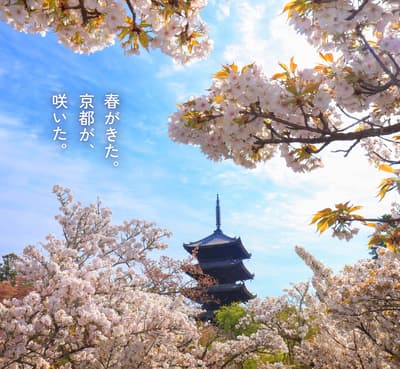
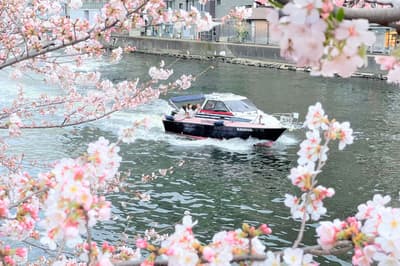
Cherry blossom season (late March to early April) is when Arashiyama looks its best. The mountainsides fill with pale pink, and the area around Togetsukyo becomes a popular hanami spot. Nakanoshima Park, the small island between the river channels just upstream of the bridge, is a particularly good place to sit under the trees.
In autumn (mid-November to early December), the same hillsides turn red and gold. Both seasons bring large crowds, so early morning visits remain the best strategy.
Sagano Romantic Train Through the Hozu River Gorge
The Sagano Scenic Railway (commonly called the Sagano Romantic Train or Torokko) runs 7.3 km along the Hozu River gorge between Torokko Saga Station and Torokko Kameoka Station. The ride takes about 25 minutes through a steep-sided valley with views of the river, rock formations, and forested slopes.
The trains are open-sided (no glass on Car 5, "The Rich"), which makes for good photos but can be cold in winter. They run at a slow pace so you can actually take in the scenery.
Fare: JPY 880 one-way for adults, JPY 440 for children
Schedule: Trains run roughly hourly. The line operates from March through December but is closed from late December through February. Check the official Sagano Scenic Railway site for the current timetable.
Booking: Tickets for individual travelers open online at midnight Japan time, one month before your travel date. Same-day tickets are sometimes available at the station counter, but during cherry blossom and autumn foliage seasons they sell out early.
How to connect it to your visit: Ride the Torokko from Torokko Saga (near JR Saga-Arashiyama Station) to Torokko Kameoka, then either take the JR line back or -- for an even more dramatic return -- book a Hozugawa River Boat Ride (JPY 6,000 adults, JPY 4,500 children) downstream back to Arashiyama. The boat ride takes about two hours through the same gorge and is one of the best experiences in the Kyoto area.
More Things to Do in Arashiyama
Iwatayama Monkey Park
A 20-minute uphill hike from the south end of Togetsukyo Bridge takes you to a hilltop park where roughly 120 Japanese macaques live in the open. There is an enclosed feeding area where you can buy snacks (JPY 100 per bag) and feed the monkeys through a wire mesh -- you are inside, they are outside.
The viewpoint at the top also gives you one of the best panoramic views of Kyoto, which not many visitors realize.
Admission: JPY 550 adults, JPY 250 children (ages 4 to 15)
Hours: 9:00 to 16:00 (until 16:30 March 15 to September 30). The park closes if weather is bad.
Okochi-Sanso Villa
This hilltop estate was the private villa of silent-film actor Okochi Denjiro, who spent 30 years building the gardens. The grounds are beautifully maintained, with moss-covered paths, a tea pavilion, and views over Kyoto on one side and the Hozu River gorge on the other.
Admission (JPY 1,000) includes matcha and a small sweet at the garden tea house. It is one of the quieter spots in Arashiyama even on busy days, because many visitors skip it.
The villa entrance is at the north end of the Bamboo Grove path.
Quieter Temples in Northern Sagano
If you walk north past Okochi-Sanso, the crowds thin out quickly and you enter the Okusaga district -- a stretch of rural-feeling lanes with several smaller temples that rarely appear on mainstream itineraries:
- Jojakko-ji: A hillside temple with a pagoda and one of the best autumn foliage spots in Kyoto. The approach up stone steps through the trees is genuinely atmospheric.
- Nison-in: Known for its long, tree-lined approach path and strong autumn color.
- Gio-ji: A tiny moss-garden temple associated with a tragic love story from the Heike Monogatari. The dappled light on the moss floor is extraordinary.
- Adashino Nenbutsu-ji: Rows of stone Buddhist figures arranged across a hillside. It has an unusual, slightly eerie quality that makes it one of the most memorable temples in Kyoto.
A slow walking loop through these temples takes 2 to 3 hours and is the best way to experience the quieter side of Arashiyama.
Where to Eat in Arashiyama
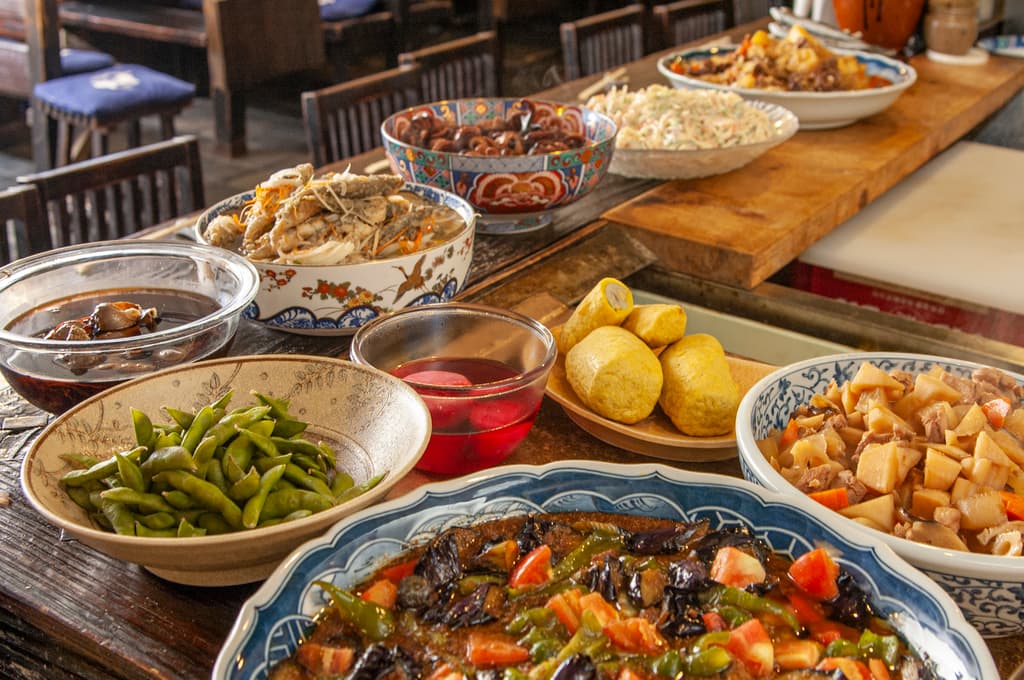
Arashiyama's food scene leans on two local specialties: yudofu (tofu simmered in a light kombu broth) and matcha sweets.
For yudofu, look for restaurants along the main road between Togetsukyo Bridge and Tenryu-ji. Several have been operating for decades and serve multi-course tofu meals in tatami rooms overlooking gardens. Expect to pay around JPY 3,000 to JPY 5,000 per person for a set meal.
The commercial street near Keifuku Arashiyama Station has plenty of takeaway options: matcha soft serve, warabi mochi, skewered dango, and croquettes. It gets busy around lunchtime but the food is generally good and priced for tourists (JPY 300 to JPY 800 per item).
For something more casual, the area around JR Saga-Arashiyama Station has several small cafes and bakeries that are less crowded than the main tourist strip.
Exploring Kyoto After Dark
After a day in Arashiyama, the evening hours open up another side of Kyoto. The Arashiyama-Sagano area itself has a few izakaya and bars worth discovering, and a guided bar-hopping tour is one of the best ways to find them.
If you head back toward central Kyoto, the Nijo-Karasuma-Shijo area has a dense concentration of small bars and restaurants that cater to locals rather than tourists.
Capturing Arashiyama on Camera
Arashiyama is one of the most photogenic areas in Kyoto, but getting good shots takes a bit of planning around the crowds. If you want professional-quality photos of your trip, a guided photo tour with a local photographer can make a real difference -- they know the angles, the timing, and the spots that most visitors walk past.
While there isn't a dedicated photo tour for Arashiyama yet, this guided tour covers other iconic Kyoto spots -- Shimogamo Shrine, Ginkaku-ji, and Kyoto Imperial Park -- and pairs well with an Arashiyama visit if you have a full day in the city.
Spring Cherry Blossoms and Seasonal Highlights
Arashiyama shifts character with each season, and the difference is worth considering when planning your trip.
Spring (late March to mid-April): Cherry blossoms cover the hillsides around Togetsukyo Bridge. The combination of the river, mountains, and sakura is one of Kyoto's signature spring views. Nakanoshima Park is a popular hanami spot. Expect heavy crowds during peak bloom.
For more spring ideas across the city:
Summer (June to August): Hot and humid, but the bamboo grove provides welcome shade. The Hozugawa River Boat Ride is refreshing in summer. Evening visits to the bamboo path (it is open 24 hours) can be pleasant.
Autumn (mid-November to early December): The most popular season alongside spring. Jojakko-ji and the Togetsukyo area are top autumn foliage spots. Some temples hold evening illumination events.
Winter (December to February): Visitor numbers drop significantly. Occasional snowfall on the bamboo creates a rare and striking scene. The Sagano Romantic Train does not operate from late December through February.
Suggested Half-Day Itinerary
This route works well if you arrive early and covers the main highlights in about 4 to 5 hours:
- 7:30 -- Arrive at JR Saga-Arashiyama Station
- 7:40 -- Walk the Bamboo Grove from south to north while it is still quiet
- 8:10 -- Explore the northern Sagano lanes toward Jojakko-ji and Nison-in (exterior views only at this hour)
- 8:30 -- Head south to Tenryu-ji Temple (opens 8:30). Enter the garden and exit from the north gate into the grove for a second pass
- 9:15 -- Walk back north to Okochi-Sanso Villa (opens 9:00). Enjoy matcha in the garden tea house
- 10:00 -- Walk to Togetsukyo Bridge. Option A: Hike up to Iwatayama Monkey Park (opens 9:00). Option B: Head to the Torokko station for the Sagano Romantic Train
- 11:30 -- Lunch in the Arashiyama commercial area
If you have a full day, add the northern Sagano temple loop in the afternoon and end with dinner and drinks in the area.
Practical Tips for Visiting Arashiyama
Time needed: The Bamboo Grove alone takes 15 to 30 minutes. With Tenryu-ji and Togetsukyo, plan at least 2 to 3 hours. A thorough visit including the Torokko train or monkey park takes a half to full day.
Best day to visit: Weekdays see noticeably fewer visitors than weekends. Within the week, Tuesday and Wednesday tend to be the quietest.
What to wear: Comfortable walking shoes are essential. The path to Iwatayama Monkey Park involves a steep uphill climb. In summer, bring water and sun protection. In winter, layers -- the bamboo grove and river area can be colder than central Kyoto.
Luggage storage: Coin lockers are available at JR Saga-Arashiyama Station. Fill up early on busy days.
Accessibility: The Bamboo Grove path is paved and flat, making it wheelchair accessible. Tenryu-ji's garden paths are partially accessible. Iwatayama Monkey Park involves stairs and steep trails and is not accessible.
Combining with other Kyoto sights: Arashiyama pairs well with the Kinkaku-ji (Golden Pavilion) area in northern Kyoto, or with a morning at Fushimi Inari if you start the day early. For a detailed guide to Fushimi Inari: