Akatsuka Botanical Garden Co., Ltd. (Headquarters: Tsu City, Mie Prefecture; President: Koichi Akatsuka) will open "Suzuka no Mori Garden," a research and cultivation garden located in Suzuka City, Mie Prefecture, to the public for a limited period starting February 21, 2026 (Saturday).
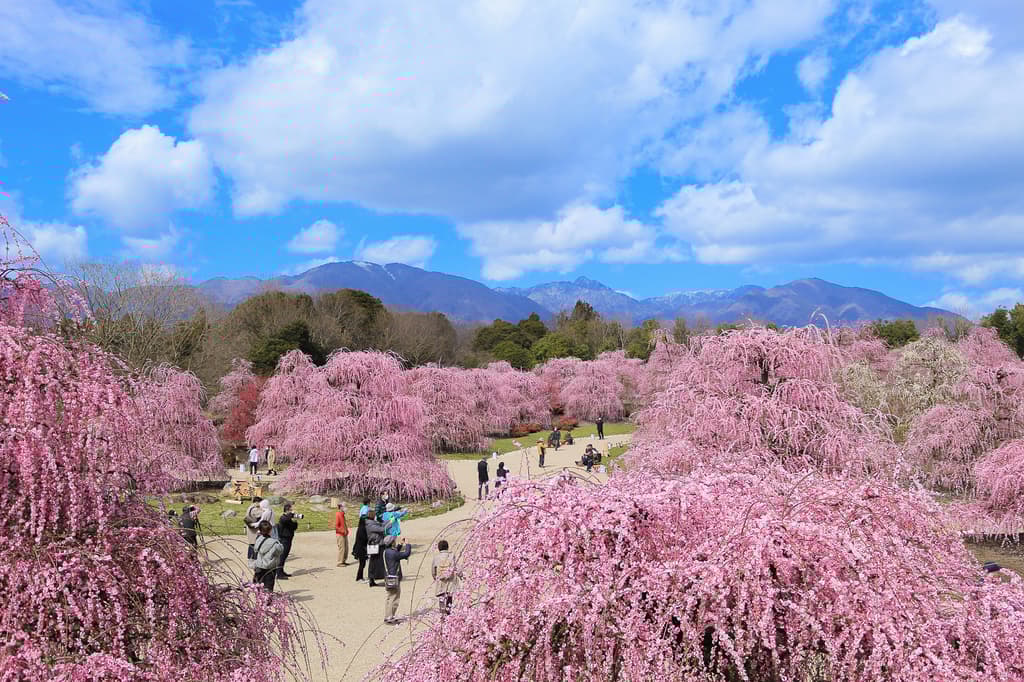
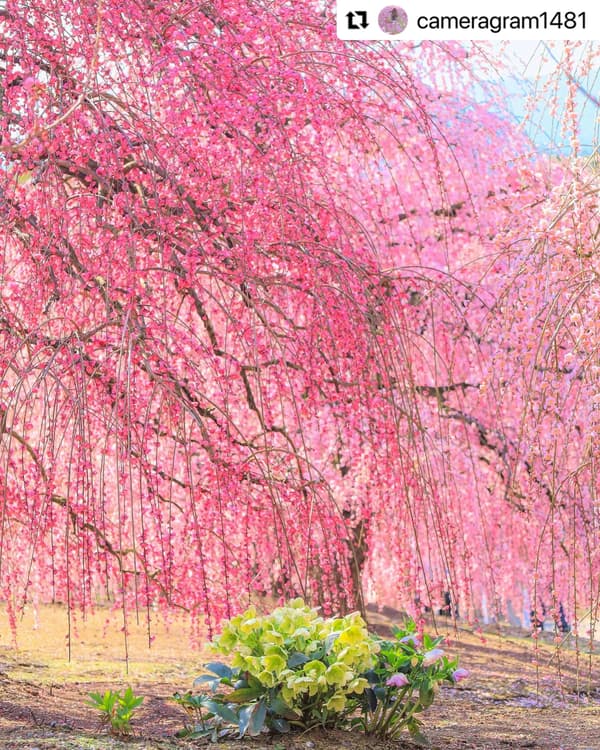
The garden features approximately 200 meticulously maintained weeping plum trees, primarily of the representative variety "Kureha Shidare" (Weeping Kureha). Among them, the famous trees "Dragon of Heaven" and "Dragon of Earth," which are over 100 years old, are iconic symbols of the garden. When the blossoms reach full bloom, the entire garden is enveloped in vibrant spring colors.
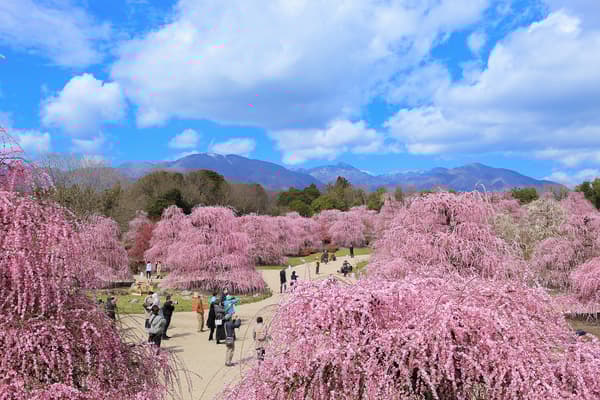
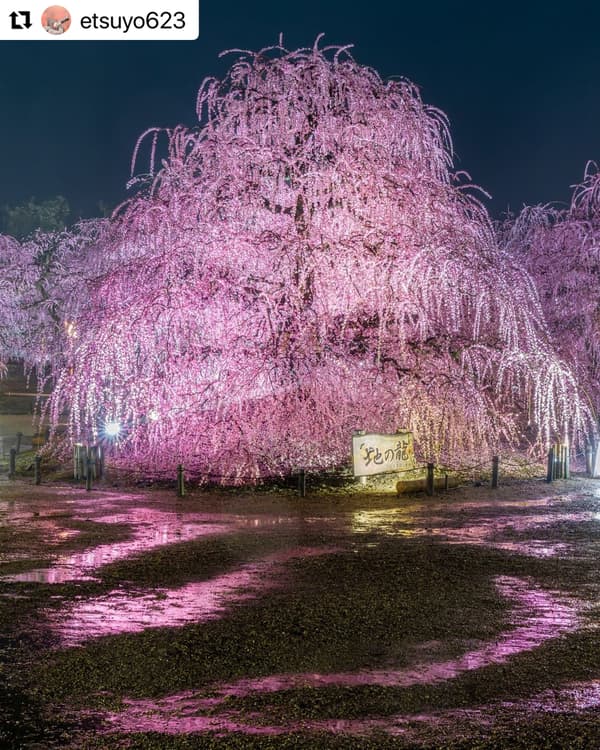
During the day, visitors can enjoy magnificent views with the Suzuka Mountain Range as a borrowed landscape, while at night, they can experience the enchanting illuminated displays. Come enjoy this breathtaking landscape that heralds the arrival of spring.
Peak bloom is expected around early March each year, and after opening, the garden plans to update flowering status daily on its website and social media. (Flowering times may vary depending on weather conditions.) The garden will close for the season when the blossoms fall around late March.
Highlights of Suzuka no Mori Garden
Century-Old Famous Trees: "Dragon of Heaven" and "Dragon of Earth"
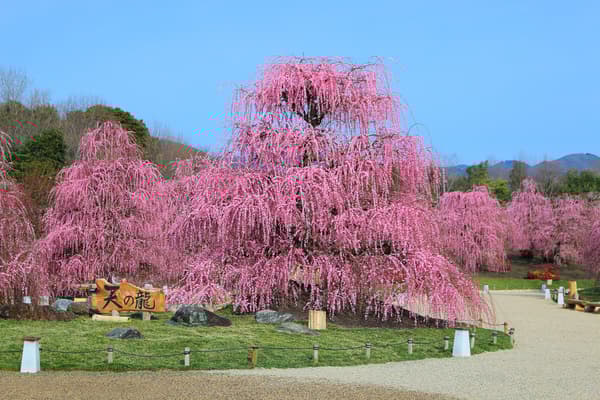
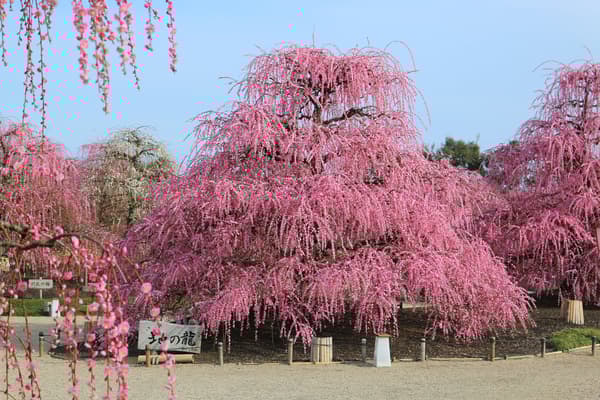
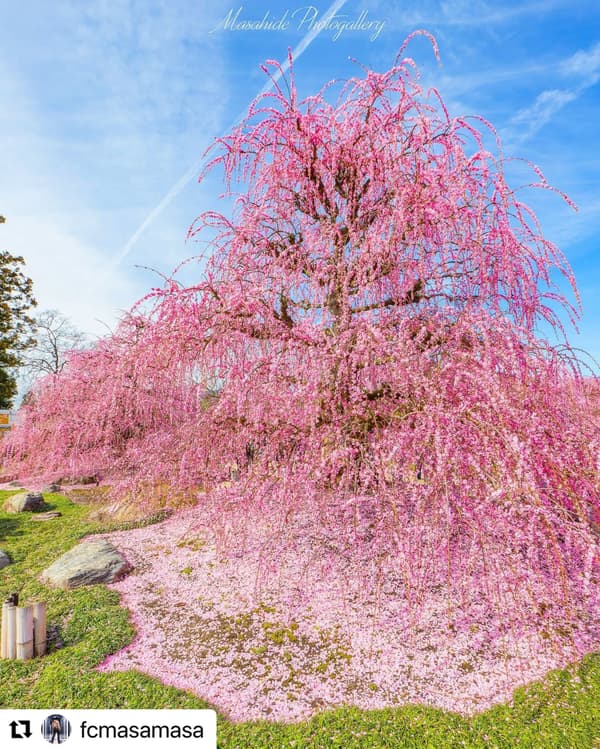
The iconic symbols of Suzuka no Mori Garden, the famous trees "Dragon of Heaven" and "Dragon of Earth," are over 100 years old and stand approximately 7 meters tall, considered among the largest Kureha Shidare plums in Japan. Their powerfully spreading branches and waterfall-like cascading blossoms convey the vitality of plum trees accumulated over many years, captivating numerous visitors.
Traditional Craftsmanship: Masterful Pruning Techniques
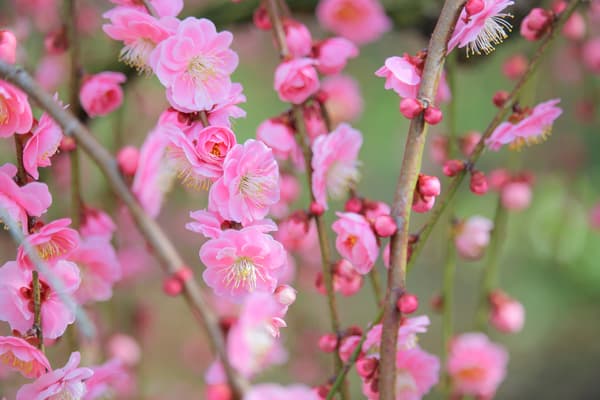
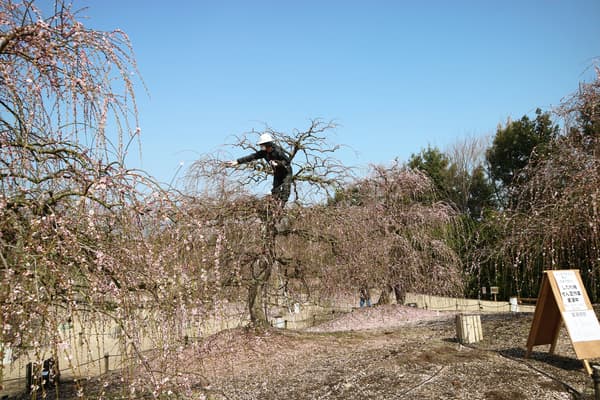
This garden aims to preserve and pass down the traditional Japanese weeping plum pruning technique known as "shitate gijutsu" (training technique). Craftsmen carefully tend to each tree, assessing its form and growth individually. All approximately 200 famous trees planted in the garden have been trained through such masterful techniques. (Live demonstrations of pruning by craftsmen are scheduled for the late viewing period.)
Magical Illuminations That Transform From Day to Night
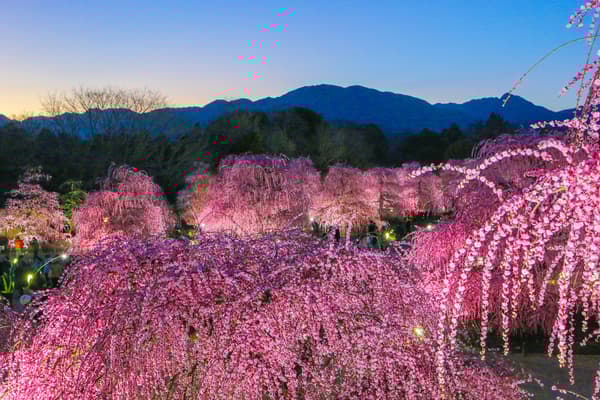
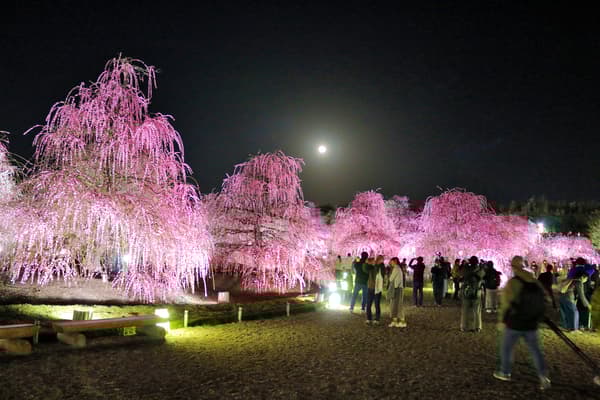
At night, illuminations gently light up the weeping plums. At dusk, the plum trees quietly emerge against the backdrop of the Suzuka Mountain Range ridgeline and deep blue sky. Eventually, in pitch-black darkness, the flowers illuminate like chandeliers, creating a mystical world.
Photography-Enhancing Features and Photo Contest
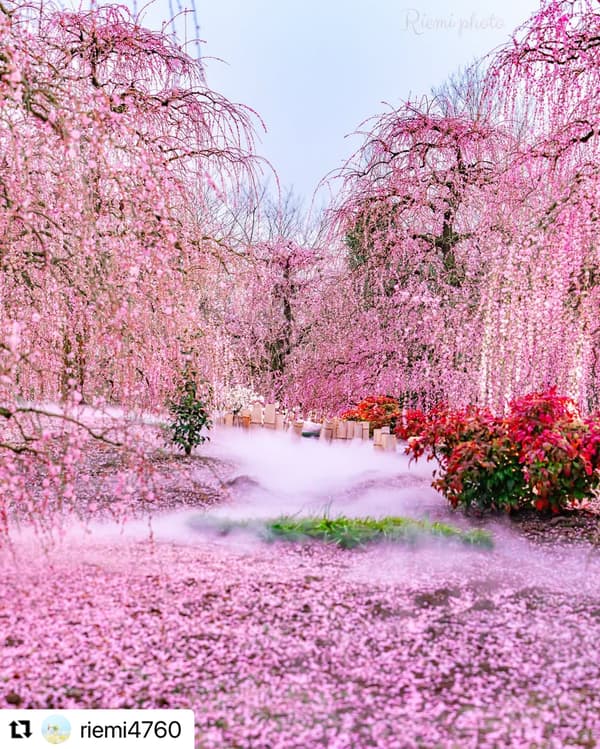
The garden provides various features to make photography enjoyable, including plantings of daffodils and Christmas roses that color the base of the plum trees, and areas with mystical mist (fog). Additionally, the Instagram photo contest is in its eighth year this year, with wonderful works displayed annually. Photos featuring reflections in puddles after rain and the scene of fallen petals spread like pink carpets are particularly popular.
Visitor-Friendly Initiatives for a More Comfortable Experience
For 2026, shuttle bus service from JR Yokkaichi Station via Kintetsu Yokkaichi Station operated by Mie Kotsu has been confirmed (Operation dates: February 21st to March 15th).
Following last year, web tickets will be available for purchase through Webket, a ticketing system by Goodfellows JTB, allowing admission without waiting in line at the ticket counter.
Starting this year, credit cards and code payments will be accepted for admission fees and purchases within the garden, making it more convenient.
Garden Introduction Video
Location and Schedule Information
Name: Research and Cultivation Garden "Suzuka no Mori Garden"
Location: 151-2 Yamamoto-cho, Suzuka City, Mie Prefecture
Phone: 059-371-1777
URL: https://www.akatsuka.gr.jp/group/suzuka/
Operating Company: Akatsuka Botanical Garden Co., Ltd.
Opening Schedule: February 21, 2026 (Saturday) to late March (scheduled) (No holidays during the period)
Business Hours: 9:00 AM to 8:30 PM
※On days without illumination, closes at 4:00 PM
※Last admission is 30 minutes before closing time
※Illumination lights up around 6:00 PM
Admission Fees
Admission Fee: ¥700 to ¥2,000
※Varies according to blooming status. Elementary school students half price, preschool children free
※Cash, credit card, and code payment accepted
Web Tickets: Available for purchase through Webket
※Can be purchased from 7:00 PM the day before admission to 7:00 PM on the day of admission (until 2:30 PM on days without illumination)
※Links to the sales site will be displayed on the garden's website when purchase becomes available
Access
By Car:
Approximately 3 km (about 5 minutes) from Suzuka IC on the Higashi-Meihan Expressway / Approximately 3 km (about 5 minutes) from Suzuka PA Smart IC (※ETC only) on the Shin-Meishin Expressway / Parking: Approximately 200 spaces (free)
By Train:
Approximately 20 km from Kintetsu Yokkaichi Station (Kintetsu Nagoya Line), JR Yokkaichi Station (JR Kansai Line) / Approximately 10 km from Kintetsu Komono Station (Kintetsu Yunoyama Line)
Temporary Shuttle Bus: Direct bus from JR Yokkaichi Station via Kintetsu Yokkaichi Station operated by Mie Kotsu, limited operation from February 21st to March 15th
Access Details:
https://www.akatsuka.gr.jp/group/suzuka/access.html
Reference Data
Garden Area: Approximately 20,000 square meters
Plum Varieties and Numbers: Primarily "Kureha Shidare," along with "Shirataki Shidare," "Naniwa Shidare," "Kagoshima Beni," "Shirakaga," and others. Over 30 varieties total, approximately 200 trees including both weeping and upright plums
Age and Height: "Dragon of Heaven" and "Dragon of Earth," both over 100 years old, stand approximately 7 meters tall. They are believed to be the oldest Kureha Shidare plums in Japan
Year Public Viewing Began: 2014
Photo Contest Information
How to Enter:
On Instagram, follow the garden's official account (@suzuka_no_mori), post with the hashtag (#鈴鹿の森庭園フォトコン2026), and tag the garden's official account
(Details will be announced on the website once finalized)
Prize Benefits:
Beautiful flowers from Akatsuka Botanical Garden's comprehensive garden center Akatsuka FFC Pavilion, original Akatsuka Botanical Garden goods, and more
Photo Contest Details:
https://www.akatsuka.gr.jp/group/suzuka/photocon.html
About Weeping Plum Pruning and Cultivation Management at the Garden
This garden is a research and cultivation garden aimed at preserving and passing down weeping plum training techniques.
Plum trees have the characteristic of budding on newly grown branches after pruning, so pruning is essential for flowering. For weeping plums in particular, unique pruning techniques are required to maintain beautiful tree forms and prevent pest and disease problems caused by overcrowded drooping branches. Additionally, cultivation management continues year-round, including tree transplanting and pathway repositioning considering sunlight and root growth.
The garden considers it important to preserve numerous famous trees in healthy condition and continues research on optimal watering and fertilization for plum trees. Using Akatsuka Botanical Garden's proprietary products such as "FFC Genshi Kassuiki" (water quality improvement activation device), "FFC Ace" (soil improvement material), and "FFC Bark Compost" contributes to maintaining the health of the plum trees.
Cultivation Management Details: