Asakusa, Kuramae, Oshiage × Japanese Culture Tour

Discover amazing Japanese Culture experiences in areas.Asakusa, Kuramae, Oshiage

Showing 6 experiences
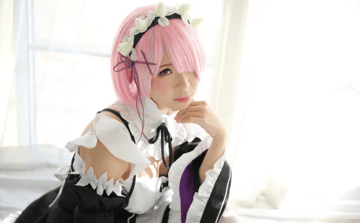
Cosplayer/gravure idol photo session
1 hour
4.8 (5 reviews)

Cosplayer/gravure idol photo session

◆Introduction ・Featuring Japanese cosplayers /gravure idols! ・Directly communicate with the model to capture the photos you want! ・Exclusive model sessions available just for you! ・Beginners are welcome! No need to worry about equipment or photography knowledge! ・An interpreter will accompany you, so there's no need to worry about language barriers! ◆About the Photo Session(about 1 hour): The photo sessions are held at indoor studios in and around Tokyo. Two types of photography sessions are available: ① Personal Photography: A one-on-one photography session with the model. (you have exclusive time with the model, ensuring no interference from others; ideal for experienced photographers). ② Group Photography: -Standard Group Photography (1 model, 5-6 photographers): Each photographer has about 10 minutes of exclusive time with the model. Afterward, you can still take photos, but cannot request any changes in poses (ideal for beginners). -Multiple Models, Multiple Photographers (more than 10 participants, usually outdoor sessions): This option allows you to photograph multiple models at once. However, each photographer's time is limited. You can choose the format that best suits your preferences. ※Professional photography equipment is available for rent for an extra fee. ◆ Participation Process: -Consultation: Before booking, feel free to consult with us about the schedule and performers for the photo session. -Booking: Once you're satisfied with the plan, proceed with the booking of the service. -Confirmation: After your booking is confirmed, we will notify you of the meeting location for the photo session. -On the Day of the Session: Our accompanying interpreter will meet you at the location and guide you to the photo studio. -Payment: Upon arrival at the studio, please pay the participation fee to the operator (cash is generally required) and confirm the participation rules. -Photo Session: The session begins, and the interpreter will assist in communication with the model ◆Participation Fees (for reference only):Prices may vary depending on the model's level. ①Individual Session (1 hour): Participation fee: around 10,000 yen ②Group Session (per participant): Participation fee: around 5,000 yen Note :You will be responsible for covering the participation fee for your interpreter. ◆Included: ・Accompanying tour guide and interpretation. ・Cashless medical care ◆Not Included: ・Participation fees ・Personal and other expenses ![](https://assets.hldycdn.com/experiences/2e8e17_25290aaada9c4c8597223145460b1d2f~mv2.png) ![](https://assets.hldycdn.com/experiences/2e8e17_ecaf2c28498245ef9dfb826bec6a9f84~mv2.png) ![](https://assets.hldycdn.com/experiences/2e8e17_29d8eb645d3145f58da2202ab1eb1323~mv2.png) ![](https://assets.hldycdn.com/experiences/2e8e17_78a62ad3c35b4148b0f9efe408ab0859~mv2.png) ![](https://assets.hldycdn.com/experiences/2e8e17_e1e3663ec8b5435f8fcf18bd76e68366~mv2.png) ![](https://assets.hldycdn.com/experiences/2e8e17_7ae6a94436df4917b9ead8b134e7f2b4~mv2.png)

Tokyo Japanese Culture Cosplay / Gravure / Portrait Photo Session
¥10900~
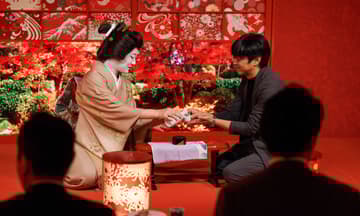
Geisha Dinner Show & Ozashiki-Asobi at Benitsuya in Shinbashi
1.5-2 hours
4.8 (5 reviews)

Geisha Dinner Show & Ozashiki-Asobi at Benitsuya in Shinbashi

Experience authentic Japanese culture with an intimate geisha dinner show at Benitsuya, a modern 30-seat venue in the heart of Shinbashi. Enjoy a seasonal kaiseki course dinner prepared by Kyoto celebrity chef Naoki Okumura while watching professional Tokyo geisha perform traditional dances and shamisen music. This unique cultural experience includes interactive ozashiki-asobi party games where you can engage directly with the geisha, learn traditional games, and take memorable photos together. The intimate setting allows for close interaction and cultural exchange in an authentic yet accessible way. **What's Included:** - Multi-course seasonal kaiseki dinner - One welcome drink (additional drinks available for purchase) - Live geisha dance and shamisen performances - Interactive ozashiki-asobi party games with the geisha - Photo opportunities with the geisha - All gratuities and performance fees **Schedule:** Three nightly seatings available: - 17:00 - 18:30 - 19:00 - 20:30 - 21:00 - 22:30 **Location & Access:** Located on the 6th floor of the Grand Hammer building, just 1 minute walk from JR Shimbashi Station West Exit 7, right in front of SL Square. **Important Notes:** - Minimum age: 20+ only (alcohol is served) - Dress code: Smart casual (no shorts, sleeveless shirts, or flip-flops) - Private bookings available for groups - Not wheelchair accessible - Free cancellation up to 24 hours before your selected time Experience Tokyo's geisha culture without needing private ochaya connections - this is your chance to see authentic geisha performances up close in a welcoming, modern setting!

Tokyo Cultural Experience Dinner Show Traditional Performance Japanese Culture
¥25000~
Asakusa Walking & Matcha Making Tour
3 hours

Asakusa Walking & Matcha Making Tour

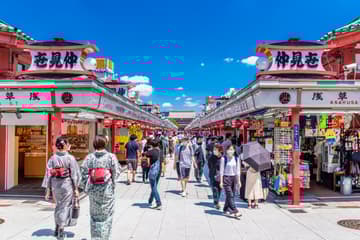
◆Introduction Discover the traditions and history of Asakusa on this immersive tour! Ride through the area by rickshaw, stroll along the main shopping street, and sample traditional Japanese snacks. Visit the iconic Sensoji Temple, then explore Kappabashi Kitchen Street. End the tour at a traditional restaurant, where you'll learn to make okonomiyaki (savory pancake). ◆Included ・Cashless medical treatment in case of injury or illness during the tour. ・Some food samplings (Japanese snacks and sweets) ・Lunch ( Okonomiyaki or Monja-yaki + 1 drink) *Vegetarian menu available / not vegan & Gluten-free ・Tour photos ・3 hours with a local guide ・Matcha Making Experience ◆Not included ・Additional food/drinks ◆Itinerary ■Meeting Point:Kaminarimon Police Box, Asakusa Your guide will be waiting in front of Kaminarimon Police Box ■Asakusa Tour Starts! ■Nakamise Shopping Street (Kaminarimon) Try some traditional Japanese sweets ■Asakusa Kaminarimondori Shopping Street You will also stop by Kaminarimon, a perfect spot for photos! ■Senso-ji Temple You will learn and experience what Japanese people do at a temple (eg: praying, omikuji - fortune telling) ■Asakusa Shrine You will also explore in Asakusa Shrine next to Senso-ji Temple ・Pass by Hozomon gate ・Pass by Asakusa Culture Tourist Information Center ■ End point: Kaminarimon Police Box, Asakusa This tour ends back at the meeting point. ◆Additional Information ・Small-group tour limited to seven participants ・Near public transportation ・Not wheelchair or stroller accessible ・Unable to accommodate gluten-free requests ・Please note that we are unable to guarantee allergy-free or cater to dietary restrictions as the food is prepared in kitchens that do not belong to Holiday Travel. ![](https://assets.hldycdn.com/experiences/022047_5abd928fcb714945bd719129aa71b7c9~mv2.jpg) ![](https://assets.hldycdn.com/experiences/022047_c7f827cb3cfc402f9719adcbfb4f63e3~mv2.jpg) ![](https://assets.hldycdn.com/experiences/022047_63aada224754443ab297825b9a66f39f~mv2.jpg) ![](https://assets.hldycdn.com/experiences/022047_3deb801faf0b4983b8260e34be6f40c8~mv2.jpg) ![](https://assets.hldycdn.com/experiences/022047_3e38854bb2fc437f8d7c7fbe157e0650~mv2.jpg) ![](https://assets.hldycdn.com/experiences/022047_b7ef12d2d0254630abcfbd5deebd27e8~mv2.jpg)

Asakusa Temple Area Japanese Culture
¥13700~
Shinagawa-Juku Old Tokyo Walking Tour
3 hours

Shinagawa-Juku Old Tokyo Walking Tour

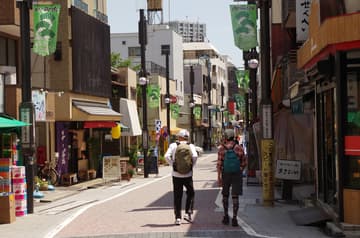
◆Introduction Get to know Edo-era Tokyo on a fun and informative small-group walking tour. Over three hours, you’ll tour the Shinagawa area, following your guide down back alleys to find landmarks, buildings, and shops that you might not find independently. Learn more about this area’s history and its importance on the Old Tokaido Road through Japan. ・An ideal tour for history and culture-loving travelers ・Avoid the risk of getting lost in an old part of Tokyo ・This is a small-group tour so you won’t struggle to hear your guide ・Hot drinks will be provided to keep you refreshed ◆Included ・English/Chinese/Korean speaking guide ・Coffee and/or Tea ◆Not Included ・Lunch ・Hotel pickup ・Transportation costs ◆Itinerary ・Shinagawa-Ura Park (15 min) In Edo times, Shinagawa was a bustling fishing village. While no longer used for commercial fishing, the area retains nostalgic traces, with traditional "yakatabune" boats alongside old fishing boats. The mix of modern skyscrapers and preserved old houseboats reflects ・Kyu-tokaido Street (1 hour) The Kyu-Tokaido Road was Tokyo's first stop for travelers heading to Kyoto, filled with inns and shops that have largely survived fires and air raids. Today, visitors can find century-old green tea and rice cracker shops, along with the last traditional sandal shop, Maruya, offering handmade geta and zori sandals with customizable straps—a nod to the Edo-era focus on quality footwear. ・Hozenji Temple (10 min) Smaller streets off the Tokaido Road reveal hidden temples, old green-covered houses, and a rare historic water well still intact among residences. ・Shotokuji Temple (5 min) Visit Shotokuji Temple on Shinbaba Street, beautiful in autumn with maple trees and a unique brick wall fence. ・Ebara Jinja Shrine (10 min) Founded in 709, Ebara Shrine honors the dragon god, with intricate carvings, a June festival, and cherry blossoms in spring. ・Shinagawa Shrine (50 min) Founded in 1187, Shinagawa Shrine features Japan’s tallest “fujizuka” (mini-Mt. Fuji) made from Fuji rocks, red torii gates, and a fortune-enhancing fountain. Nearby, relax at a tea cafe in a restored private house offering seasonal daifuku sweets and roasted teas. ◆Additional Info ・Not wheelchair accessible ・Travelers should have a moderate physical fitness level ・This tour will have a maximum of 7 travelers ![](https://assets.hldycdn.com/experiences/d3ae06_55c7fe49ea4348ccb0f8daae892177f8~mv2.jpg) ![](https://assets.hldycdn.com/experiences/d3ae06_4d018ac12fa6451abf5cea680349625d~mv2.jpg) ![](https://assets.hldycdn.com/experiences/d3ae06_029efc4103fe4b1f8a164f0b8fd5d02e~mv2.jpg) ![](https://assets.hldycdn.com/experiences/d3ae06_2ac2351a61a94c2bbbb6a730f242068f~mv2.jpg) ![](https://assets.hldycdn.com/experiences/d3ae06_3b3333b85613475d90754fc62d506672~mv2.jpg)

Tokyo Japanese Culture
¥24000~
Gravure Idol / Chill Farm Photo Session by Asia Promotion

Gravure Idol / Chill Farm Photo Session by Asia Promotion

**Chill Farm Photo Session** is a photo session series organized and sold by the talent agency **Asia Promotion**. For visitors to Japan who want to safely enjoy a Japanese model photo session with a clear understanding of the rules and a smooth experience, **Holiday Travel provides full support, from booking assistance (availability check) to interpreter accompaniment on the day**. **[Important: Content varies by date]** Chill Farm's **performer lineup, costume themes, shooting formats (individual/group/session, etc.), schedules, participation requirements, and pricing** change with each event date. This page provides an overview of the series. Details for confirmed upcoming dates are updated below, so please check for the latest information. We also accommodate requests such as "Can I participate in a photo session that fits my travel dates and area?" so feel free to reach out with any inquiries. --- **[Past Performers (Selected Examples)]** The performer lineup changes with each Chill Farm event. Past performers have included (partial list): - Kanami Takasaki / Midori Takasago / Shieru Yoshii / Yuuna Ikeda / Rena Matsumoto / Hoshi Ka - Nana Owada / Airi Sugimoto / Mizuki Asakura - Nanami Asahi - Satsuki Miwa *Please refer to individual event date pages for the latest performer information.* --- **About Shooting Formats** **1) Individual Slots (Private Shoots, Designated Model Slots, etc.)** - A format where participants **select a specific model for a private photo session** - Some events may include a **photo session + bonus meet & greet (Cheki, etc.)** as a set - Clear guidelines are established for maximum participants (e.g., small group format) and time slots **2) Session / Group Shoots** - A format where multiple models appear and participants take turns shooting - Some events may include **unit (lineup) shooting** - Maximum participant limits may apply **3) Bonus Meet & Greet (Cheki, etc.)** - Some events offer Cheki sessions after the photo shoot ends - Pricing and details follow the event schedule and on-site announcements --- **[Pricing Guide]** Ticket prices vary by **date, session, shooting format, and performer**. Past events have ranged from **$100 to $300**. **[What Holiday Travel Provides (Booking Assistance + Interpreter Accompaniment)]** This product is a service where **Holiday Travel** supports international visitors who wish to participate in Chill Farm events. Holiday Travel provides the following: **1) Availability Check for Individual Event Slots Matching Your Preferences** - Based on your preferences (date/time, performers, shooting format, group size, priority conditions, etc.), we **check whether the relevant individual slots (private/designated slots, etc.) are available** - Availability fluctuates constantly, so **securing a spot is not guaranteed** (slots close once filled) - If no availability exists, we will suggest alternative options with similar conditions **2) Interpreter Guide Assignment for the Day (On-Site Accompaniment)** - On the day of the photo session, we **arrange and accompany an interpreter guide** - We support reception, understanding of rules and notices, meeting points, transportation, and time management so even first-time participants can enjoy the experience with peace of mind *Available languages may vary depending on the plan/date.* **3) Pre-Event Rule Explanation + Troubleshooting Support** - We **organize and clearly explain in advance** the rules specific to photo sessions (e.g., permitted shooting areas, whether pose direction is allowed, no-contact policies, video/audio handling, social media posting policies, cancellation terms, etc.) - On the day, we provide **on-the-spot interpretation and confirmation** as needed to prevent misunderstandings about rules - In case of any miscommunication (late arrivals, venue confusion, differences in understanding with organizers, etc.), we organize the situation and **provide support for smooth resolution** *However, final decisions and rule enforcement follow the organizer's regulations.* --- **[Request for Participants]** Photo sessions are operated under rules set by the organizer. For a safe and enjoyable experience, **please be sure to follow the on-site guidance and rules.** Holiday Travel provides careful support from booking to the day of the event so that everyone can enjoy the experience with confidence.

Tokyo Japanese Culture Cosplay / Gravure / Portrait Photo Session
¥16000~
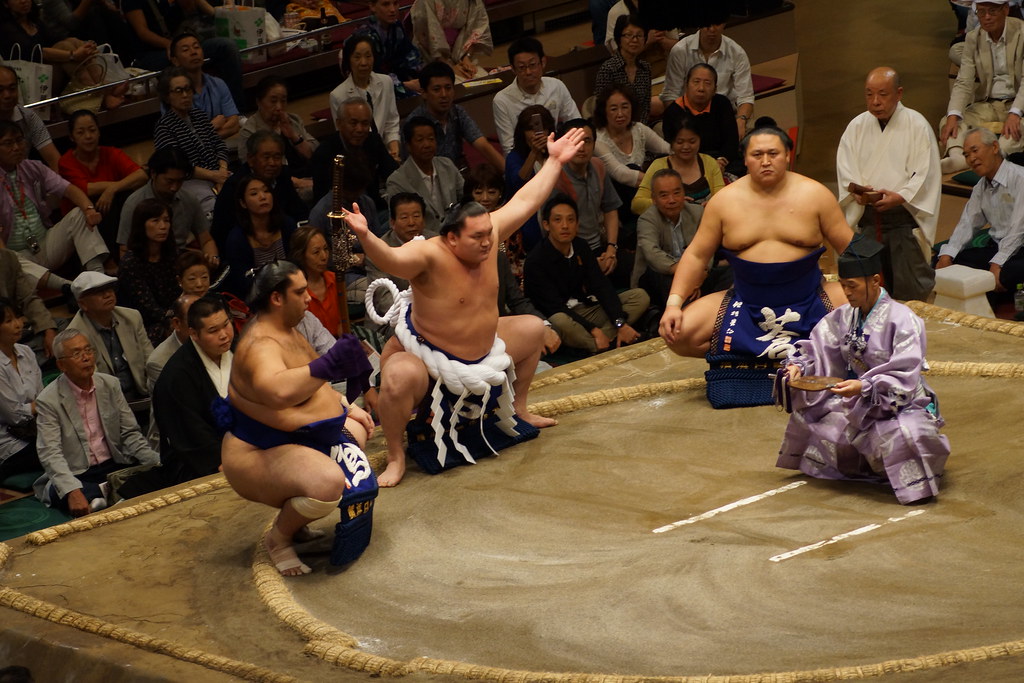
Tokyo Grand Sumo Tournaments

Tokyo Grand Sumo Tournaments

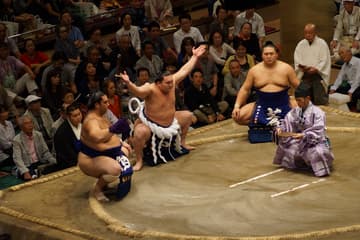
◆ Event Introduction The Tokyo Grand Sumo Tournaments (honbasho) are among Japan's most iconic and culturally significant sporting events. Of the six annual tournaments held across Japan, three take place at the legendary Ryogoku Kokugikan arena in Tokyo's Sumida ward, showcasing the ancient art of sumo wrestling at its highest level. Each tournament spans 15 consecutive days, featuring hundreds of bouts from the lower divisions in the morning through to the elite makuuchi division matches in the late afternoon. The atmosphere combines intense athletic competition with centuries-old Shinto rituals, making it a truly unique spectacle. ◆ Historical Background Sumo is believed to have a history of at least 1,500 years in Japan. Ancient chronicles such as the Kojiki and Nihon Shoki contain myths of wrestling bouts among the gods. During the Nara and Heian periods (8th to 12th centuries), sumo was held at the imperial court as part of official ceremonies. During the Edo period (1603 to 1868), sumo developed into a form of urban entertainment beloved by the common people in Edo (present-day Tokyo). Professional wrestlers began to organize, and many of the ritual elements recognizable today, including the ring-entering ceremonies, the referee's traditional costume, and the salt-throwing purification, were established during this era. The current system of six annual tournaments (each lasting 15 days) was established in the postwar era and is administered by the Japan Sumo Association. Three of these six tournaments are held in Tokyo, with the remaining three taking place in Osaka (March), Nagoya (July), and Fukuoka (November). ◆ Tokyo Tournament Schedule 📅 January Tournament (Hatsu Basho / New Year Tournament) Held over 15 days in mid-January, typically starting on the second Sunday of the month. This tournament marks the beginning of the sumo calendar year and is one of the most anticipated events. 📅 May Tournament (Natsu Basho / Summer Tournament) Held over 15 days in mid-May, typically starting on the second or third Sunday of the month. The summer tournament brings exciting competition as wrestlers aim to build momentum for the year. 📅 September Tournament (Aki Basho / Autumn Tournament) Held over 15 days in mid-September, typically starting on the second Sunday of the month. The autumn tournament is the final Tokyo honbasho of the year. ◆ Daily Schedule Matches begin in the late morning with bouts from the lower divisions (jonokuchi, jonidan, sandanme, and makushita). The juryo (second-highest division) matches take place in the mid-afternoon, followed by the highly anticipated makuuchi (top division) bouts in the late afternoon. The final match of the day, known as the musubi no ichiban, typically concludes around 6:00 PM. The final day of each tournament, called senshuraku, is the climactic conclusion where the tournament champion (yusho) is decided and awarded the prestigious Emperor's Cup along with numerous other prizes and trophies. ◆ Venue: Ryogoku Kokugikan 📍 Location: 1-3-28 Yokoami, Sumida, Tokyo 🚃 Access: 1-minute walk from JR Ryogoku Station (West Exit), or 5-minute walk from Toei Oedo Line Ryogoku Station (Exit A3) The Ryogoku Kokugikan, often simply called the Kokugikan ("National Sport Hall"), is the spiritual home of professional sumo. This iconic indoor arena seats over 10,000 spectators and features the sacred dohyo (clay ring) at its center, crowned by a suspended shrine-like roof (tsuriyane) that symbolizes sumo's deep connection to Shinto traditions. Seating options include traditional masu-seki (box seats) near the ring, where spectators sit on cushions in intimate tatami-style compartments, as well as chair seats in the upper levels offering panoramic views of the arena. ◆ What Makes Sumo Special 🎌 Sacred Rituals Every aspect of sumo is steeped in Shinto tradition. Wrestlers throw salt to purify the ring before each bout, perform ceremonial stomps (shiko) to drive away evil spirits, and participate in elaborate ring-entering ceremonies (dohyo-iri). The yokozuna (grand champion) ring-entering ceremony is a particularly awe-inspiring display of tradition and power. 💪 The Rankings Sumo wrestlers (rikishi) are ranked in a hierarchical system called the banzuke. The pinnacle of sumo is the rank of yokozuna, the grand champion, a title that carries immense prestige and responsibility. Wrestlers live and train in communal training stables (heya), many of which are located in the Ryogoku neighborhood. 🍲 Sumo Culture in Ryogoku The Ryogoku area surrounding the Kokugikan is rich with sumo heritage. Visitors can explore chanko-nabe restaurants serving the hearty hot pot stew that forms the staple diet of sumo wrestlers, visit the Sumo Museum inside the arena, and spot rikishi walking through the neighborhood streets in their traditional attire. ◆ Important Notes ⚠️ This page is for event information only. For inquiries about the tournaments, please feel free to contact us directly. ⚠️ The arena can become extremely crowded during tournaments, especially on weekends and the final days. Plan your visit well in advance. ⚠️ Photography rules may apply inside the arena. Please follow the venue's guidelines regarding cameras and recording devices. ⚠️ The Ryogoku area offers many dining options, but popular chanko-nabe restaurants can fill up quickly during tournament periods. ![](https://assets.hldycdn.com/f779a839-425a-4641-97e6-1ea33b0bf7a3.jpg)
Asakusa, Kuramae, Oshiage Festivals & Events Japanese Culture