Kyoto Jidai Festival
◆ Event Introduction
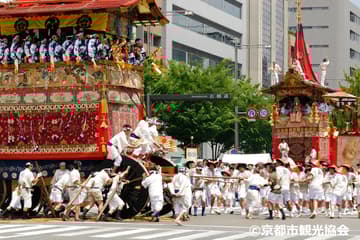
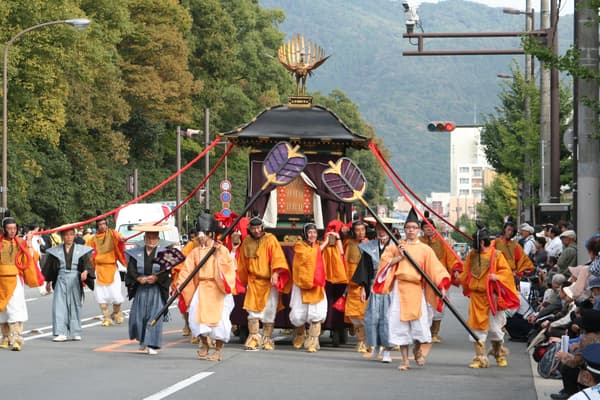
The Jidai Matsuri (Festival of the Ages) is one of Kyoto's three great festivals, alongside the Aoi Matsuri and the Gion Matsuri. Held annually on October 22nd, this spectacular historical costume procession brings together approximately 2,000 participants dressed in authentic period attire, spanning over 1,000 years of Japanese history. The procession itself stretches approximately 2 kilometers in length, while the route from the Kyoto Imperial Palace to Heian Jingu Shrine covers a distance of about 4.5 kilometers. Each year, the festival draws well over 100,000 spectators from Japan and around the world.
◆ Historical Background
The Jidai Matsuri was first held in 1895 to celebrate the 1,100th anniversary of the transfer of the capital to Heian-kyo (present-day Kyoto) by Emperor Kanmu in 794. That same year, Heian Jingu Shrine was established in the Okazaki area as a dedication to Emperor Kanmu, and the Fourth National Industrial Exhibition was held in Kyoto to bring vitality back to the city after the effective relocation of the capital to Tokyo. The festival was created as a grand commemorative event, with the first historical costume procession taking place in autumn of that year. October 22nd was chosen as the festival date because it is regarded as the day Emperor Kanmu officially entered the new capital of Heian-kyo, making it, in essence, Kyoto's birthday.
◆ The Historical Costume Procession (Jidai Gyoretsu)
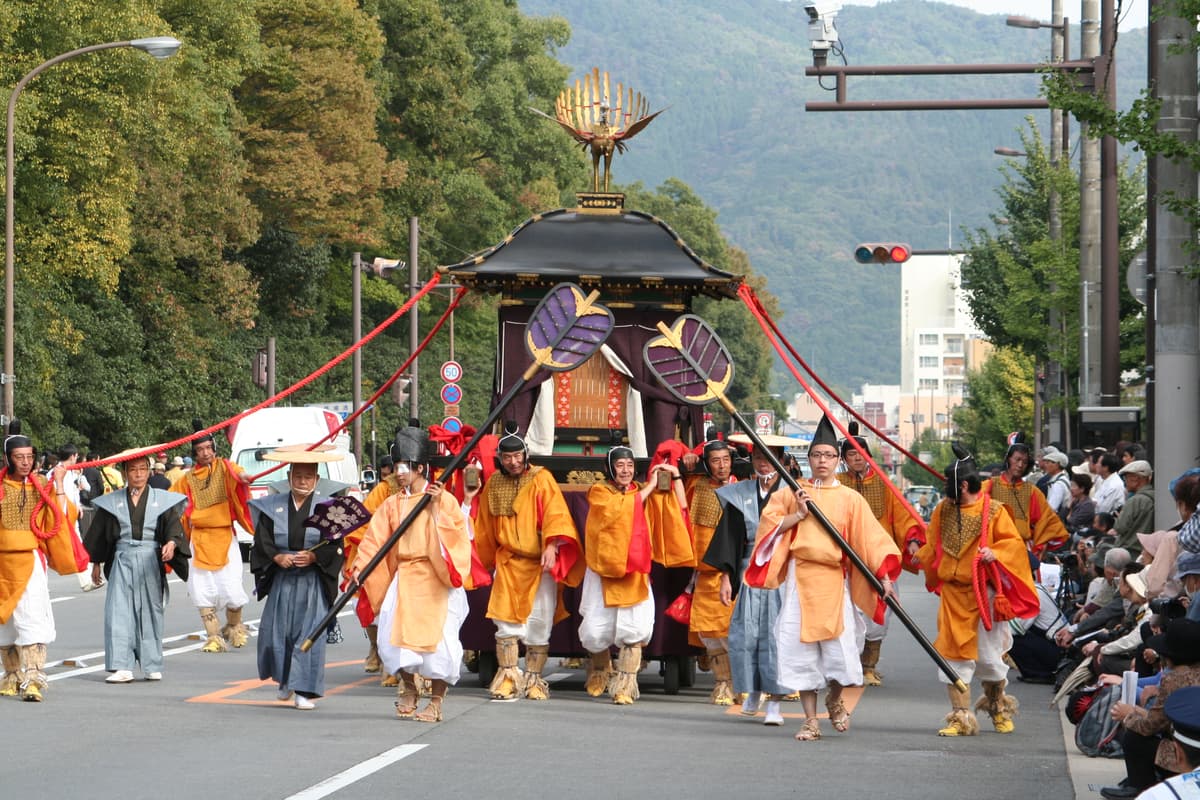
The highlight of the Jidai Matsuri is the Jidai Gyoretsu, an elaborate historical costume procession that traces Japanese history backward through time. Starting from the Meiji Restoration era and going all the way back to the Enryaku period (late 8th century), the procession features meticulously recreated costumes, hairstyles, weapons, and ceremonial objects representing each era.
The procession begins with the Meiji Restoration period, featuring figures such as loyalist samurai and statesmen in both traditional and Western-style attire. As the parade continues, you will see samurai from the Edo, Azuchi-Momoyama, Muromachi, and Kamakura periods in their distinct armor and helmets. Noble court figures from the Fujiwara and Heian periods appear in exquisite layered robes (junihitoe), accompanied by ox-drawn carriages and other artifacts of classical court culture.
Famous historical figures are brought to life in the procession, including Oda Nobunaga, Toyotomi Hideyoshi, Saigo Takamori, and literary luminaries such as Murasaki Shikibu and Sei Shonagon. But the procession is not limited to the famous; it also features everyday people of old Kyoto, including merchants, townspeople, and working women such as the Ohara-me (women from Ohara) and Shirakawa-me (women from Shirakawa).
Approximately 12,000 items, including costumes, armor, and accessories, are used in the procession, all recreated with painstaking attention to historical accuracy using traditional Kyoto craftsmanship. This is why the Jidai Matsuri is often described as a "walking museum" of Japanese history.
◆ The Sacred Procession (Shinko-retsu)
Following the historical costume groups, the sacred procession (Shinko-retsu) forms the spiritual heart of the festival. Two portable shrines called Go-horen carry the spirits of Emperor Kanmu and Emperor Komei, the first and last emperors to reign from Kyoto. In fact, the entire historical procession serves as an escort for these sacred palanquins as they make their journey back to Heian Jingu Shrine.
◆ Event Details
📅 Date: October 22nd every year (the event proceeds in light rain; in the case of severe weather, it may be postponed to the following day or cancelled)
📍 Route: From the Kyoto Imperial Palace (Kenreimon Gate) to Heian Jingu Shrine
🕐 Schedule (approximate; actual times may vary slightly each year):
- Approximately 12:00 - Procession departs from Kyoto Imperial Palace
- Approximately 12:50 - Passes Karasuma-Oike intersection
- Approximately 13:20 - Passes Kawaramachi-Oike
- Approximately 13:40 - Crosses Sanjo Bridge over the Kamo River
- Approximately 14:30 - Front of procession arrives at Heian Jingu Shrine
- The times above are rough estimates based on past years and are not fixed. Please check official announcements for the latest schedule.
◆ Main Viewing Points
🏯 Kyoto Imperial Palace Park
The starting point of the procession. Arrive early to see the participants lining up and the procession beginning its journey.
🏢 Oike Street (Karasuma-Oike to Kawaramachi-Oike)
A wide street offering excellent visibility of the procession as it passes through central Kyoto.
⛩️ Heian Jingu Shrine Approach (Jingu-michi)
The final stretch of the route. Watch as the procession approaches the grand torii gate and enters the shrine grounds.
◆ Important Notes
⚠️ This page is for event information only. For inquiries about the festival, please feel free to contact us directly.
⚠️ The procession route and surrounding areas can become extremely crowded. Plan your transportation and accommodations well in advance.
⚠️ October weather in Kyoto can vary. Bring appropriate clothing and rain gear just in case.
⚠️ The event proceeds in light rain. In the case of severe weather (such as storm warnings), the event may be postponed to the following day. If severe weather continues, the event may be cancelled. Please check official announcements for the latest updates.
Got questions? Let's chat on Instagram!
Send us a DM and we'll help you plan the perfect experience.
Highlights
- One of Kyoto's three great festivals, held annually since 1895 to celebrate the founding of the ancient capital
- Approximately 2,000 participants in historically accurate costumes spanning over 1,000 years of Japanese history
- The procession travels 4.5 km from Kyoto Imperial Palace to Heian Jingu Shrine, often called a "walking museum"
- Famous figures such as Oda Nobunaga, Murasaki Shikibu, and Sei Shonagon are brought to life in the parade
- Approximately 12,000 meticulously recreated items including costumes, armor, and accessories using traditional Kyoto craftsmanship
Contact us for booking details