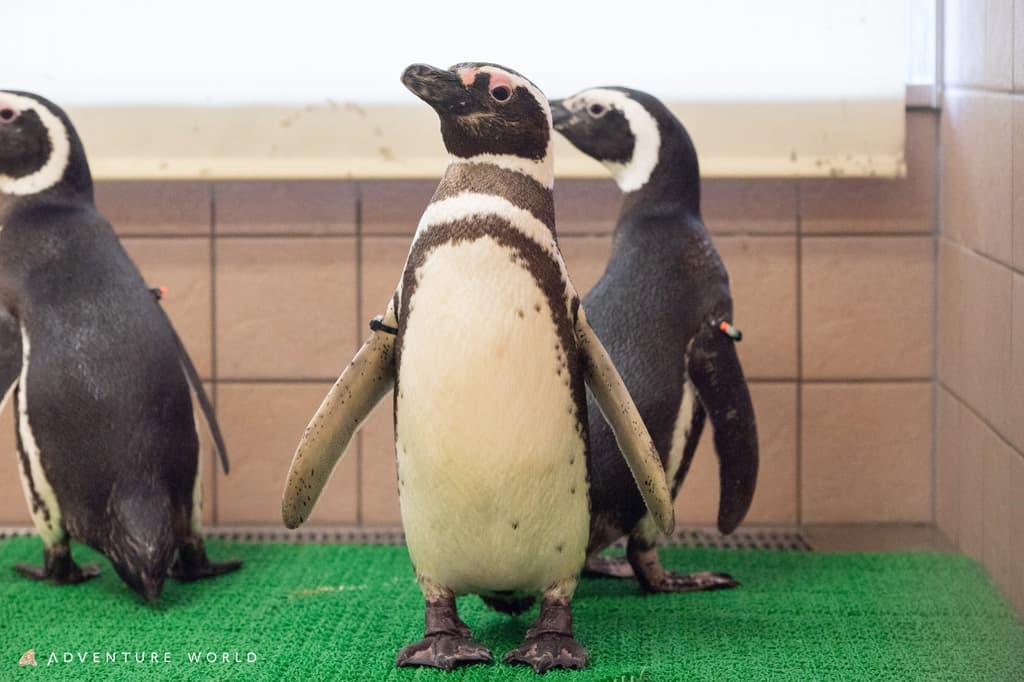
Adventure World (Shirahama, Wakayama) has welcomed Magellanic Penguins and Humboldt Penguins to its family of animals. The new arrivals are currently undergoing quarantine in a non-public area, with a public debut planned for Saturday, July 18, 2026. With this addition, Adventure World becomes Japan's only park where visitors can encounter 10 different penguin species, and the world's largest penguin-keeping facility by both species count and number of individuals (as of June 25, 2026, per the park's own research).
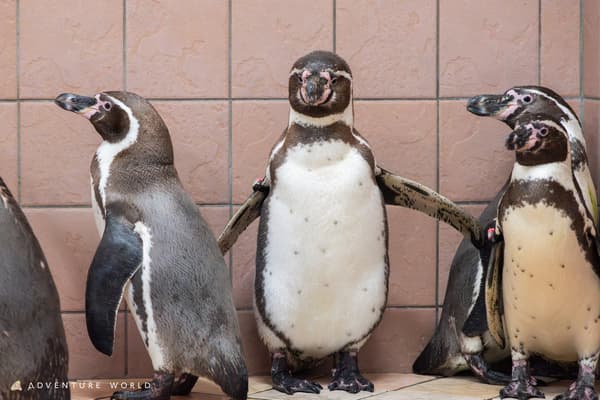
Public Debut Schedule
| Magellanic Penguin | Humboldt Penguin | |
|---|---|---|
| Public Debut Date | Saturday, July 18, 2026 | Saturday, July 18, 2026 |
| Hours | All day | All day |
| Location | Family Plaza | Center Dome |
The four male Magellanic Penguins were transferred from 長岡市寺泊水族博物館, while the six Humboldt Penguins (three males, three females) came from 新潟市水族館 マリンピア日本海.
Magellanic Penguins are native to the coasts of Argentina and Chile in South America, and are a representative species of the vast Patagonian region of sea and grasslands. Humboldt Penguins live along the coasts of Peru and Chile, nurtured by the cold Humboldt Current, and are well adapted to rocky coasts and arid environments. Both species inhabit the temperate zone of the Southern Hemisphere and bear a visual resemblance to the Cape Penguins already at home in the park — yet each has adapted to different ocean currents, climates, and coastal environments. Comparing all three species side by side invites visitors to enjoy the differences and commonalities between them while reflecting on environmental adaptation and biodiversity.
From the Animal Edutainer
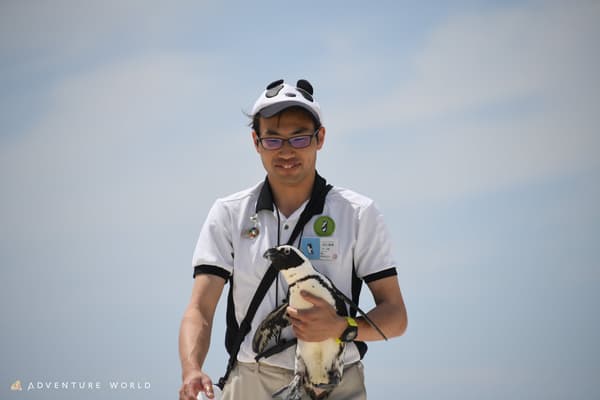
Tomohiro Kawaguchi — Temperate Penguin Division
Career: A self-described penguin enthusiast since his student days, Kawaguchi has six years of experience caring for polar penguins and four years with temperate penguins.
Special skill: Photography — his shots have appeared inside the park and beyond, including with Epos Card.
"When Adventure World began keeping Little Penguins — the first in the Kansai region — in 2015, I hadn't yet joined the staff, so I was thrilled purely as a penguin fan. Now I've been assigned to care for the Magellanic Penguins and Humboldt Penguins joining us, and while I've worked with both polar and temperate penguins at the park before, I won't pretend I don't have some anxiety. However, these penguins have been cherished by the staff and guests at their respective facilities. I intend to carry that care forward and hope they'll be equally loved by many people here at Adventure World too. Of course, my anticipation is just as great as my nerves. I look forward to spending time with them every day, discovering the unique charm of Magellanic and Humboldt Penguins, and sharing that joy with our guests."
About the Magellanic Penguin
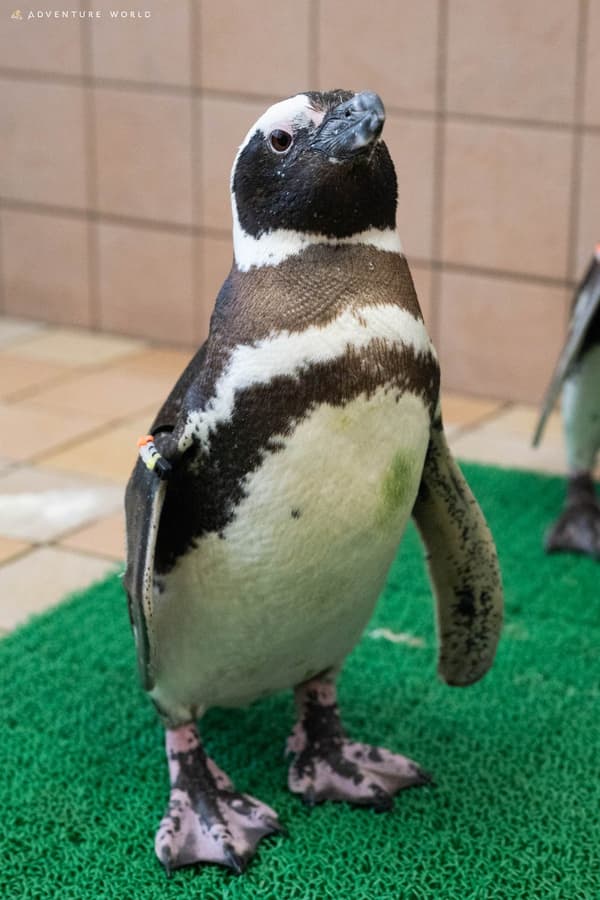
- Classification: Order Sphenisciformes, Family Spheniscidae
- Scientific Name: Spheniscus magellanicus
- English Name: Magellanic Penguin
- IUCN Red List Status: Near Threatened (NT)
- Habitat: Coasts of Argentina and Chile, South America
- Diet: Mackerel (fed at Adventure World)
- Lifespan: 10–20 years in the wild; 25–30 years in captivity
- Body Length: Approx. 65–75 cm
- Body Weight: Approx. 4–5 kg
- Characteristics: Distinguished by two black stripes across the chest and white feathers that frame the face from above the eyes around the neck. Facial and chest markings differ between individuals. The name comes from explorer Ferdinand Magellan, who discovered the strait connecting the Pacific and Atlantic Oceans.
NT (Near Threatened): Not currently at high risk of extinction, but may move to "threatened" status if habitat conditions change.
About the Humboldt Penguin
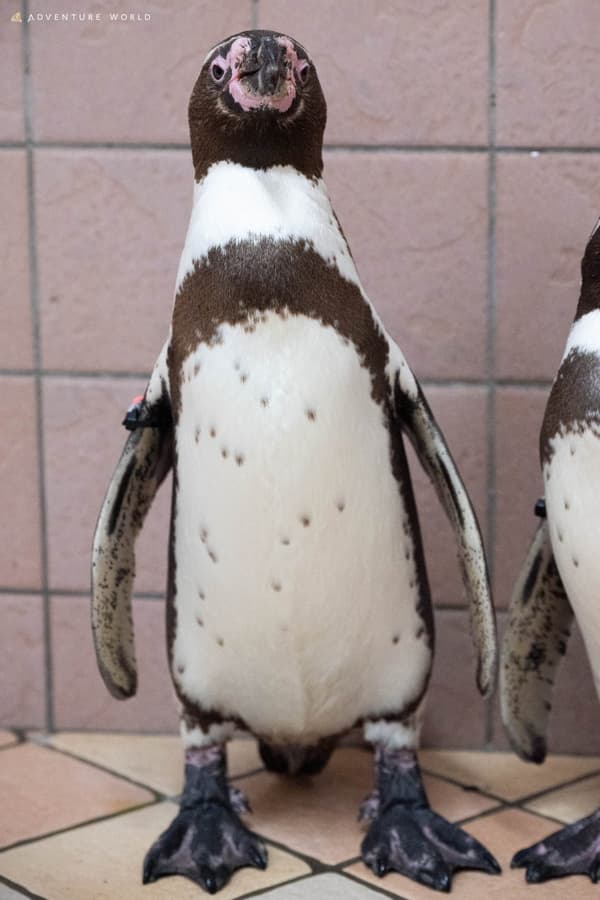
- Classification: Order Sphenisciformes, Family Spheniscidae
- Scientific Name: Spheniscus humboldti
- English Name: Humboldt Penguin
- IUCN Red List Status: Vulnerable (VU)
- Habitat: Coasts of Peru and Chile, South America
- Diet: Mackerel (fed at Adventure World)
- Lifespan: Approx. 20 years in the wild; 25–30 years in captivity
- Body Length: Approx. 55–70 cm
- Body Weight: Approx. 3–5 kg
- Characteristics: Unlike Magellanic and Cape Penguins, the Humboldt Penguin has a broad area of exposed pink skin at the base of its upper bill. It is also one of the most commonly kept penguin species in Japanese zoos and aquariums. Adventure World originally kept Humboldt Penguins when the park opened in 1978 and has resumed keeping the species in 2026.
VU (Vulnerable): A species facing an increased risk of extinction.
Penguins at Adventure World
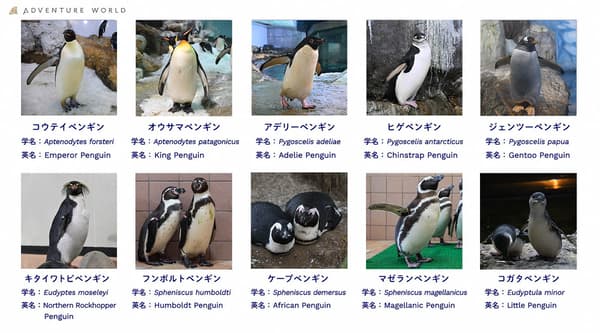
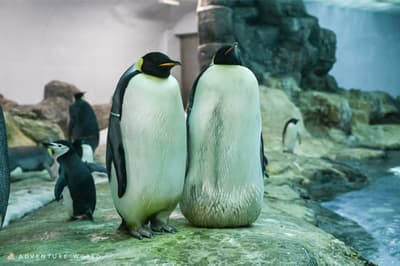
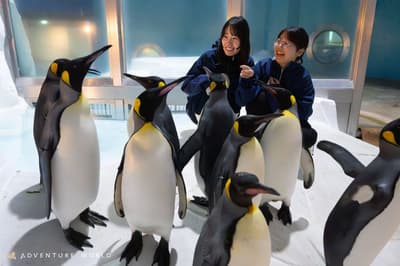
Adventure World is now home to a remarkable range of penguin species: Emperor Penguins that breed in sub-zero conditions, King Penguins and Gentoo Penguins from subantarctic regions, and temperate penguins native to the coasts of southern Africa and South America. Observing penguins that have evolved across such diverse environments in one place is a rare opportunity on a global scale. Many penguin species are also affected by climate change, shifting marine environments, and declining fish stocks, and are listed on the IUCN Red List.
Through dedicated habitat design and active breeding programs, Adventure World has communicated the natural appeal and ecology of each species. Encounters with 10 distinctive penguin species invite visitors to deepen their interest in biodiversity and marine conservation, and to think about the future of the planet.
"38°C MIRACLE Project": Naming 19 Emperor Penguins

The Emperor Penguin was classified as an endangered species in April 2026. Adventure World, which holds Japan's leading captive breeding record for the species, has launched the "38°C MIRACLE Project" — an initiative encouraging reflection on the future of the planet through the lives of Emperor Penguins.
As the project's first step, the park began accepting name submissions for all 19 Emperor Penguins living at the park starting Monday, June 1, 2026. Staff have long identified each bird by an individual number; layering names suggested by guests onto these identifiers aims to spread awareness of the value of life to the world.
For details on how to submit a name, visit the special website.