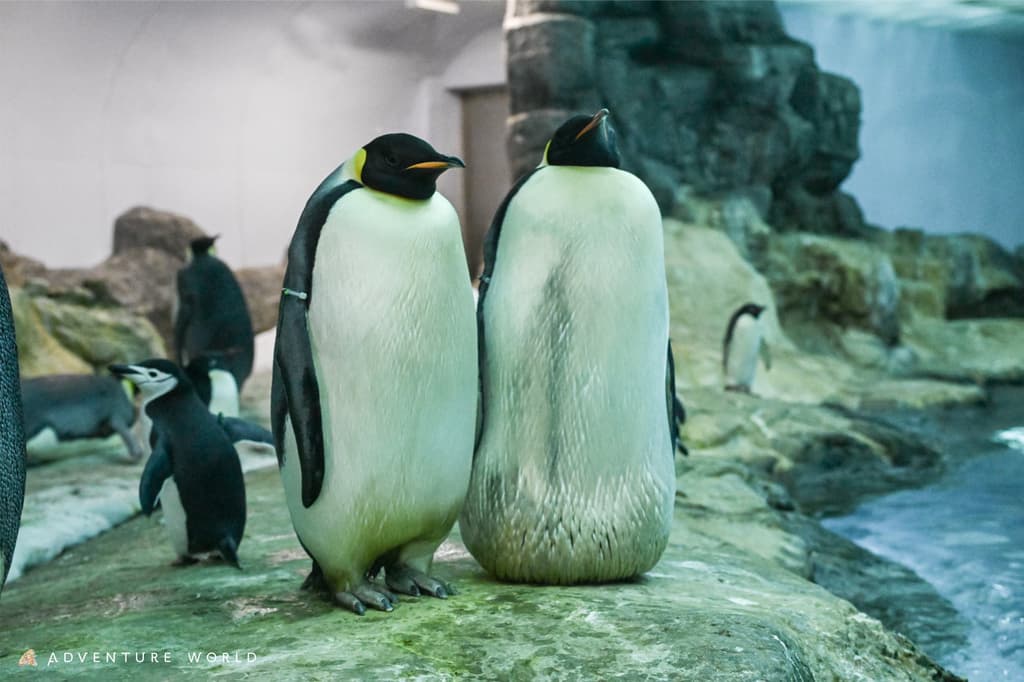
Adventure World (Shirahama, Wakayama) — Japan's only park* where visitors can encounter 10 penguin species among a total of 470 birds — has confirmed the season's first Emperor Penguin egg. The egg was laid by the pair whose previous chick, "E044," marked the park's first successful hatch in four years last season: male E005 and female E014. Alongside this, the park continues its artificial insemination research aimed at maintaining the species' genetic diversity and carrying life on to future generations, and has already begun a new attempt this season. As of August 4, 2026, five eggs have been confirmed in total, including those from other pairs.
Just as Emperor Penguins protect their lives in extreme cold by forming huddles, Adventure World has launched the "38°C MIRACLE Project" this season, carrying the belief that protecting the future of penguins is connected to protecting the future of people, animals, nature, and the planet as a whole. Emperor Penguins are listed as an endangered species and are kept in captivity in only three countries worldwide — the United States, China, and Japan — making their breeding an extremely difficult challenge globally. The park has continued working to establish breeding techniques, but the path to new life is never smooth. While hoping for a safe hatching, the park shares an update on this season's egg-laying and its ongoing artificial insemination efforts.
*As of August 4, 2026, among facilities belonging to the Japan Association of Zoos and Aquariums (JAZA).
Key Points
- The "E005 / E014" pair — parents of last year's chick "E044" — laid the season's first egg. If future testing confirms it to be fertile, it is expected to hatch around the end of September if all goes well.
- Building on last year's achievement of confirming the world's first fertile egg (per the park's own research) through artificial insemination, the park is carrying out artificial insemination again this season (E007 / E004).
- Five eggs have been confirmed so far this season. Laying dates: July 23, July 28, July 29, July 30, and August 4.
- Breeding Emperor Penguins is extremely difficult, and the park's overall fertile-egg rate is only about 28%. Despite this challenging reality, the park continues working to improve its techniques.
Facing a Difficult Reality: The Long History of Breeding Research and the Challenges of Breeding Emperor Penguins
Adventure World began Emperor Penguin breeding research in 1997, and in 2004 achieved Japan's first successful hatching — only the second facility in the world to do so. In the early years, staff hand-reared chicks in place of their parents through "full artificial rearing." Aiming for chicks to be raised naturally by their own parents, the park then advanced its technique to "early-stage artificial rearing," in which hatched chicks are returned to their parent birds, and in 2013 achieved parent-led feeding for the first time. Through this ongoing research and experience, the park has carried many lives forward, including last year's (2025) chick — the 16th born at the park to date.
However, Emperor Penguins require highly advanced breeding techniques, and the probability that a laid egg successfully hatches is never high. Even with the park's years of accumulated experience, only about 28% of laid eggs turn out to be fertile, and of those fertile eggs, only about 74% go on to hatch successfully. Laying an egg does not guarantee a hatching — arrested development (when a fertilized egg stops dividing before becoming a chick) or an unfertilized egg are always possibilities. Rather than looking away from this difficult reality, the park is pouring its years of accumulated husbandry expertise into maximizing the chances of every possible life.
About This Season's First Egg
- Laying date: Thursday, July 23, 2026
- Pair: Male E005, Female E014
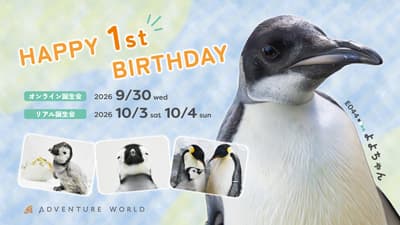
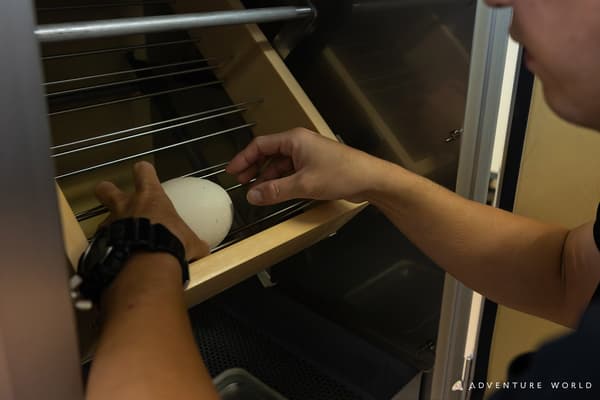
Last year (2025), this pair produced Adventure World's first successful hatch in four years, chick "E044." They have now laid their first egg of this season. The egg has been taken from the parent birds and is being carefully kept warm in an incubator, under close watch ahead of future testing to confirm whether it is fertile.
Continuing the Challenge of Artificial Insemination for Species Preservation
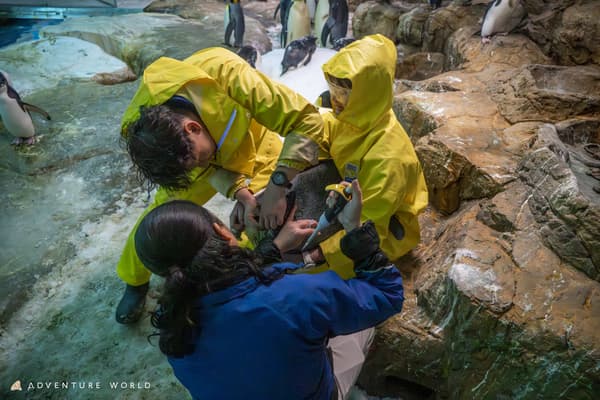
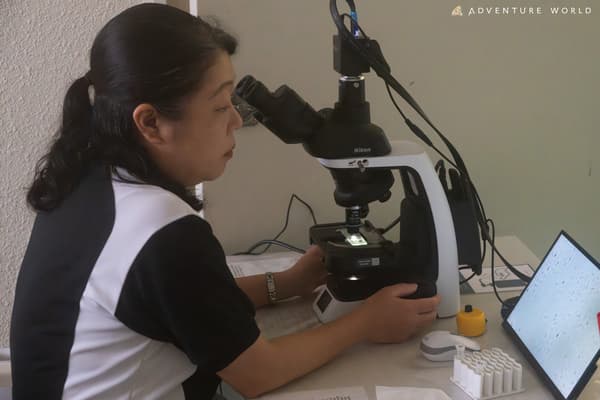
Beyond supporting natural breeding, Adventure World has been pursuing an artificial insemination project since 2024 as part of its breeding research to maintain genetic diversity in captivity. Last year (2025), the park confirmed the world's first (per the park's own research) fertile egg produced through artificial insemination. Unfortunately, an abnormality in the eggshell caused development to stop partway through, but it still marked a major step forward globally. This season, the park has already collected sperm from male E007 and injected it into female E004 as part of continued artificial insemination efforts. Semen is injected multiple times, timed to the predicted egg-laying period, to give the best possible chance of fertilization. Research is still ongoing into the optimal injection volume and timing, and the park will continue to carefully monitor how things progress. Throughout the season, the park will keep the penguins' condition as its top priority while continuing its challenge of semen collection and artificial insemination.
Help Nurture Life With Your Ideas and Skills: Call for Penguin-Mask Makers
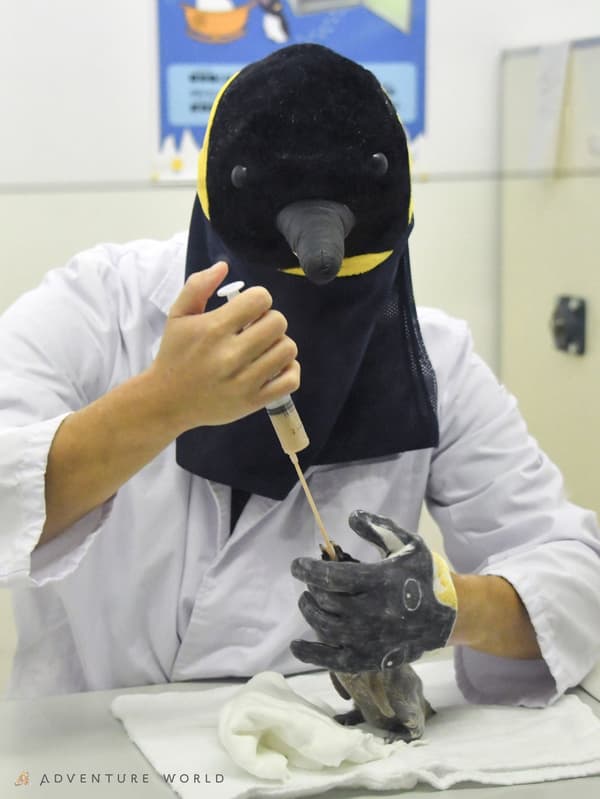
When natural hatching or parent-led rearing is difficult, Adventure World staff hand-rear chicks in their parents' place through "early-stage artificial rearing." To prevent chicks from imprinting on humans as their parents, staff wear masks made to resemble a penguin's appearance while feeding the chicks.
Until now, these masks have been handmade by staff, but issues have come up — limited visibility, poor ventilation making them harsh to wear, and a need for a more realistic texture. As a new step toward the "38°C MIRACLE Project's" goal of protecting life as a whole society, the park is now calling for makers to create penguin masks. Whether you're skilled at sculpting or sewing, know of cool, breathable materials, or have ideas for a more usable structure, the park invites you to put your expertise and ideas to work in the field of animal welfare and conservation. The call is open to professionals and amateurs, individuals and companies alike. The park looks forward to warm support and participation in raising future life together.
Application details will be announced at a later date.