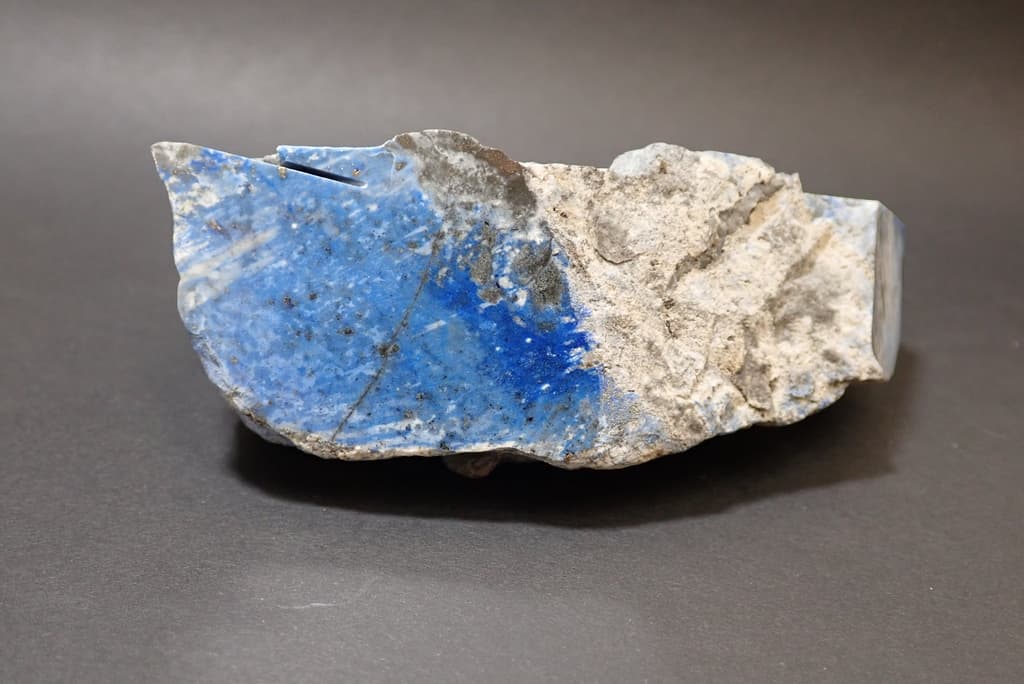
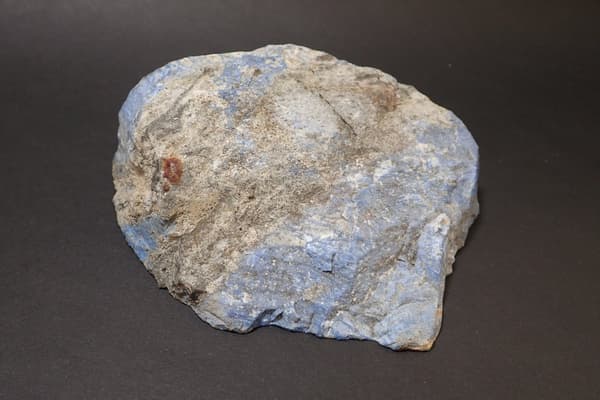
Researchers at the National Museum of Nature and Science, led by honorary researcher Satoshi Matsubara, have identified blue stones found in a tributary of the Himekawa River in Itoigawa, Niigata Prefecture, as lapis lazuli. This is the first confirmed occurrence of domestically produced lapis lazuli in Japan — a groundbreaking find for both mineralogy and the history of gemstones.
Lapis lazuli is a blue-to-indigo gemstone with a history spanning more than 7,000 years, yet its known sources worldwide have been extremely limited. Historically, gem-quality lapis lazuli has come almost exclusively from northeastern Afghanistan. The specimens found in ancient Middle Eastern, Chinese, Greek, and Roman ruins — as well as those held in Japan's Shōsōin imperial treasure repository — are all believed to be of Afghan origin. Until now, no domestic Japanese source had ever been confirmed.
Found Among Locally Collected Stones
The Itoigawa lapis lazuli specimens were discovered within a collection of rocks — mainly jadeite — gathered over many years as a hobby by two local residents. After both collectors passed away, their stones were acquired by Kotaki Bussan (representative: Kanako Ito), a company dealing in jadeite and similar materials. Noticing some blue stones in the collection, the company submitted them to the National Museum of Nature and Science. Chemical composition analysis and X-ray diffraction confirmed the stones to be lapis lazuli.
Distinct Mineral Composition
The blue-forming minerals were identified as haüyne in two samples and sodalite in one sample. While the well-known Afghan lapis lazuli is also primarily composed of haüyne, the Itoigawa specimens show unusual accompanying minerals not previously reported in any foreign lapis lazuli.
The haüyne is associated with wollastonite and grossular garnet, suggesting the rocks underwent contact metasomatic metamorphism (skarn-type). The sodalite specimen contains minerals unknown from foreign occurrences, including gonnardite, AlO(OH) minerals (likely diaspore), and siderophyllite (a type of biotite). These characteristics suggest the Itoigawa lapis lazuli originated as blocks within a serpentinite mélange — a geological setting similar to that of the jadeite found in Himekawa riverbeds and along the local coastline. Full research results are scheduled to be presented at the Mineralogical Society of Japan annual meeting in September.
Possibly Overlooked for Years
Small pebbles resembling lapis lazuli had previously been collected from Itoigawa's coastline, but they were assumed to have been scattered during a local stone-picking event that used foreign-origin stones, and the specimens received no detailed study. It has since been confirmed that only jadeite pebbles were distributed at that event, suggesting the coastal lapis lazuli — much like jadeite — was carried downstream from inland rivers.
Riverbeds and beaches in the area also contain other blue stones with a similar appearance, long known as dumortierite, whose mineralogical properties were recently published at the Mineralogical Society of Japan (Shirase et al., 2025). Because of this resemblance, it is possible that lapis lazuli specimens are mixed in among existing dumortierite collections held by individuals.
A similar situation has occurred before: the new mineral "Itoigawa-ite" was long mistaken for blue jadeite before being identified as an entirely different mineral (Miyajima et al., 1999). Once that identification was made, many Itoigawa-ite specimens came to light. A comparable wave of rediscovery may now unfold for lapis lazuli.
Research Team
National Museum of Nature and Science: Tsunaichi Momma, Satoshi Matsubara, Akiko Tokumoto, Yoko Kusaba
Research Collaborators: Kanako Ito, Hiroki Ito, Hiroyuki Imai, Norimasa Shimobayashi
Additional Notes
- Jadeite was once similarly thought not to occur within Japan, with all jade artifacts from Japanese archaeological sites believed to have arrived from the continent. Following its rediscovery in the Himekawa basin in the early Shōwa period, jadeite from Itoigawa was confirmed as the source for such artifacts found across Japan, and large quantities were also found to have been exported to the Korean Peninsula.
- Kanako Ito, who provided the specimens for this discovery, was also involved in identifying the new minerals "Itoigawa-ite," "Rengaite," and "Matsubaraite" within jadeite, and is a co-author on their original descriptions.
- The largest specimen among the finds — approximately 20 cm in diameter — is believed to have been collected from the upper riverbed of a Himekawa tributary. The exact location is still under investigation. In autumn of last year, Hiroki Ito (Kanako Ito's eldest son) and local volunteers conducted two surveys in the area around the presumed collection site, but significant changes to the riverbed from snowmelt and flooding meant no target specimens could be confirmed. Further on-site surveys are planned.