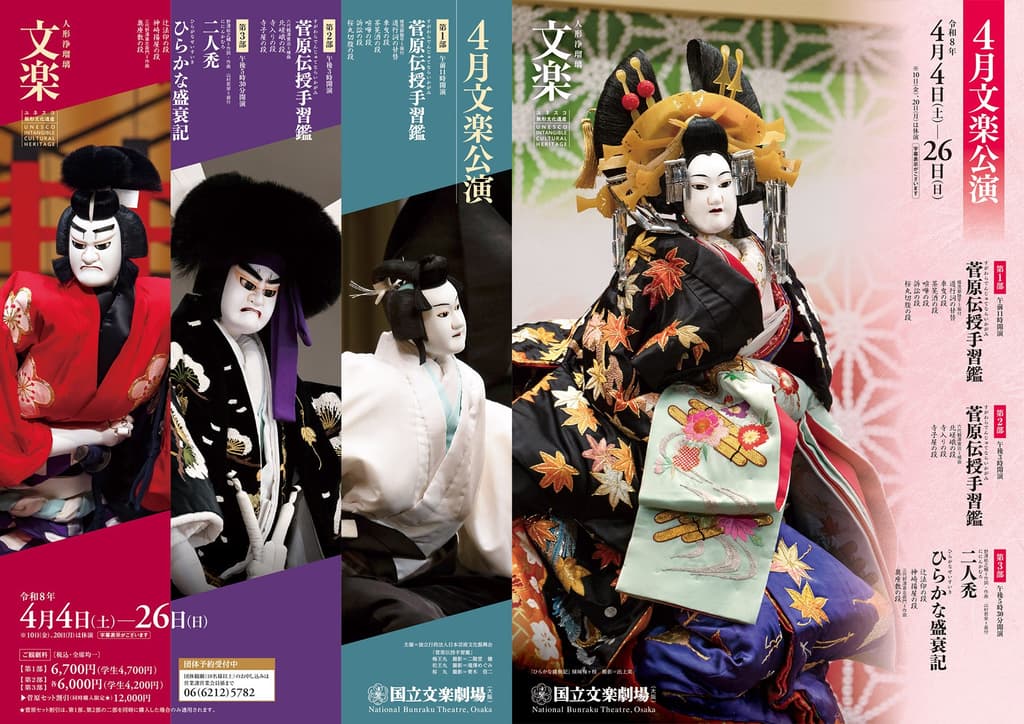
The April Bunraku performance is now underway at the National Bunraku Theatre, having opened on April 4. Performances run through Sunday, April 26.
Parts 1 and 2 present Sugawara Denju Tenarai Kagami (Sugawara and the Secrets of Calligraphy), one of the three great masterpieces of ningyo joruri puppet theater, celebrating the 280th anniversary of its premiere. The story weaves the tragic tale of Sugawara no Michizane — revered as the "God of Learning" — who is exiled to Dazaifu through the scheming of his rival Fujiwara no Tokihira, with the struggles of the triplets Umeoumaru, Matsuomaru, and Sakuramaru, sons of the loyal Shirokudayu, torn between duty and family bonds. Part 3 features Futari Kamuro, a charming and vibrant dance piece, and Act Four of Hiragana Seisuiki, a large-scale historical work drawn from the Genpei War.
Part 1: Sugawara Denju Tenarai Kagami
(Michiyuki Kotoba no Amagatae, Kuruma Biki no Dan, Chasen Zake no Dan, Kenka no Dan, Sosho no Dan, Sakuramaru Seppuku no Dan)
Sugawara Denju Tenarai Kagami depicts the political scheming of Fujiwara no Tokihira that leads to the exile of Sugawara no Michizane (referred to in the play as Kan Shojo), along with the plight of Shirokudayu's triplets — Umeoumaru, Matsuomaru, and Sakuramaru — as they are caught between loyalty to their lords and their bonds as brothers.
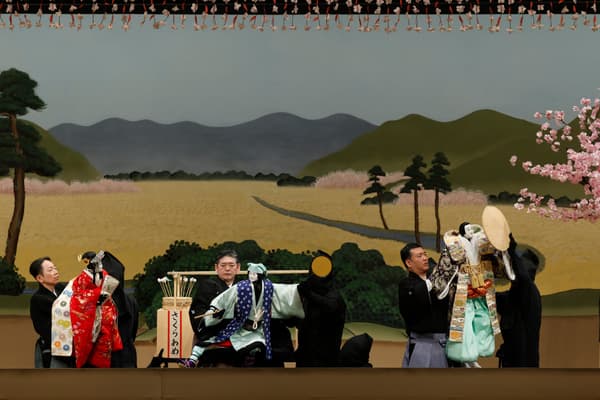
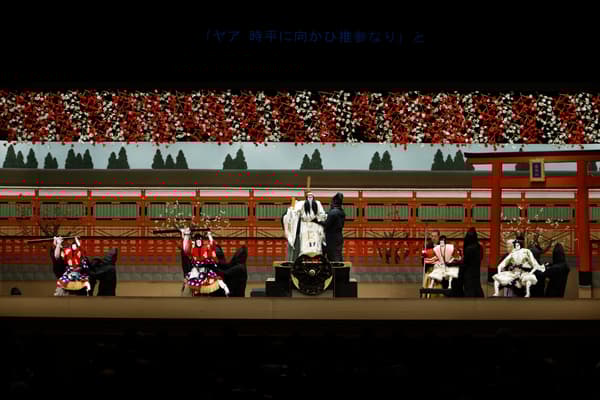
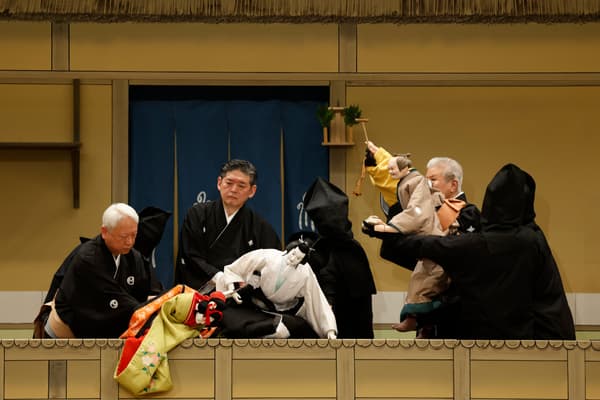
Part 1 opens with "Michiyuki Kotoba no Amagatae" — making its National Bunraku Theatre premiere — in which Sakuramaru, the youngest triplet, disguises himself as a candy seller and escorts Prince Tokiyo (the Emperor's younger brother) and Kan Shojo's adopted daughter Kariya-hime on their journey to Haji no Sato. Their forbidden romance is the root cause of suspicion falling on Kan Shojo, a burden that weighs heavily on Sakuramaru and sets him on a tragic path.
With their lords gone, Umeoumaru and Sakuramaru find themselves masterless, while Matsuomaru has entered the service of their enemy Fujiwara no Tokihira. When the brothers gather to celebrate their father's seventieth birthday, old grievances erupt into a quarrel, and Matsuomaru declares his break from the family — though his true feelings remain hidden.
What fate awaits the parents and their three sons as they are swept up in political strife?
Part 2: Sugawara Denju Tenarai Kagami
(Kita Saga no Dan, Terairi no Dan, Terakoya no Dan)
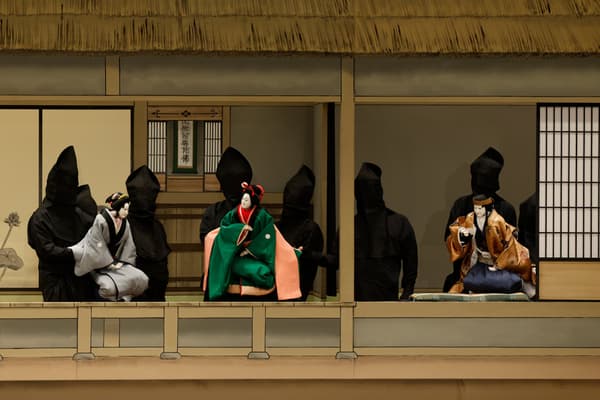
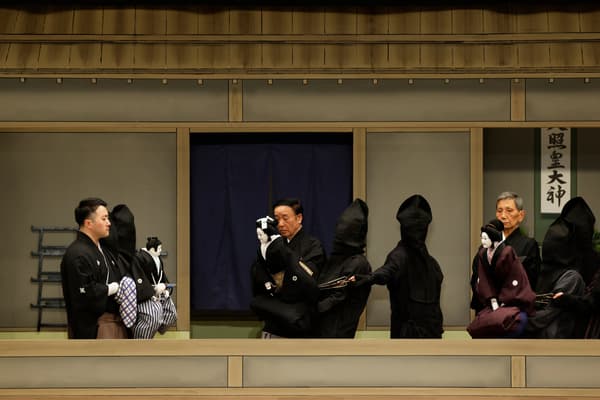
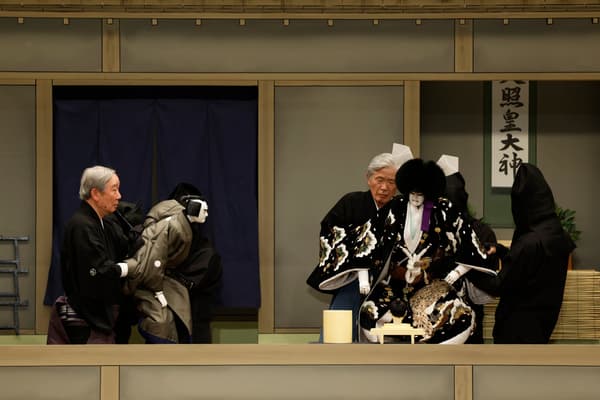
Part 2 begins with "Kita Saga no Dan" — also making its National Bunraku Theatre debut — set at the secluded hermitage in Kita Saga where Kan Shojo's wife is in hiding. Even here, Tokihira's men close in; Sakuramaru's wife Yae is killed and the mistress is taken away. This scene serves as a crucial prelude to the often-staged "Terakoya no Dan," enriching audiences' understanding of the sorrow and emotion that follow.
In "Terakoya no Dan," Kan Shojo's disciple Takebe Genzo is sheltering Kan Shojo's son, the young Kan Shusai, in his village school. Desperate to protect him, Genzo presents a newly enrolled pupil named Kotaro as a stand-in. Then Matsuomaru arrives to conduct an inspection...
After a breathless moment of suspense, the truth behind his actions is revealed — building to a deeply moving climax.
Part 3: Futari Kamuro and Hiragana Seisuiki
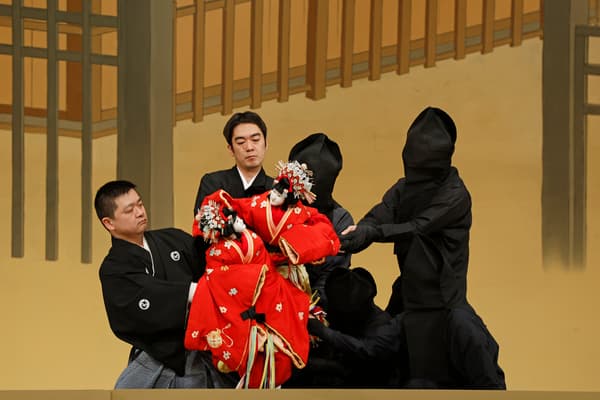
Futari Kamuro is a dance piece set in the pleasure quarter of Shimabara in Kyoto. Two young kamuro — apprentice girls dressed in colorful kimono — play shuttlecock and handball, singing about the hardships of their lives in the quarter. As they lose themselves in the warmth of spring, their spirits seem to lift. The piece captures the innocent yet bittersweet quality of these girls against the vibrant backdrop of the pleasure district.
A kamuro (禿) is a young girl who serves and attends to a high-ranking courtesan, learning manners and the arts in preparation for her own future in the quarter.
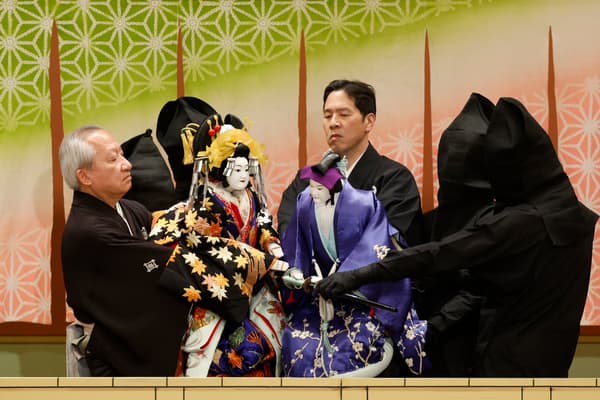
Hiragana Seisuiki takes its title from the concept of rendering the Genpei Seisuiki in plain hiragana — making the tale of the Genpei War accessible to all. Set between Yoshitsune's campaign against Kiso Yoshinaka and the Battle of Ichi-no-Tani, the work dramatizes the loyalty of Higuchi Jiro Kanemitsu and the love story between Kajiwara Genta Kagemasa and his attendant Chidori (later the courtesan Umegae). This performance presents Act Four, centered on Umegae's unwavering devotion to Genta, who was disgraced after losing the race to cross the Uji River.
Cast out by his family after the defeat, Genta fled with Chidori to Settsu Province. He went into hiding at the home of Tsuji Hoin in Kashima no Sato, while Chidori became a courtesan at a nearby establishment in Kanzaki, taking the name Umegae.
At the busy Chinenoya establishment in Kanzaki, Umegae frantically tries to raise money to reclaim Genta's pawned armor — the key to rejoining Yoshitsune's forces. Driven to desperation, she prays for a miracle without fear of the consequences, and one does arrive — though it brings new tension to their relationship. When the secret behind the miracle is revealed, Genta dons his armor and rides off to battle with a plum branch tucked into his quiver.
Performance Details
April Bunraku Performance (National Bunraku Theatre)
Program and Performance Times
Part 1 — 11:00 AM (ends approx. 2:20 PM)
Sugawara Denju Tenarai Kagami
- Michiyuki Kotoba no Amagatae
- Kuruma Biki no Dan
- Chasen Zake no Dan
- Kenka no Dan
- Sosho no Dan
- Sakuramaru Seppuku no Dan
Part 2 — 3:00 PM (ends approx. 5:00 PM)
Sugawara Denju Tenarai Kagami
- Kita Saga no Dan
- Terairi no Dan
- Terakoya no Dan
Part 3 — 5:30 PM (ends approx. 8:05 PM)
Futari Kamuro
Hiragana Seisuiki
- Tsuji Hoin no Dan
- Kanzaki Ageyano Dan
- Oku Zashiki no Dan
Tickets (uniform pricing, tax included)
| Part | General | Student |
|---|---|---|
| Part 1 | ¥6,700 | ¥4,700 |
| Part 2 | ¥6,000 | ¥4,200 |
| Part 3 | ¥6,000 | ¥4,200 |
Sugawara Set Discount (Parts 1 & 2 purchased together): ¥12,000
Persons with disabilities and one accompanying caregiver receive a 20% discount (cannot be combined with other discounts). Student and disability discounts are available for online purchases as well.
Subtitle services are available during performances. A commentary booklet (including a full libretto, ¥700) and a simultaneous commentary earphone guide (¥800 rental) are also offered, making the performances accessible even for first-time Bunraku audiences.
Ticket Reservations
National Theatre Ticket Center
- Phone reservations (10:00 AM – 6:00 PM): 0570-07-9900 / 03-3230-3000 (some IP phones)
- Online reservations: https://ticket.ntj.jac.go.jp/
For full performance details: https://www.ntj.jac.go.jp/schedule/bunraku/2026/2026bunraku04/