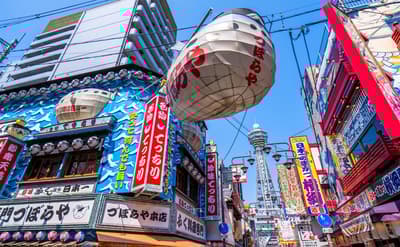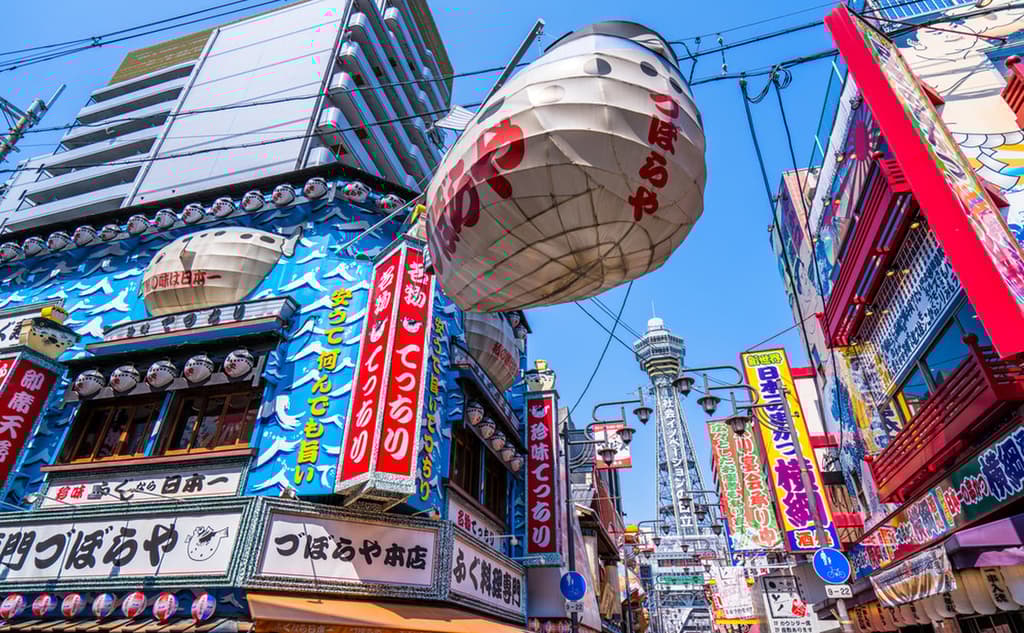
Osaka rewards you for staying longer than a day. Three days covers the main neighborhoods and their signature foods. Four or five days opens up Universal Studios Japan, a day trip to Nara, and quieter spots most visitors skip. This itinerary is built around walking routes that make geographic sense, so you spend less time on trains and more time eating takoyaki.
Before You Go — Getting Around Osaka
Osaka's subway system is easy to navigate. The Midosuji Line (red) is the main artery, running from Shin-Osaka south through Umeda, Shinsaibashi, Namba, and Tennoji. Most of the places in this itinerary are within a short walk of a Midosuji Line station.
The Osaka Amazing Pass
If you plan to visit multiple paid attractions, the Osaka Amazing Pass is worth considering. The 1-day pass costs JPY 3,500 and the 2-day pass costs JPY 5,000. Both include unlimited subway and bus rides plus free entry to around 40 attractions, including Osaka Castle, Umeda Sky Building, Tsutenkaku Tower, the Tombori River Cruise, and HEP Five Ferris Wheel.
The pass is QR-code only (the physical card was discontinued in 2024). You can buy it online and activate it on your first use. If you hit three or four paid attractions in a day, the pass pays for itself.
Where to Stay
Namba and Osaka Station (Umeda) are the two most convenient bases. Namba puts you within walking distance of Dotonbori, Shinsaibashi, and the Nankai Line to Kansai Airport. Umeda is better if you plan to take day trips via JR lines, since Osaka Station connects to Kyoto, Nara, and Kobe without transfers.
Day 1 — Osaka Castle, Tenma, and Dotonbori
Start on the east side of the city and work your way south toward Namba by evening.
Morning: Osaka Castle and Nishinomaru Garden
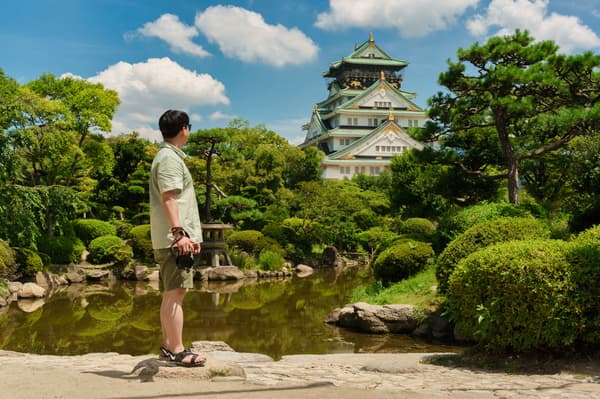
Take the Tanimachi Line or Chuo Line to Tanimachi 4-chome Station or Morinomiya Station. The walk from either station to the castle takes about 15 minutes through the park grounds.
The main tower houses a museum on Toyotomi Hideyoshi and Osaka's history. The 8th-floor observation deck gives you a wide view over the park and surrounding neighborhoods. Admission is JPY 1,200 for adults and JPY 600 for high school and university students. Junior high school students and younger enter free. Hours are 9:00 to 17:00 (last entry 16:30), with extended hours during spring cherry blossom season and summer.
If the weather is good, walk through Nishinomaru Garden on the west side of the castle grounds. Entry costs JPY 200 and you get an unobstructed angle of the castle with the city skyline behind it. In late March and early April, the garden's 300 cherry trees are in full bloom and lit up at night.
Allow about two hours for the castle and garden combined.
Lunch: Tenma and Nakazakicho
From Osaka Castle, take the JR Loop Line one stop to Temma Station, or walk north for about 20 minutes.
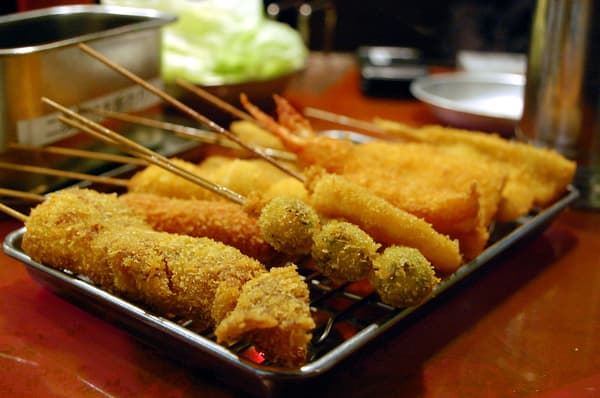
Tenjinbashisuji Shopping Street is Japan's longest covered shopping arcade, stretching 2.6 km from north to south. You don't need to walk the whole thing. The southern section near Temma Station has small restaurants and food stalls where you can grab lunch. Try kushikatsu (deep-fried skewers) at one of the standing counters, or pick up some gyoza at a local shop.
If you have time after lunch, detour one station west to Nakazakicho. This quiet backstreet neighborhood is full of renovated townhouses turned into coffee shops, secondhand bookstores, and small galleries. It takes about 30 minutes to wander through and makes for a good contrast to the busier areas you'll visit later.
Afternoon and Evening: Dotonbori and Namba
Take the subway south to Namba Station (Midosuji Line, about 15 minutes from Temma).
Walk east along the Dotonbori canal. The stretch between Ebisu Bridge and Nipponbashi Bridge is where all the famous signage is, including the Glico Running Man billboard. At night the neon reflections on the canal water are worth seeing, but the afternoon is also a good time to explore before the crowds peak.
For takoyaki, head to Creo-Ru near Dotonbori Bridge. They've been making takoyaki since the 1970s and are one of the original shops in the area. For okonomiyaki, Mizuno on Dotonborisuji has a counter where cooks prepare it in front of you. Go on a weekday or arrive right when they open to avoid the worst of the lines.
Duck south into Hozenji Yokocho, a narrow cobblestone alley with a moss-covered Fudo Myoo statue and small bars. The atmosphere here is completely different from the neon strip one block north.
For a broader overview of what to do in the area, check out our full guide:
Day 2 — Kuromon Market, Shinsekai, and Abeno Harukas
Today you'll explore the southern half of the city, moving from east to west.
Morning: Kuromon Market
Take the subway to Nippombashi Station (Sakaisuji Line or Sennichimae Line). Kuromon Market is a 2-minute walk from Exit 10.
The market opens around 9:00 and most stalls close by 16:00 to 18:00. Arrive before 11:00 to beat the midday rush, which peaks between 12:00 and 13:30. This is a good place for a seafood breakfast or early lunch. Fresh sashimi, grilled scallops, sea urchin, and Kobe beef skewers are all available to eat on the spot. Many stalls accept credit cards, but bring some cash as backup.
Don't spend more than an hour here. The market is a single covered street and you can see everything in one pass if you're focused.
Midday: Shinsekai and Tsutenkaku Tower
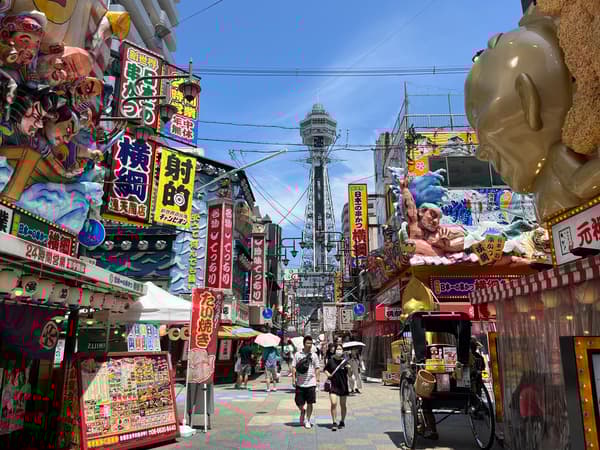
Walk south from Kuromon Market for about 15 minutes, or take the subway one stop from Nippombashi to Ebisucho Station (Sakaisuji Line).
Shinsekai feels like a different era. The neighborhood was modeled on New York and Paris when it was built in 1912, but decades of development elsewhere left it frozen in a retro time warp. The neon signs, the Billiken statues, and the smell of frying kushikatsu give it an atmosphere you won't find anywhere else in Japan.
Kushikatsu is the thing to eat here. Daruma is the most famous chain, with its angry mascot and the sign reminding you never to double-dip. Tengu offers solid kushikatsu plus dote-yaki (beef tendons simmered in miso). For a sit-down meal with more space, try Irori.
Tsutenkaku Tower is a 10-minute walk from Ebisucho Station. The general observation deck costs JPY 900 for adults, JPY 400 for children. Hours are 10:00 to 20:00 (last entry 19:30). An extra JPY 300 gets you access to the top-floor Tenbo Paradise deck. The views aren't as high as Abeno Harukas, but the retro tower itself is the main draw.
Our detailed Shinsekai guide covers the neighborhood in depth:
Afternoon: Abeno Harukas
Walk west from Shinsekai for about 10 minutes to reach Tennoji Station, directly connected to the Abeno Harukas building.
At 300 meters, Abeno Harukas is the tallest skyscraper in Japan outside of Tokyo. The Harukas 300 observation deck spans floors 58 to 60 and gives you a 360-degree view that reaches as far as Kobe, the Akashi Kaikyo Bridge, and Awaji Island on clear days. Admission costs JPY 2,000 for adults, JPY 1,200 for ages 12 to 17, and JPY 700 for ages 6 to 11. Hours are 9:00 to 22:00 (last entry 21:30).
The 16th floor has a free garden terrace if you want to take in the view without paying for the observation deck. Kintetsu Department Store occupies the lower floors, with a food hall in the basement worth browsing.
Evening: Tennoji Area or Return to Namba
If you still have energy, Tennoji Park (next to the Harukas building) has the Osaka City Museum of Fine Arts and Keitakuen Garden. Or head back to Namba for dinner. The Ura-Namba area (the backstreets south of Namba Station) has smaller, local-oriented restaurants that are less touristy than Dotonbori.
For a proper izakaya experience in Osaka, have a look at our picks:
Day 3 — Umeda, Nakanoshima, and Sumiyoshi Taisha
The third day covers Osaka's northern business district and a historic shrine in the south.
Morning: Umeda Sky Building
Take the subway to Umeda Station (Midosuji Line) and walk northwest for about 10 minutes. The building is across from Osaka Station, past a small canal.
The Kuchu Teien Observatory connects the twin towers on the 39th, 40th, and rooftop floors. The open-air rooftop at 173 meters gives you a full 360-degree view. Admission is JPY 1,300 for adults, JPY 800 for junior high to university students. Hours are 9:30 to 22:30 (last entry 22:00). The sunset views here are particularly good.
The Takimi-Koji alley at the basement level recreates a 1920s-era Osaka street with ramen, okonomiyaki, and other food shops. It's a decent lunch option if you're visiting in the morning.
Midday: Nakanoshima
Walk south from Umeda Sky Building for about 15 minutes to reach Nakanoshima, a narrow island between the Dojima and Tosabori rivers.
The National Museum of Art, Osaka (NMAO) is here, housed in an underground building designed by Cesar Pelli. If contemporary art interests you, this is worth a visit. The Nakanoshima waterfront also has the Osaka City Central Public Hall, a red-brick Neoclassical building from 1918 that is free to admire from outside.
Afternoon: Sumiyoshi Taisha
Take the Midosuji Line south from Umeda to Tengachaya, then transfer to the Hankai Tramway (Osaka's last remaining streetcar line). Ride the tram to Sumiyoshitorii-mae Station, about 15 minutes. Alternatively, take the Nankai Main Line to Sumiyoshitaisha Station and walk 3 minutes.
Sumiyoshi Taisha is one of Japan's oldest shrines, dating back to the 3rd century. Unlike most Shinto shrines that use the Chinese-influenced curved roofline, Sumiyoshi Taisha keeps the straight-line sumiyoshi-zukuri style, which predates the introduction of Buddhist architecture. The arched Taikobashi bridge at the entrance is the most photographed spot.
The shrine grounds are open 6:00 to 17:00 (April to September) or 6:30 to 17:00 (October to March). Entry is free.
The tram ride itself is part of the experience. The Hankai Tramway runs vintage streetcars through residential neighborhoods, giving you a different perspective from the subway.
Evening: Shinsaibashi and Amerikamura
Head back to the Shinsaibashi area for evening shopping and dinner. Shinsaibashi-suji is a covered shopping street running from Shinsaibashi Station south to Namba. Amerikamura (American Village) sits one block west and caters to a younger crowd with vintage clothing shops, record stores, and casual restaurants.
Day 4 — Universal Studios Japan (Optional)
If you have a fourth day, dedicate it to Universal Studios Japan. A full day at USJ can't really be split with other activities.
Getting There
Take the JR Yumesaki Line from Nishikujo Station (transfer from the JR Loop Line) to Universal City Station. The ride from Osaka Station takes about 15 minutes total.
What to Know
USJ uses dynamic ticket pricing, so prices change based on the date. Standard 1-day Studio Passes typically start from around JPY 8,600 for adults and go higher on peak days. Check the official website (usjticketing.com) for the exact price on your travel dates.
Park hours vary by season, usually opening between 8:30 and 9:30 and closing between 19:00 and 21:00. USJ often opens 30 to 60 minutes earlier than the posted time on busy days.
Key Areas
Super Nintendo World is the marquee attraction. The Mario Kart ride uses AR goggles to blend physical sets with digital effects. Wait times regularly hit 60 to 90 minutes, so arrive early or use an Express Pass.
The Wizarding World of Harry Potter is worth visiting even if you're not a fan of the films. The recreation of Hogsmeade village and Hogwarts Castle is detailed, and the Forbidden Journey ride inside the castle is one of the best dark rides in any theme park.
Other popular zones include Minion Park, Jurassic Park, and the seasonal events (Halloween Horror Nights in autumn, Christmas events in winter).
Tips
- Buy tickets online in advance. The park regularly sells out on weekends and holidays.
- Express Passes cost extra but save significant wait time. They're especially useful for Super Nintendo World and Harry Potter.
- Eat lunch before 11:30 or after 14:00 to avoid long restaurant queues inside the park.
After a full day at the park, the Osaka Bay and USJ area has plenty of places to unwind with a drink:
Day 5 — Day Trip to Nara (Optional)
If you have a fifth day and haven't visited Nara from Kyoto, it's an easy trip from Osaka.
Getting There
Take the Kintetsu Nara Line from Osaka-Namba Station to Kintetsu Nara Station. The express takes about 40 minutes and costs JPY 680. JR also runs trains from Osaka Station to JR Nara Station (about 50 minutes, JPY 820).
What to See
Nara Park is a 5-minute walk from Kintetsu Nara Station. Over 1,000 free-roaming deer live in the park, and you can buy deer crackers (shika-senbei, JPY 200 per pack) to feed them.
Todai-ji Temple houses a 15-meter bronze Buddha statue in the world's largest wooden building. Admission is JPY 600 for adults. Hours are 7:30 to 17:30 (April to October) or 8:00 to 17:00 (November to March).
Kasuga Taisha, Nara's most famous shrine, is a 20-minute walk east through the park. The path lined with stone lanterns is especially atmospheric. Entry to the main grounds is free, but the inner sanctuary costs JPY 500.
You can cover the main Nara sights in half a day and be back in Osaka by early afternoon, leaving time for any Osaka spots you missed earlier in the trip.
Practical Tips for Your Osaka Trip
Best Time to Visit
Spring (late March through May) and autumn (October and November) have the most comfortable weather. Cherry blossom season peaks in late March to early April. Summer (June to August) is hot and humid with a rainy season in June. Winter (December to February) is mild compared to Tokyo but still cold enough for a proper jacket.
Budget Tips
- Eat at standing restaurants and food stalls. A full meal of kushikatsu or okonomiyaki costs JPY 800 to 1,500 at most casual spots.
- Use the Osaka Amazing Pass if you plan to visit more than two or three paid attractions.
- Convenience stores (konbini) like Lawson, FamilyMart, and 7-Eleven serve surprisingly good onigiri, sandwiches, and hot foods for under JPY 500.
- The Kansai Thru Pass (JPY 4,480 for 2 days) covers subways, private railways, and buses across Osaka, Kyoto, Kobe, and Nara. Useful if you plan multiple day trips.
Food You Shouldn't Miss
- Takoyaki — Octopus balls cooked in a rounded mold. Crispy outside, gooey inside.
- Okonomiyaki — Savory pancakes loaded with cabbage, pork, and topped with sauce, mayo, and bonito flakes.
- Kushikatsu — Deep-fried skewers of meat, seafood, and vegetables. Remember the rule: no double-dipping in the communal sauce.
- Kitsune udon — Thick wheat noodles in a sweet dashi broth with seasoned fried tofu. Osaka's version is sweeter than what you'll find elsewhere in Japan.
- 551 Horai nikuman — Pork buns from the Osaka-born chain. Available at shops across the city and at the airport for a last-minute souvenir.
For more on Osaka's street food scene, see our dedicated guide:
Getting to Osaka
- Kansai International Airport (KIX): Nankai Railway Rapi:t express to Namba (34 minutes, JPY 1,450). JR Haruka express to Shin-Osaka or Tennoji (around 50 minutes, JPY 1,800 to 2,500 depending on seat type).
- From Tokyo: Shinkansen Nozomi to Shin-Osaka (2 hours 30 minutes, around JPY 14,720). Covered by the Japan Rail Pass if you have one (Hikari service only).
- From Kyoto: JR Special Rapid to Osaka Station (29 minutes, JPY 580). Hankyu Railway to Umeda (43 minutes, JPY 410).