Rakushoin (茶寮 楽書院), a tearoom overlooking a Japanese garden in Amagasaki City, Hyogo Prefecture, will hold "Rakushoin Juni no Kei" (楽書院 十二の景), a special series of 12 seminars that explores the world of tea at a relaxed pace, once a month. The series begins on Wednesday, October 28, 2026.
Each session takes up one theme as a "kei" (景) and teaches the appeal of tea while participants experience its aromas and flavors firsthand. The focus throughout all 12 sessions is "tea and food pairing," and participants widen their ways of enjoying tea by combining it with Rakushoin's sweets. While looking out over the Japanese garden, participants enjoy aroma, flavor, and food pairings, in a session designed as a first step into the world of tea.
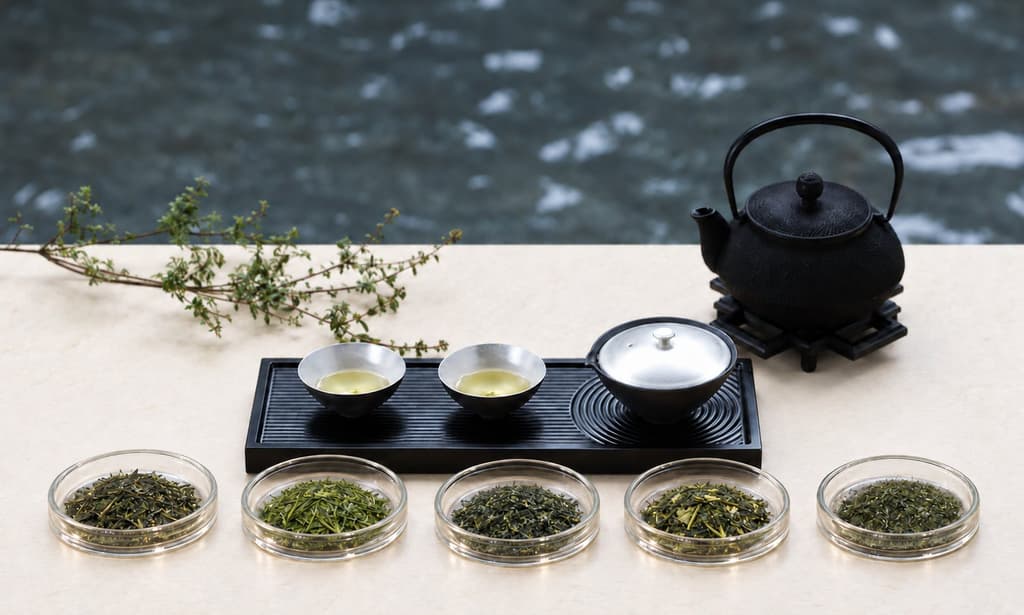
Participants compare different teas and experience the differences in aroma and flavor with all five senses.
Why Rakushoin Is Opening a Place for Learning
The word "shoin" (書院) in the shop's name has changed meaning over time. It has referred to a relaxing living room, a study for learning, and a room for receiving guests.
Until now, Rakushoin has been a place to relax while looking out over the garden and to welcome guests with a seasonal atmosphere. "Juni no Kei" opens another side of the shop, the "study for learning." Because the tearoom brews tea from tea leaves every day and serves it with sweets, it can share ways of enjoying a cup of tea, one theme at a time, every month.
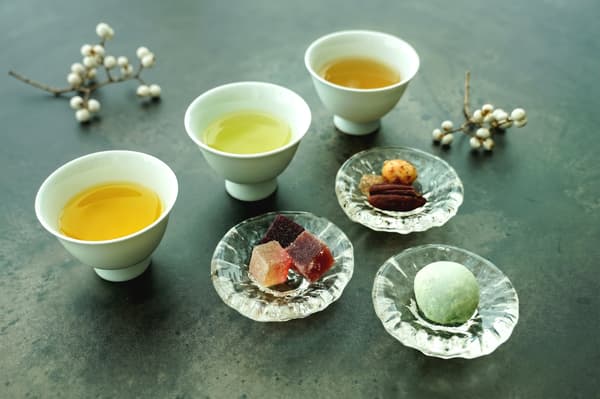
A variety of tea sweets are prepared for pairing, including a sablé with a faint Japanese fragrance.
Session 1: "A Door to the Teas of the World" (世界のお茶への扉)
The first session is a pairing experience in which participants discover, with their five senses rather than through knowledge, the differences that arise from the same tea leaves.
Green tea, oolong tea, and black tea differ in color, aroma, and flavor, yet all of them come from the same tea plant (チャノキ). So why do they turn out so different? The first session starts with a classroom lecture (座学) on the basics of the tea plant, the classification of tea, differences in production methods, and the main tea-producing regions of the world. Participants then compare six types of tea, namely white tea, yellow tea, green tea, oolong tea (青茶), black tea, and dark tea (黒茶), and check the differences with their five senses.
Changing the tea alone can also change how sweet the sweets taste, make a fragrance rise up, or leave a completely different aftertaste. What matters is not "which is the right one" but finding out "this is the one I like." The session is a time to find your own sense of taste rather than memorize answers as knowledge.
About the Lecturer
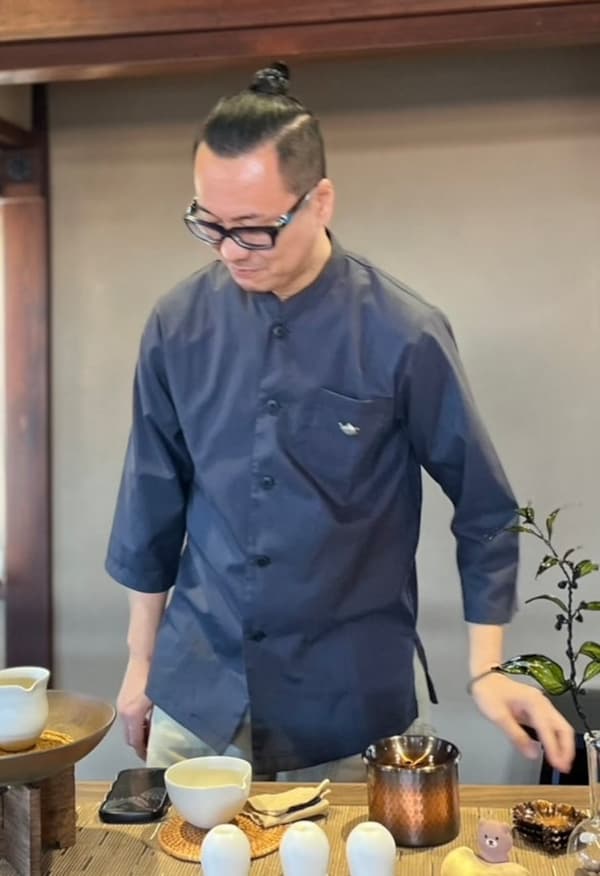
Lecturer: 茶ばっしー, representative of お茶活推進委員会 [CHABACHY]
The lecturer is 茶ばっしー, representative of お茶活推進委員会 [CHABACHY].
Under the motto "Refined Tea Life!", the lecturer is based in Hyogo Prefecture and continues to share ways of enjoying tea. Starting from the 2018 Japanese black tea festival (和紅茶の祭典), the lecturer has organized TEA KOBE, a tea festival in Kobe, since 2023. It has grown into an event that connects producers and tea merchants from across Japan with tea lovers and offers tastings of more than 60 types of tea. From 2026, TEA KOBE is held twice a year, in spring and summer and in autumn and winter. The lecturer also organizes many other events for enjoying tea in daily life, such as 神戸北野音楽茶会, and is also involved in selecting tea leaves for Rakushoin.
The content is suitable both for those who want to start learning about tea and for those who already enjoy tea regularly. Each session can be attended on its own.
Session 1 Details
- Event name: 楽書院「十二の景」第一景「世界のお茶への扉」(Rakushoin "Juni no Kei," Session 1, "A Door to the Teas of the World")
- Date and time: Wednesday, October 28, 2026, 10:30 AM to 12:00 PM. Held on the shop's regular closing day, with the venue reserved exclusively for the seminar.
- Venue: Rakushoin (茶寮 楽書院), 3-3-16 Santanda-cho (三反田町), Amagasaki City, Hyogo Prefecture
- Fee: ¥3,500 per person (tax included). Includes a tasting of six teas, tea sweets, and a souvenir.
- Capacity: 12 people. If fewer than 5 people sign up, the event will be postponed.
- Program:
- Lecture: What is the tea plant, the six major tea categories, differences by production method, the main tea-producing regions of the world, and the basic classification of tea
- Hands-on: Expressing aroma, tasting, and tasting with pairings
- How to apply: Please use the reservation form: https://chabachy.official.ec/items/153435531
The 12 Sessions: A Year of Tea
Over the course of a year, participants travel through one "view" a month. Joining only the sessions that interest you is also welcome.
2026
- October: Session 1 (第一景) "A Door to the Teas of the World" (世界のお茶への扉). Learning the differences in aroma / what defines tea
- November: Session 2 (第二景) "Why Are Tea Leaves So Delicious?" (茶葉はなぜ美味しい?). The secrets of umami and aroma / the components and benefits of tea
- December: Session 3 (第三景) "Tea Magic: The Secret of Fermentation" (Tea Magic 発酵の秘密). Following changing aromas / tea production methods and classification
2027
- January: Session 4 (第四景) "A Journey Through Japanese Tea" (日本茶を旅する). Savoring the aroma of green / characteristics of tea by domestic growing region
- February: Session 5 (第五景) "Getting to Know Blended Tea" (ブレンドティーを知る). Combinations of aromas / what blending (合組) means and finding your own preference
- March: Session 6 (第六景) "A World Black Tea Tour" (世界の紅茶ツアー). The distinct aromas of each growing region / tea culture and history around the world
- April: Session 7 (第七景) "From the Tea Field to the Cup" (茶畑からカップへ). Aromas nurtured by the land / varieties and terroir (with producers invited)
- May: Session 8 (第八景) "Brew Lab: The Science of Brewing" (Brew Lab 淹れ方の科学). The science of aroma / extraction methods and types of teaware
- June: Session 9 (第九景) "Putting Aroma into Words" (香りを言葉にする). Sensory evaluation and how to express it
- July: Session 10 (第十景) "Pairing Tea on Your Own" (自分でお茶のペアリング). Where the aroma goes / a deeper exploration of combining tea and sweets
- August: Session 11 (第十一景) "Hospitality with Tea" (お茶でおもてなし). Manners and ways of using tea
- September: Session 12 (第十二景) "Using Tea and the SDGs" (お茶の活用とSDGs). Bringing tea into daily life and the cycle of tea
The dates and content of each session may change. Before attending, please check the latest information on Rakushoin's Instagram (@rakushoin).
Taking a Favorite Cup Home
Teas that leave an impression at the seminar can be taken home by purchasing them at the shop's retail corner, whether tea leaves participants liked among those compared on the day or leaves recommended by Rakushoin. The cup that a participant finds "this is the one I like" can then be enjoyed at home, and the teas encountered in "Juni no Kei" can carry over into everyday moments.
About the Name "Rakushoin"
"Shoin" (書院) changed in meaning over time. It originally referred to a monk's private room. From the Muromachi period it came to mean a study that also served as the living room of samurai and court nobles. Later, when shoin-zukuri architecture developed in the Azuchi-Momoyama period, it also came to refer to a tatami room used for receiving guests.
Adding "楽" (raku) conveys a comfortable sense of relaxation in the space. The name was chosen with the image of a room that can be a living room with bedding laid out, a study for work, and a place to receive guests, with all of these functions carried out with ease.
About Rakushoin
Rakushoin is a tearoom surrounded by a spacious Japanese garden and the sound of water, where guests can spend time away from everyday life.
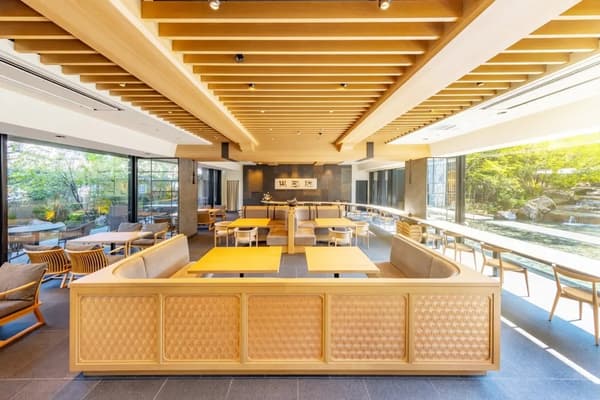
Right after passing through the noren curtain swaying in the wind, the sound of clear flowing water reaches the ears. The Japanese garden, the symbol of Rakushoin, has a gentle "mizuochi" (水落) created by carefully planned differences in height, and its murmuring creates a quiet atmosphere. (A video of the sound of the waterfall is available on Instagram.) Inside the shop, guests can look out at the Japanese garden as if it were framed in a picture, in a quiet setting. The space can be used at leisure, whether for time alone or for conversation with someone close.
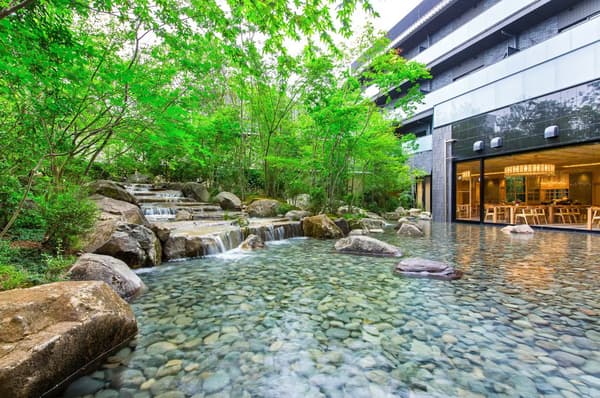
The mizuochi (水落) as seen from inside the shop
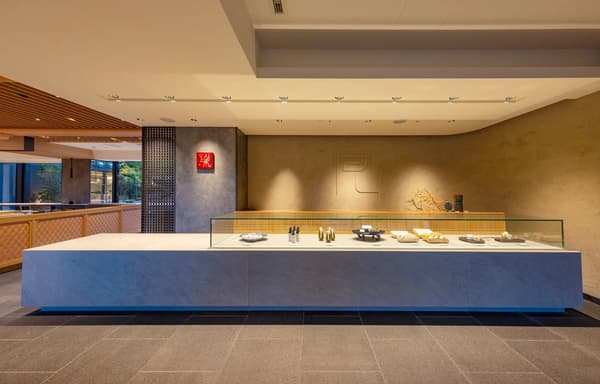
Rakushoin's retail corner, stocked with tea leaves and Japanese sweets
Shop Information
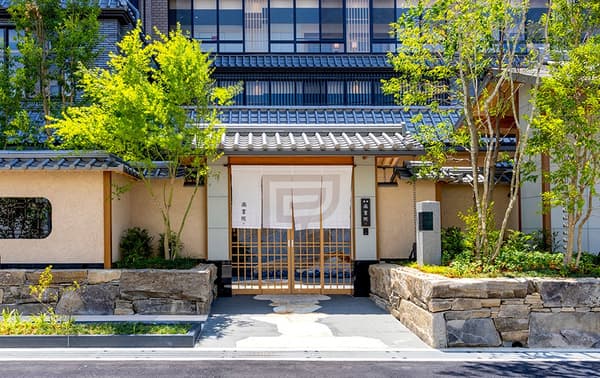
Shop exterior
Rakushoin (茶寮 楽書院)
- Address: 3-3-16 Santanda-cho (三反田町), Amagasaki City, Hyogo Prefecture 661-0024
- Access: 4-minute walk from the Hanshin Bus "Ohama Nishiguchi" (尾浜西口) stop, 16-minute walk from JR Tachibana Station, 13-minute drive from Osaka International Airport. Parking for 30 cars is available.
- Phone: 06-4950-5911
- Hours: 11:00 AM to 6:00 PM (lunch last order 2:00 PM, café last order 5:00 PM). Afternoon tea is served from 2:00 PM (last order 4:00 PM, reservation required).
- Closed: Tuesdays and Wednesdays
- Official website: Rakushoin official website
Rakushoin aims to be a relaxing space for adults and welcomes guests of junior high school age and older.