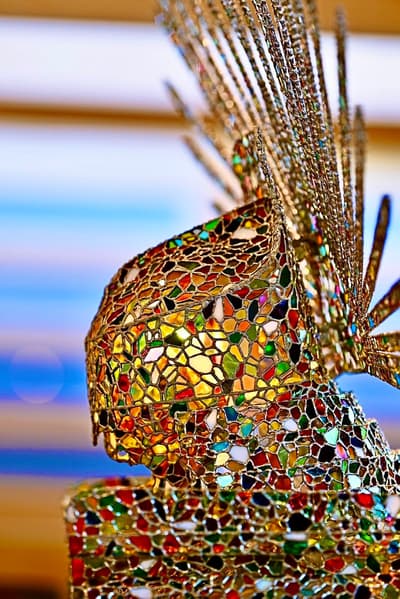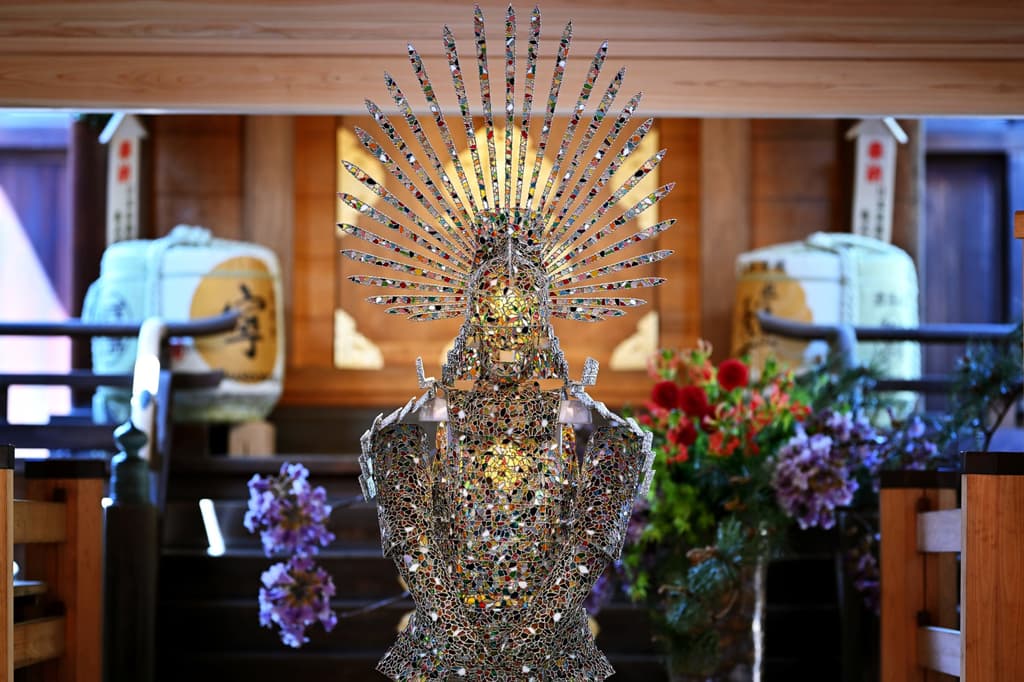
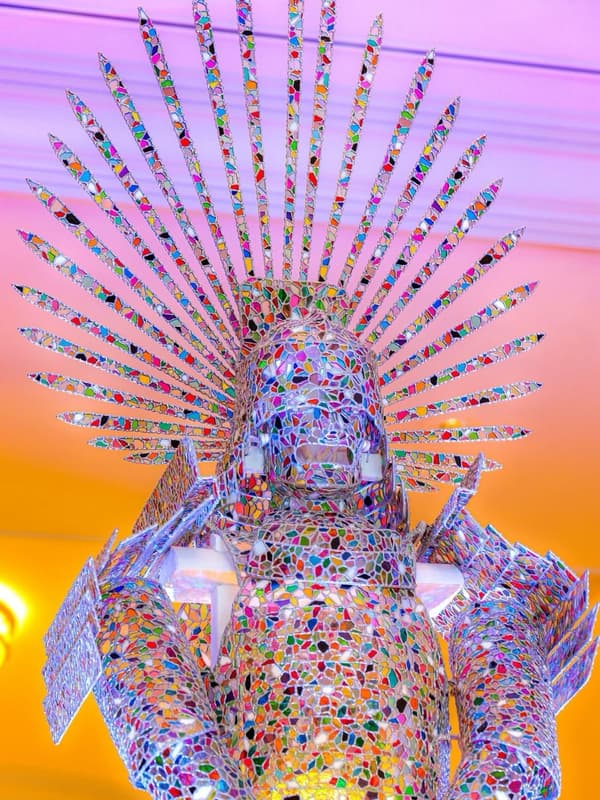
Espacio Nagoya Castle (3-19 Hinokuchi-cho, Nishi-ku, Nagoya, Aichi Prefecture), which holds the concept of becoming "an art museum hotel the world can be proud of," will hold a special exhibition from Sunday, August 30 to Sunday, October 25, 2026, of the stained-glass samurai armor "Toyotomi Hideyoshi," held in the collection of Toyokuni Shrine in Nakamura-ku, Nagoya — an area said to be Hideyoshi's birthplace.
The piece was certified by Guinness World Records™ in April 2025 as the largest armor made of stained glass, and after touring venues in Aichi and Gifu prefectures, it now arrives for special display at Espacio Nagoya Castle. Alongside the art that fills the hotel, it offers a special experience where Nagoya's history and culture intersect with art.
About the Stained-Glass Samurai Armor "Toyotomi Hideyoshi"
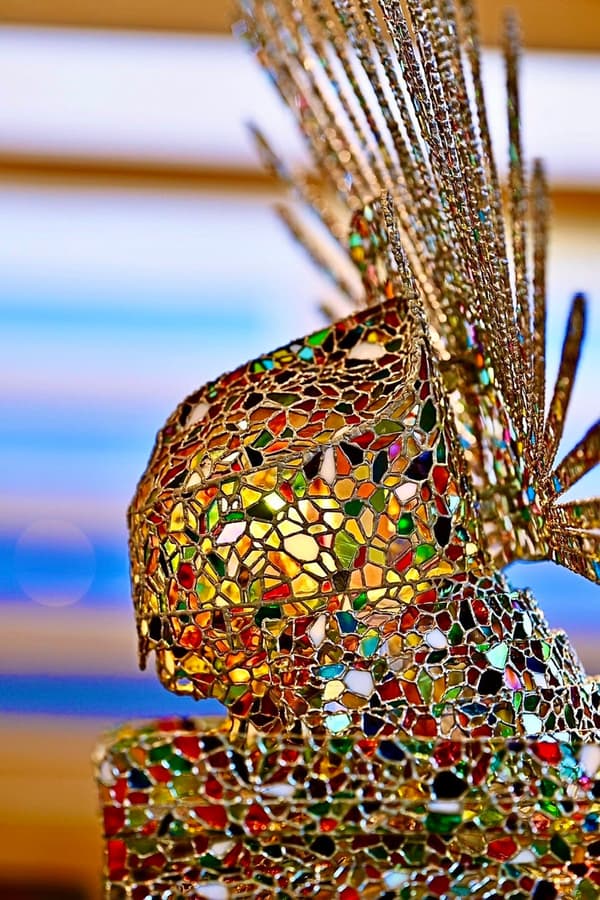
Assembled from roughly 20,000 pieces of glass in 33 colors, meticulously formed into 72 parts using precise techniques, the piece is known for its overwhelming sculptural beauty and is normally not open to the public.
- Held by: Toyokuni Shrine (Nakamura-ku, Nagoya, Aichi Prefecture)
- Creator: Stained-glass artist Yoji Uchiyama
- Size: Height 213 cm x Width 77.4 cm x Depth 60.7 cm
- Weight: Approx. 80 kg
- Record: Certified by Guinness World Records™ in April 2025 as the "largest armor made of stained glass"
Special Exhibition Period and Location
Exhibition Period: Sunday, August 30 to Sunday, October 25, 2026
Exhibition Location: 1st floor, Espacio Nagoya Castle
Anyone may view it freely, including guests staying at the hotel or dining at its restaurant.
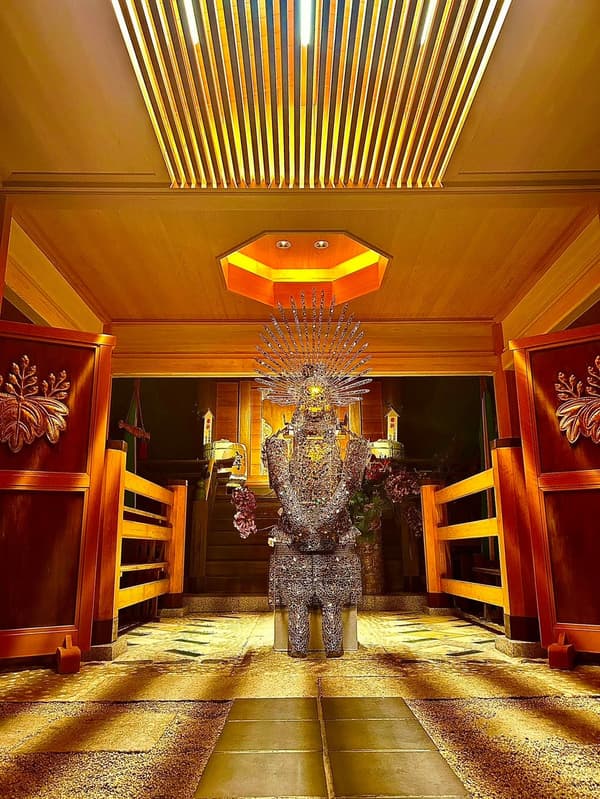
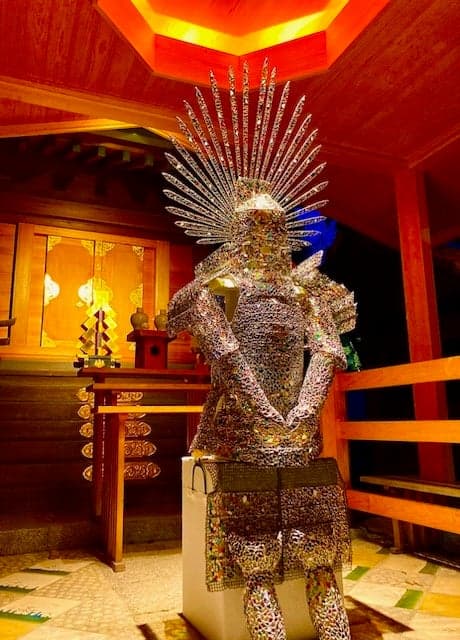
The Story and Highlights Behind the Exhibition
Overlooking Nagoya Castle, Espacio Nagoya Castle offers guests a chance to experience art and culture through the space of a hotel.
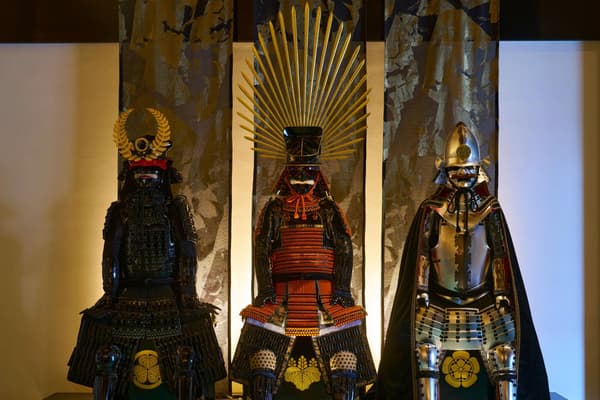
The 1st-floor guest entrance permanently displays armor representing the "Three Great Unifiers" — Oda Nobunaga, Toyotomi Hideyoshi, and Tokugawa Ieyasu — and the stained-glass samurai armor "Toyotomi Hideyoshi" is placed in the elevator hall just beyond it. Through a spatial flow that moves from this weighty historical prologue into contemporary stained-glass art, visitors can experience a distinctive presentation where Nagoya's history and culture meet contemporary art — the kind of experience unique to an "art museum hotel."