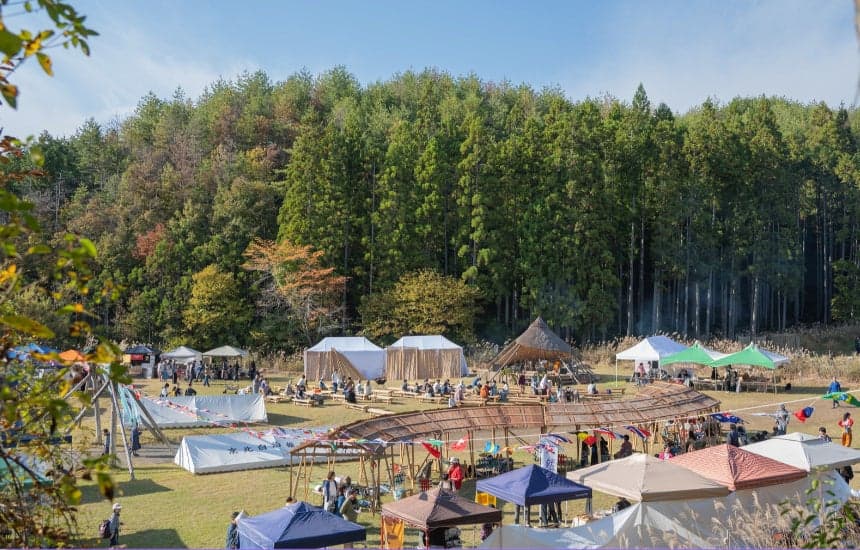
The outdoor event Tsukuru Mori (ツクル森) will be held in Keihoku, Ukyo Ward, Kyoto, over two days on Saturday, November 7 and Sunday, November 8, 2026. The venue is Auru no Harappa (あうるの原っぱ), next to Kyoto Prefectural Seminar House (京都府立ゼミナールハウス).
This year's theme is "Live, Create, Connect" (生きる、ツクル、つなぐ). Through world music, art, crafts and food, the festival offers time in the forest to "create," "enjoy" and "meet." The organizers describe it as an "old yet new festival."
An "Old Yet New Festival"
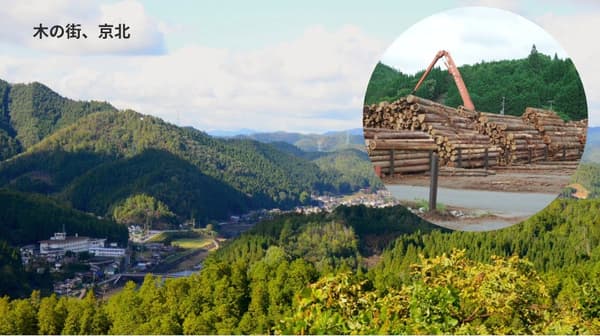
Keihoku has rich nature, with mountain forests and rivers. Along with that nature, the life and culture of the satochi-satoyama (里地里山, rural landscapes of villages and surrounding woodlands) have developed over a long time, including forestry, sweetfish fishing and thatched-roof houses.
Tsukuru Mori values Keihoku's nature and culture while bringing together traditional music, food and craftsmanship from around the world to enjoy in the forest. What has long existed in this land and what has been handed down somewhere else in the world resonate with each other in the Keihoku forest and create a new landscape. Valuing what has been passed down while creating new encounters and new ways of enjoying it is why Tsukuru Mori is called an "old yet new festival."
About Keihoku
Keihoku is a community in the mountains, but the mountains and the city have never been truly separated. In the days of Heian-kyo, trees cut in the Keihoku mountains were carried down the river to the capital and used there. Sweetfish, known as "kenjo-ayu" (献上鮎, tribute sweetfish), were reportedly kept alive in water jars in summer and carried on foot all the way to the Kyoto Imperial Palace. Through the gifts of the mountains and the river and the work of people, Keihoku and the city were connected.
In later times, people who made fortunes in forestry are said to have supported culture such as Nihonga painting and ceramics. It is also said that in the early days of Japanese cinema, Keihoku supplied the timber used for film sets, so the mountain's trees were involved in the new culture of film as well.
Even when transportation was not as good as it is today, people traveled between the mountains and the city, carrying goods and exchanging culture. This is the history of Keihoku. For this reason, the organizers do not think of Keihoku as a "far-off place in the mountains." When the culture nurtured in this land meets music, food and craftsmanship coming from around the world, what has continued since long ago is expected to create new connections once again. Tsukuru Mori is held in Keihoku as a place that connects mountains and city, people and people, past and future.
A New Tsukuru Mori in 2026
This year, the festival has been handed over to a new executive committee chair. While carrying on the festival as it has continued so far, new people and ideas are being added.
- A place where children and families can have fun
- Time to relax the body and mind in the forest
- The fun of working with your hands and making things
- New encounters among people traveling between the city and Keihoku
Under the theme "Live, Create, Connect," a new form of the festival is being shaped while cherishing the Tsukuru Mori of the past.
What to Enjoy at This Year's Tsukuru Mori
A Stage for World Music
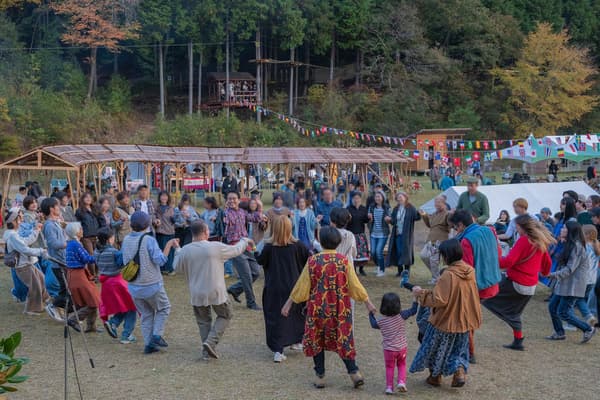
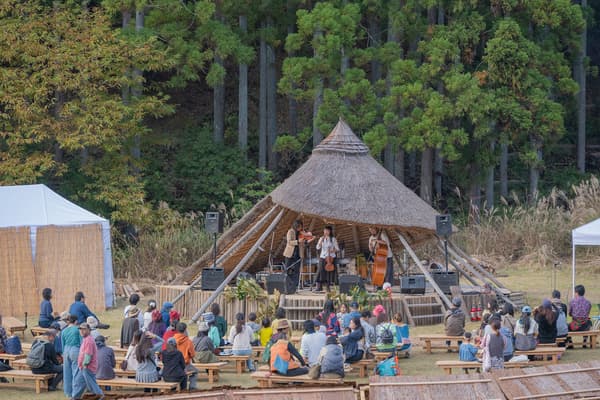
A thatched-roof stage where visitors can directly experience music and dance from around the world is one of the main features of Tsukuru Mori. Artists from Japan and abroad gather to match each year's theme, offering performances of instruments and music rarely heard in daily life, as well as workshops, talk shows and collaborations unique to Tsukuru Mori, on a stage that crosses national borders.
Main stage themes in 2026
- November 7: "From the Far East to the Far West" (東の果てから、西の果てまで)
- November 8: "News from Central Eurasia" (ユーラシア中央からの便り)
Nostalgic Sounds of Japan, "Itonowa" (懐かしき日本の音 "いとのわ")
A female trio centered on Tsugaru shamisen player 梶尾瑞穂 (winner of the General Women's Division at the 2022 Osaka tournament). The trio introduces folk songs from Tsugaru and across Japan, including songs that depict Japan's nature, the four seasons and people's lives, in a stage that can be enjoyed across generations.
Flamenco, "Wind of Seville" (魅惑のフラメンコ "セビージャの風")
Francisco Morales "El Pulga" (フランシスコ・モラレス), a flamenco guitarist born in Seville, Spain, has been active as a professional in Spain and Portugal since the 1980s and has also taught students across Spain since the 1990s. Together with cante (song) and baile (dance), he presents the world of flamenco.
Wind from Kazakhstan (カザフスタンからの風)
Dombra player イナーラ・セリク・パウェヴァ, formerly of the Kazakhstan National Folk Orchestra, and 高橋直己, a researcher of Kazakh music, a first-place winner at a traditional song contest and a jaw harp (口琴) player, perform a number of traditional Kazakh pieces. The program includes a playing technique that has been recognized by UNESCO.
Tsukuru Mori: Travel the World Through Dance! (ツクル森・踊って旅する世界の国々!)
A regular Tsukuru Mori corner for experiencing folk dances from around the world, led by the Keihoku Folk Dance Orchestra (京北フォークダンス楽団, 山國合奏団) and guests. With the "dancing physical therapist" ホーリー as instructor, the corner introduces dances that even first-timers can join right away in a circle.
Eastern European Festival, "Calusari" (東欧の祝祭:カルシャリ)
A young team from the 京都フォークロア歌舞団 (Kyoto Folklore Song and Dance Troupe), which has long worked on "Calusari" (カルシャリ), a Romanian traditional festival dance to ward off evil that is registered as UNESCO intangible cultural heritage, gives a cheerful performance at the front of the main stage.
"Songs, Sounds and Play" (うたおとあそび) (Attraction Area)
An attraction for parents and children that introduces children's songs and play songs from around Japan. A female trio of singing and drums centered on Tsugaru shamisen player 梶尾瑞穂 takes visitors to "nostalgic Japan" through sound play.
"Sounds of Shepherds Resonating Across the Land" (大地に唸る羊飼いの音) (Attraction Area)
Bagpipe player 大野慎矢, who plays bagpipes from Macedonia, Bulgaria, Turkey and other countries, and drummer 永田充 introduce a variety of dance music and folk songs spreading from the Mediterranean to the Balkans, with a dance experience corner. Keihoku-based musicians タロー&洋子 will also join from time to time.
The stage timetable and other details will be updated on the official website.
Art, Crafts and Workshops in the Forest
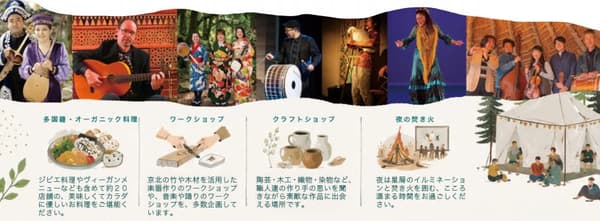
Touching materials and making things with hands and body is one of the pleasures Tsukuru Mori values. The venue offers exhibitions where visitors can see and experience art, craft sales, and workshops for making things. The organizers hope to share the joy of making, feeling the blessings of materials from this land and drawing on knowledge handed down and each person's own ingenuity.
Delicious Food From Keihoku and Beyond
At the food area, colorful multinational dishes made with organic ingredients from around Japan, carefully selected by the vendors, are served. From spicy ethnic food to roasted sweet potatoes and sweetfish that bring out the flavor of the ingredients, game dishes that taste the gifts of the satoyama, and vegan plates, the food crosses genres and borders.
Slow Time in Nature and Activities for Families
Tsukuru Mori is a festival where visitors can spend time as they like in the rich nature, not only enjoying music and crafts. Visitors can listen to the music on stage, find works that catch their eye, eat delicious food, or stroll slowly around the venue while feeling the forest air. For children, it is a chance to touch sounds and materials and make new discoveries through play. Some activities can be enjoyed by parents and children together, so adults and children can both go at their own pace.
Meeting Vendors, Performers, Volunteers and Local People
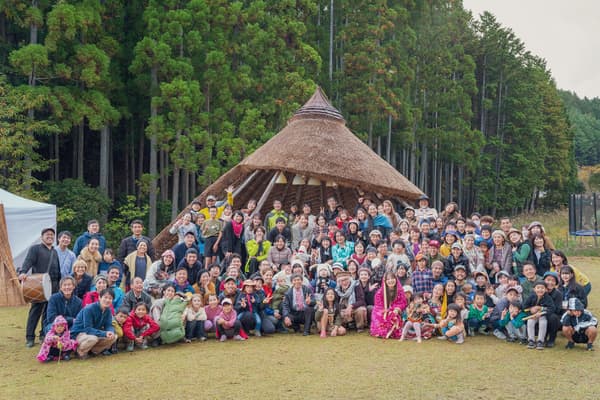
Tsukuru Mori is made not only by the executive committee but also by vendors and artists from all over Japan, volunteers who support the venue, and the people of Keihoku. At the venue, visitors can hear from the makers of the works and food about their commitment, talk with musicians about the background of their performances, and learn about life and culture in Keihoku from local people. Visitors, vendors, performers and supporters are all part of making the event together.
Message From the New Executive Committee Chair

The new executive committee chair, 日野賢一, says that preparations have been carried out carefully since last year's event, and that through them, what Tsukuru Mori has valued so far and what can be grown together with friends from now on have become clear. His thought is "to continue weaving Tsukuru Mori, as before and from now on."
For him, Tsukuru Mori is a special place that led him to move to Keihoku. Over the five years he has been involved, he has seen many encounters and challenges, joys and hardships. He feels that the appeal of Keihoku lies in the people who live there and gather there, and hopes to keep the event open as an opportunity for new connections to be born. He hopes that residents and visitors alike can enjoy themselves fully through their own "creating," and that those times and relationships will build up into a culture in which people think "I want to come again" and "I want to create together again."
Crowdfunding to Support the Event
To support the 2026 event and to keep the festival going, the Tsukuru Mori executive committee is currently running a crowdfunding project on CAMPFIRE. The goal is to gradually increase the number of people who support Tsukuru Mori and to support the festival together with people who share its spirit, rather than relying on a single facility or a few people.
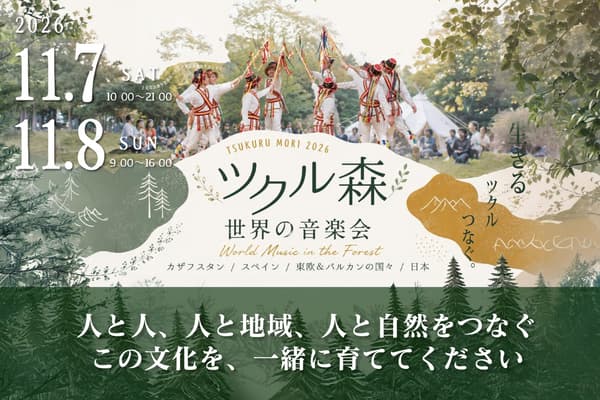
Volunteers who can help at the event are also being recruited.
Event Details
- Event name: Tsukuru Mori 2026 (ツクル森2026, Art, Crafts and World Music Concert)
- Dates and hours:
- Saturday, November 7: 10:00 AM to 9:00 PM
- Sunday, November 8: 9:00 AM to 4:00 PM
- Venue: Auru no Harappa (あうるの原っぱ), next to Kyoto Prefectural Seminar House (京都府立ゼミナールハウス)
- Address: 〒601-0533 京都府京都市右京区京北下中町鳥谷2 (Keihoku Shimonaka-cho, Ukyo Ward, Kyoto)
- Access by car:
- About 80 minutes (40 km) from JR Kyoto Station
- About 60 minutes (35 km) from JR Nijo Station
- About 40 minutes (30 km) from Fukuoji
- About 30 minutes (25 km) from Sonobe IC on the Kyoto Jukan Expressway
- Free parking
- Access by bus: Take the Nishi Nihon JR Bus from JR Kyoto Station to the terminus, Shuzan (周山), which takes about 80 minutes. Pick-up from Shuzan is provided. Please check the shuttle bus schedule in advance.
- Admission:
- Advance tickets: ¥2,000 for a two-day pass, ¥1,500 for a one-day pass
- Tickets sold on the day: ¥2,000 for a one-day pass
- One-day pass for Keihoku and Miyama residents only: ¥500 (please bring proof of address)
- Free for high school students and younger and for those aged 60 and over
- Free for people with disabilities (please bring a disability certificate)
- Ticket sales (Peatix): https://tsukurumori2026.peatix.com/
- Organizer: Tsukuru Mori Executive Committee (ツクル森 実行委員会)
- Official website: https://tsukurumori.com/