Starting Monday, June 29, 2026, the Aqua Museum aquarium at Yokohama Hakkeijima Sea Paradise is presenting a new exhibit that lets visitors observe how the Japanese lumpsucker ("Dango Uo") transforms in appearance as it grows.
The display brings together Japanese lumpsuckers born at the facility at three different growth stages — a few weeks after birth, a few months after birth, and fully grown — so visitors can compare all three side by side at the same time.
The species undergoes a dramatic transformation as it matures. Just after birth, when its body measures only a few millimeters, the fish has an endearing look, with a ring of white lines on its head nicknamed the "angel ring." As it grows, its appearance gradually shifts to resemble that of its parents.
Going forward, the facility plans to keep offering opportunities to learn about the charm and ecology of the Japanese lumpsucker and other creatures, while also carrying out planned breeding efforts as part of the aquarium's role in species conservation.
New Lumpsucker Exhibit
The exhibit is on view at LABO 3, "Animals That Evolved in the Sea," on the first floor of the Aqua Museum, where visitors can observe, at the same time, three Japanese lumpsuckers born at the facility at three different growth stages: a few weeks after birth, a few months after birth, and fully grown.
As noted above, the species changes dramatically as it grows. Just after birth, when it measures only a few millimeters, it has an endearing look with a white, ring-shaped marking on its head known as the "angel ring." As it matures, its appearance gradually comes to resemble that of adult fish.
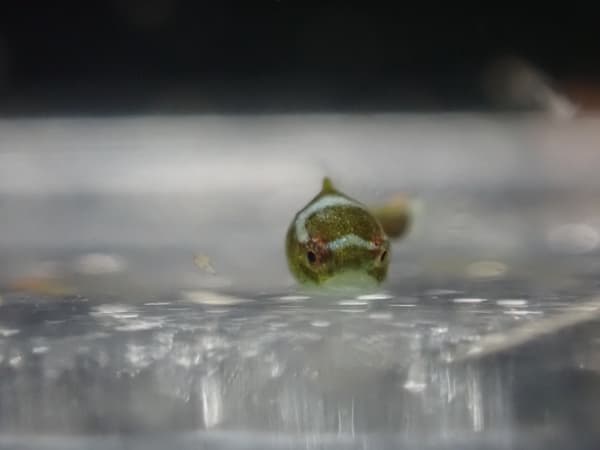
A few weeks after birth
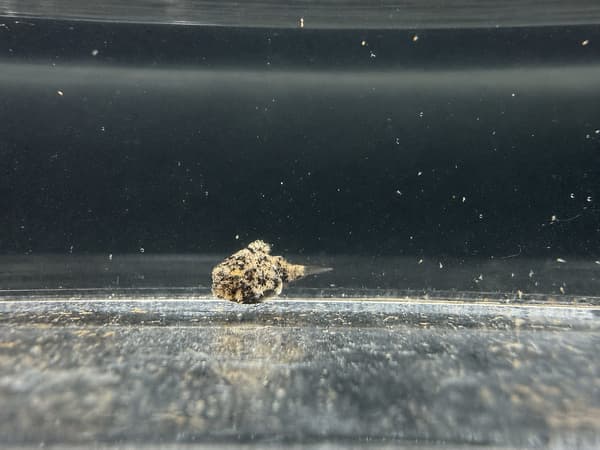
A few months after birth
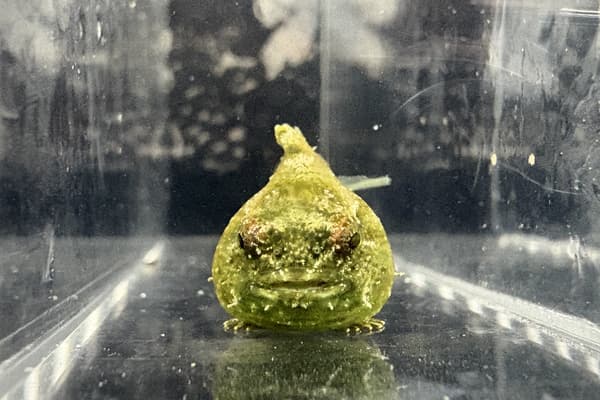
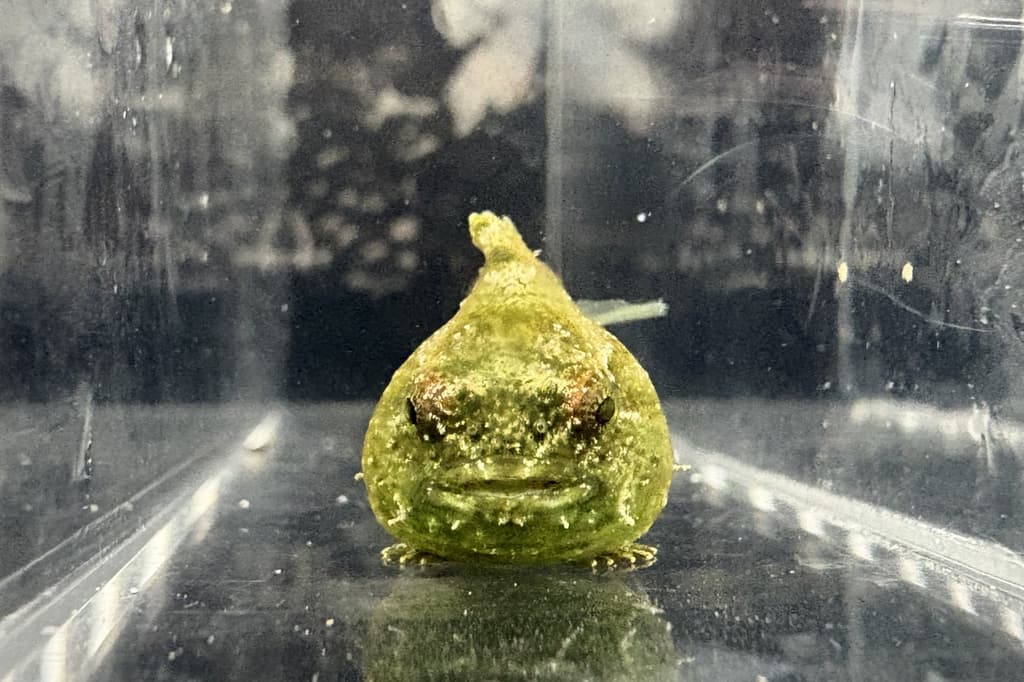
Fully grown
About the Japanese Lumpsucker
The Japanese lumpsucker is a fish in the family Cyclopteridae (order Scorpaeniformes) that lives in shallow rocky reefs and among seaweed along the Japanese coast. It is known for its endearing round body and has a powerful sucker formed from its modified pelvic fins, letting it cling firmly to seaweed and rock surfaces. Its coloring varies by habitat, appearing in shades of red, green, and brown. In winter, it moves into shallow reef waters to breed, and its large eyes and charming shape have made it a favorite among divers and many others.
Breeding at the Facility
As part of the aquarium's role in species conservation, the facility began breeding Japanese lumpsuckers in 2026.
For this species, the male guards the eggs the female lays, and the breeding season begins as water temperatures drop in winter. In the wild, males that have entered the breeding season stake out territory inside barnacles or empty snail shells to attract females. When pairing succeeds, the female lays her eggs inside, and the male continues guarding them until they hatch. In the facility's care, PVC pipes are set up as breeding sites in place of barnacles or shells, securing space for breeding.
The male watches over and tends to the eggs the female lays, and after several weeks to about a month, fry roughly 3 millimeters long are born. The fry's heads carry a white ring pattern, also called the "angel ring," which fades after about two weeks as they grow to resemble their parents.
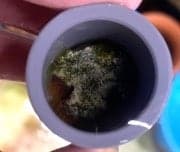
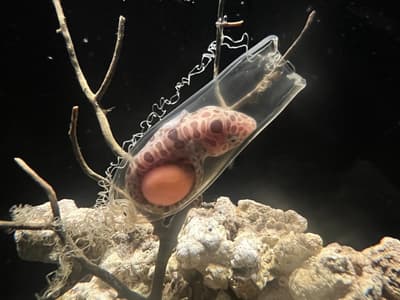
A parent guarding eggs inside a PVC pipe — the red clusters are the eggs
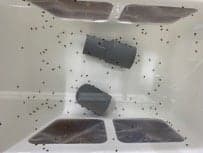
Fry approximately 3 millimeters long
Exhibit Details
Location: Aqua Museum 1F, LABO 3 — "Animals That Evolved in the Sea"
Classification: Order Scorpaeniformes, family Cyclopteridae
English name: Japanese lumpsucker
Scientific name: Eumicrotremus awae