Capella Kyoto, set to open in spring 2026 near Kyoto's oldest Zen temple, Kenninji, and the geiko and maiko practice hall of Miyagawa-cho Kaburenjo, has unveiled its design concept ahead of its debut as Japan's first Capella Hotels & Resorts property.
Located on the site of a former elementary school beloved by the local community, the hotel will serve as a new cultural and intellectual exploration venue, breathing new life into this historic district.
Design by Kengo Kuma and Associates and Brewin Design Office
The architecture is helmed by renowned architect Kengo Kuma and his firm Kengo Kuma and Associates, while the interiors are crafted by Singapore-based Brewin Design Office. The project creates a space where cultural heritage, craftsmanship, and contemporary aesthetics coexist harmoniously.
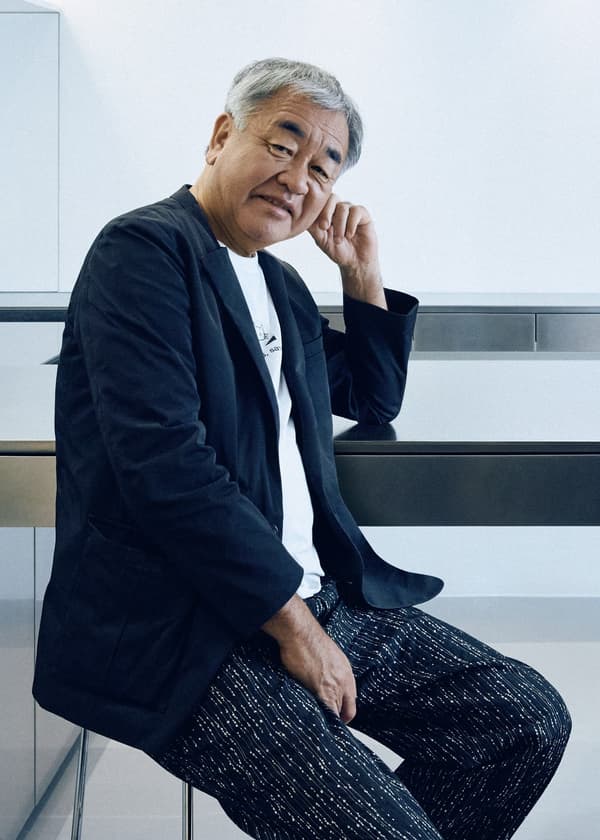
Architect Kuma explains: "Miyagawa-cho, while located in central Kyoto, is a precious place that retains a deep sense of tranquility and calm centered around Kenninji Temple. This 'quietness' is most important, and we felt it should be carefully preserved in the hotel." His architecture respects the scale and rhythm of Kyoto's characteristic narrow alleyways, achieving a low-rise composition that harmonizes with the surrounding townscape.
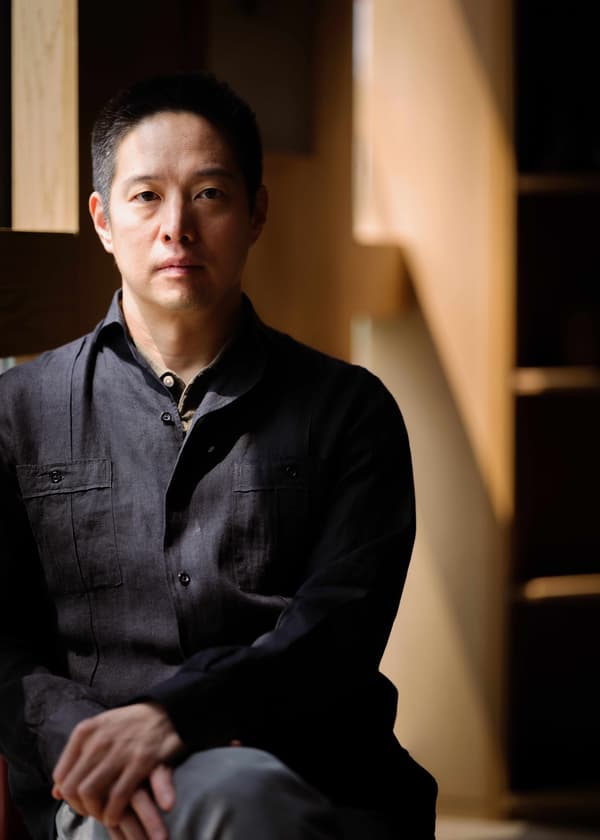
Brewin Design Office reinterprets traditional materials such as lacquer, washi paper, ceramics, and wood from a contemporary perspective, creating interiors that emphasize texture and tactility.
Through a modern reinterpretation of Kyoto's iconic traditional machiya townhouse, the design offers a serene world woven from light and materials, providing guests with a multi-layered charm of Kyoto and an experience of continuous discovery.
Community-Rooted Contemporary Machiya and the Beauty of Restraint: A Space of Layered Discoveries
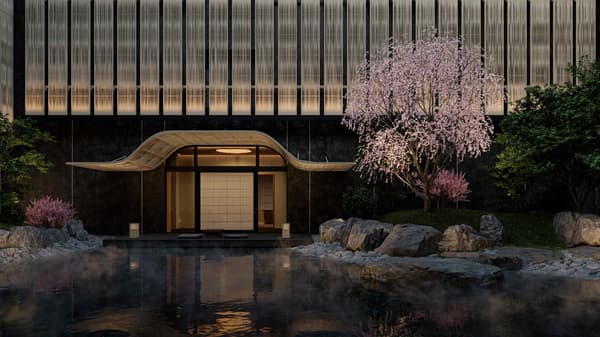
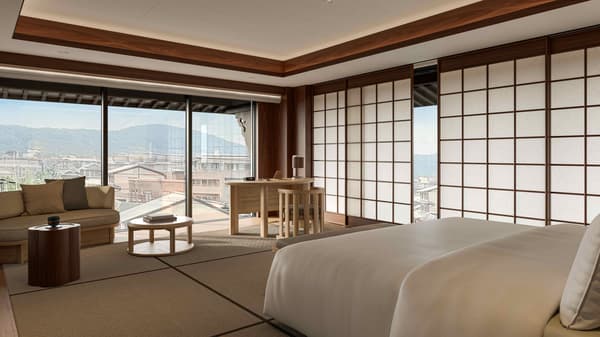
Capella Kyoto sits near Kenninji Temple, Kyoto's oldest Zen temple, and the Miyagawa-cho Kaburenjo, known as a practice hall for geiko and maiko. All 89 guest rooms incorporate the characteristic depth of machiya structures and the spiritual essence of tsuboniwa (inner courtyard gardens), expressing contemporary interpretations of spatial culture nurtured by Kyoto's way of life. The design adopts a composition where movement itself becomes an experience through architectural layering created by the "shikii" (threshold) structure that gradually connects interior and exterior spaces.
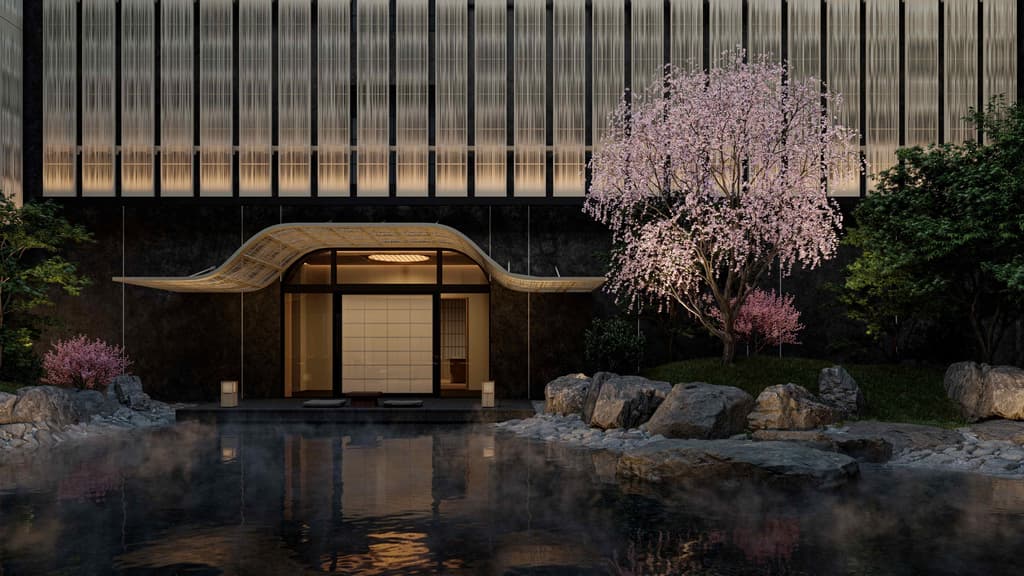
At the hotel's center stands a courtyard featuring a distinctive karahafu (undulating gable) roof. The karahafu has historically been used in prestigious architecture such as temple gates and castle structures, and was later incorporated into kabuki theaters and kaburenjo. This symbolic roof quietly anchors the entire space.
Kuma notes: "We felt it was inappropriate to place a 'foreign object' on this site, which was once an elementary school rooted in and beloved by the local community. By creating an open courtyard space, we inherited the connection with the community." The unique spatial structure that lives within Kyoto's streets also forms the core of the architecture.
"Kyoto has narrow alleyways running vertically and horizontally, and as you walk, temples and historic sites of various sizes suddenly appear. This succession of small discoveries is Kyoto's charm. We wanted guests to enjoy this 'light spirituality' at the hotel as well," Kuma explains.
Therefore, the hotel's approach differs from typical hotel entrances, incorporating elements reminiscent of Gion—such as narrow alleyways, light filtering through shoji screens, and the sound of water—deliberately creating rhythm in the circulation path. This design of repeated "compression and release" allows discoveries to gradually emerge, as if walking through Kyoto's streets.
Water is incorporated into the central tsuboniwa and underground atrium, symbolizing respect for nature. Kuma states: "The tsuboniwa is a uniquely Kyoto culture of enjoying nature in a small space. We wanted to share this with guests through the element of water."
Robert Chen, founder of Brewin Design Office, explains: "Kyoto's beauty lies in the 'beauty of negative space.' Rather than decorating lavishly, we wanted to express 'invisible qualities' such as quietness, rhythm, and material intelligence through design." This demonstrates their aim to balance the "inheritance" and "evolution" of tradition.
Throughout the property, materials native to Kyoto—including local hinoki cypress, cedar, bamboo, and Nishiki-ori textiles—are employed. The design offers spaces that engage all five senses, from guest room compositions that calculate the shifts of light to bathing experiences where deep stone tubs overlook tsuboniwa gardens.
Food Experiences as Cultural Connections
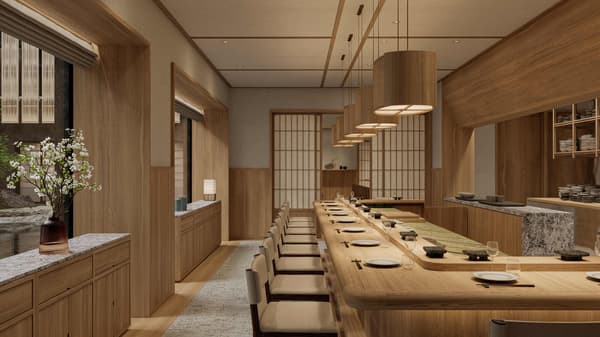
The hotel's communal spaces also uniquely reinterpret traditional architectural elements and translate them into hospitality functions. The Living Room, where guests gather, features spaces enveloped in light reminiscent of andon lanterns wrapped in washi paper.
The 32-seat signature restaurant, with its 12-seat counter and 20-seat lounge bar, offers a contemporary reconstruction of the machiya "ochaya" (tea house) aesthetic. The Japanese restaurant incorporates wood and lighting fixtures originally used in the former elementary school, carrying forward Kyoto's simple yet intricate craftsmanship.
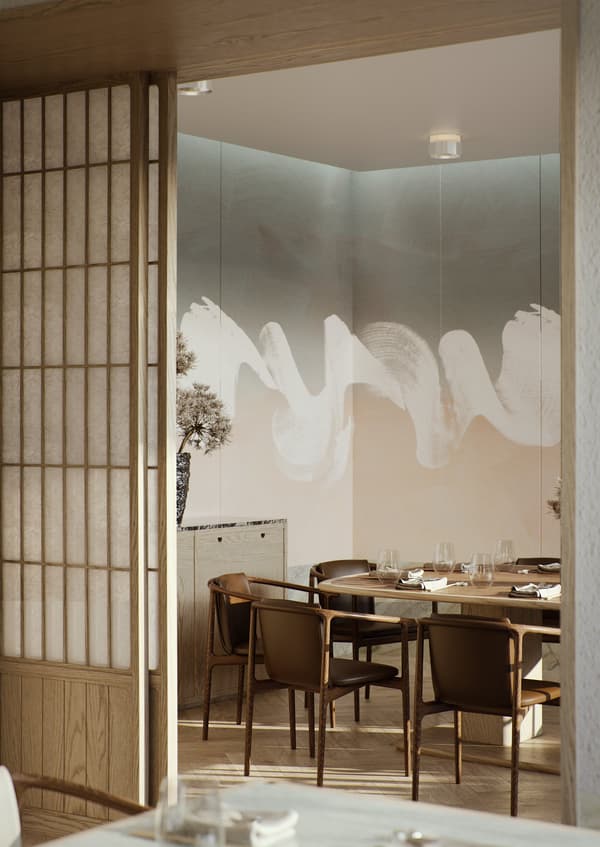
The hotel will provide a refined nighttime dining experience rarely found in Kyoto, offering new options for the city's evening scene. The all-day dining French brasserie reinterprets Parisian café culture through Kyoto's quietness and material beauty. Marble and herringbone floors harmonize with light-colored wood, delicate textures, and floral arrangements, creating a soft, poetic space.
John Blanco, General Manager of Capella Kyoto, states: "At Capella Kyoto, every design element is intended to serve as a 'stage for slowing time, sharpening the senses, and immersing in culture.' The architecture and interiors not only envelop the experience but also weave a 'journey of discovery' that connects Kyoto's rich history with Capella's signature personal hospitality."
About Capella Kyoto
Address: 130 Komatsucho, Higashiyama-ku, Kyoto, Kyoto Prefecture
Phone: 075-606-5810
Guest Rooms: 89 rooms total (including 29 suites)
Facilities: Signature restaurant, Japanese restaurant, French brasserie, pastry shop, spa
Reservations: Visit the official website or contact the reservation desk (06-6949-9035)
About Capella Hotel Group
Capella Hotel Group is a leading hospitality management company specializing in luxury hotels, resorts, and serviced residences. Headquartered in Singapore, the rapidly growing group's portfolio includes two brands operating hotels across 10 destinations. The award-winning Capella Hotels & Resorts is renowned for exceptional service, meticulously crafted luxury design, and immersive local experiences, while Patina Hotels & Resorts is the group's transformative luxury brand pioneering unprecedented perspectives in luxury hospitality.
For more information, visit the official website.
About Capella Hotels & Resorts
Capella Hotels & Resorts comprises properties in Singapore, Sydney, Taipei, Ubud, Bangkok, Hanoi, Shanghai, and Hainan. Upcoming openings include exciting cities such as Kyoto, Riyadh, Florence, Seoul, Nanjing, and Shenzhen. Named after the brightest star in the constellation Auriga, this exceptional hospitality brand creates authentic experiences through the highest standards of personalized service, integrates a legacy of gracious design, and illuminates local traditions, culture, and communities.
Capella Hotels & Resorts was named "Best Hotel Brand" by Travel + Leisure magazine's "World's Best Awards" from 2023 to 2025. Capella Bangkok and Capella Singapore were selected for "The World's 50 Best Hotels" in 2023 and 2024, with Capella Bangkok being named "The World's Best Hotel" and "Asia's Best Hotel" in 2024. In 2025, the hotel's restaurant "Côte by Mauro Colagreco" earned two Michelin stars. The company is also a member of the loyalty program "GHA DISCOVERY," which includes 40 independent hotel brands across over 100 countries worldwide.
For more information, visit the official website.
About Kengo Kuma and Associates
Founded in 1990 by architect Kengo Kuma, Kengo Kuma and Associates is an international architecture firm based in Tokyo. Known for innovative approaches that harmonize contemporary design with Japanese traditional aesthetics, the firm emphasizes the use of natural materials, lightness, and integration with surrounding environments. Working on a wide range of projects including cultural facilities, commercial buildings, residences, urban design, and exhibitions, the firm's philosophy centers on creating architecture that connects people, nature, and communities. With numerous awards and international acclaim, the firm also contributes to global discourse on contemporary architecture.
About Brewin Design Office
Founded in Singapore, Brewin Design Office is a highly regarded design studio known for pursuing high-quality design with deep understanding of environment and culture, combined with meticulous craftsmanship.
Capella Kyoto represents the studio's first project in Japan and serves as the culmination of their journey exploring materials, creating narrative-driven spaces, and pursuing harmony between architecture and interiors.