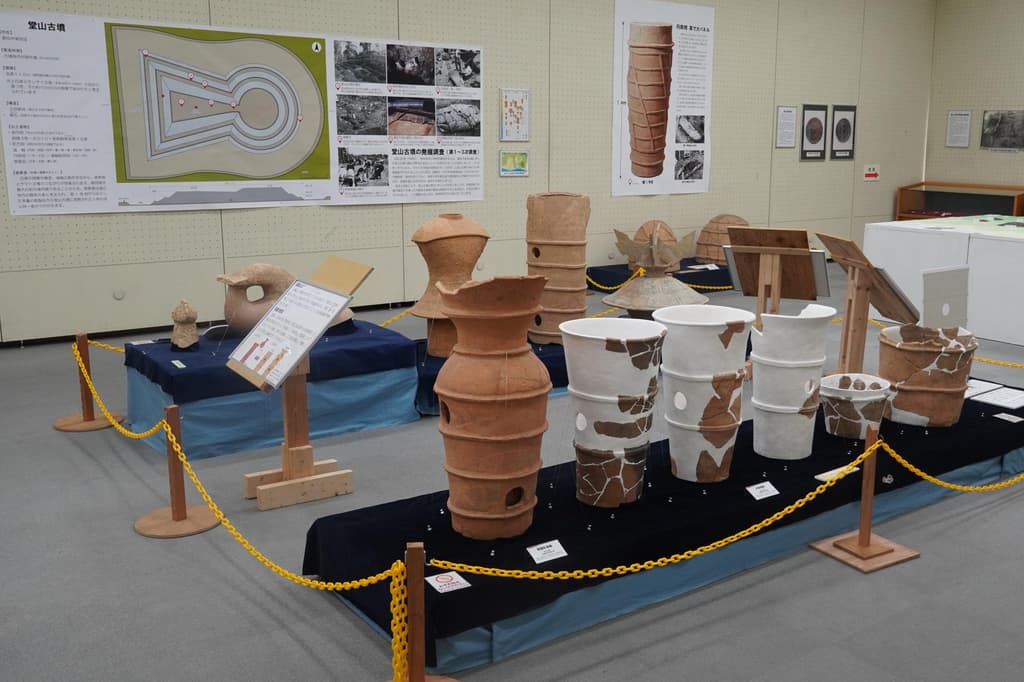
This year marks 70 years since the excavation of Doyama Kofun, one of Shizuoka Prefecture's largest keyhole-shaped burial mounds. Around 1,600 years ago, the area now known as Iwata City was home to a powerful ruler of the Totoumi region, whose authority was symbolized by the construction of this massive tomb.
Iwata City Central Library is currently holding an exhibition titled "Iwata's Giant Kofun: From Kabutozuka to Doyama," displaying haniwa clay figures, ironwork, and horse tack excavated from Doyama Kofun, Kabutozuka Kofun, Futagozuka Kofun, and other sites.
As a related program, the Buried Cultural Properties Center just east of the library is also holding a limited-time special display of 126 pieces of sue ware from Koshikizuka Kofun, currently being catalogued by the city's Cultural Properties Division.
Highlight 1: Uncovering the "King of Totoumi" From 1,600 Years Ago — 100 Prefectural Cultural Properties on Display
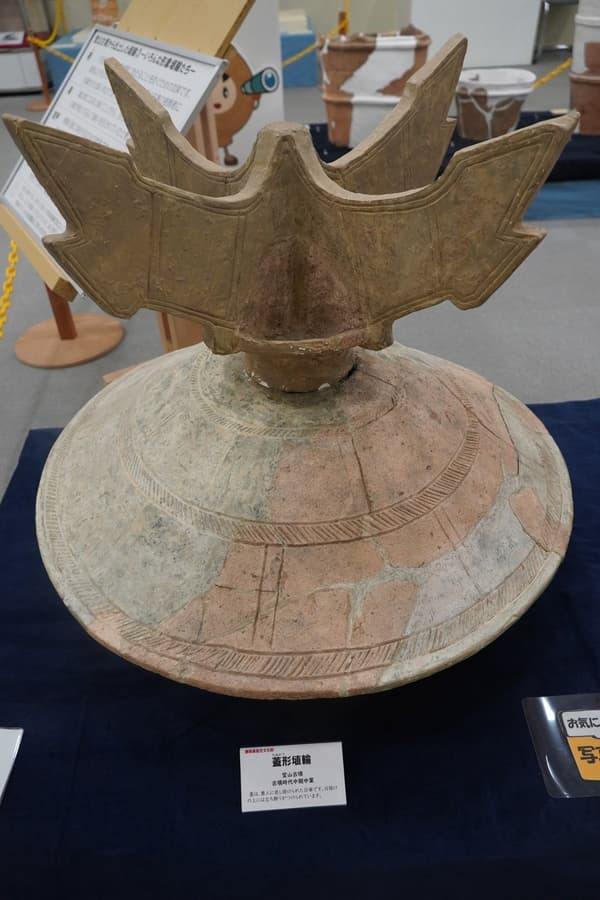
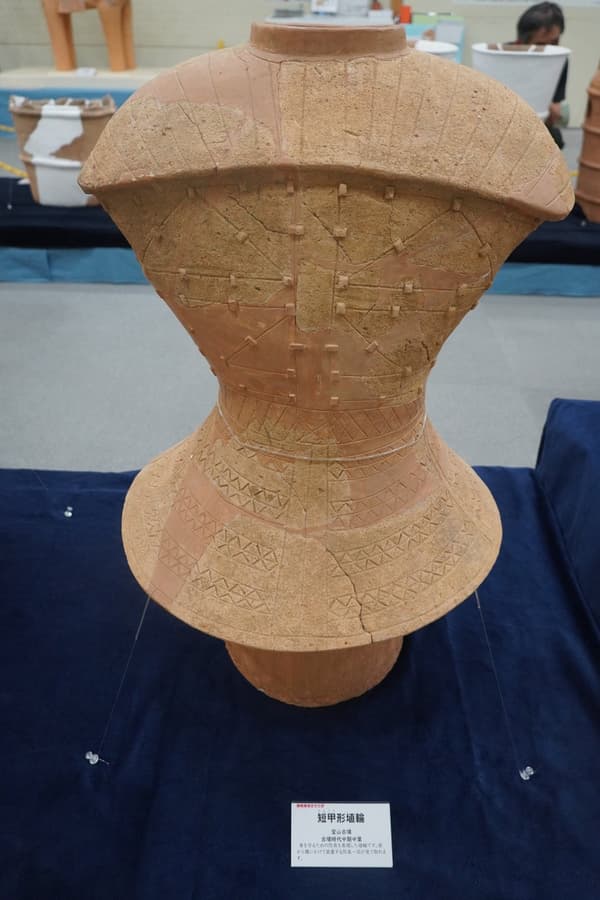
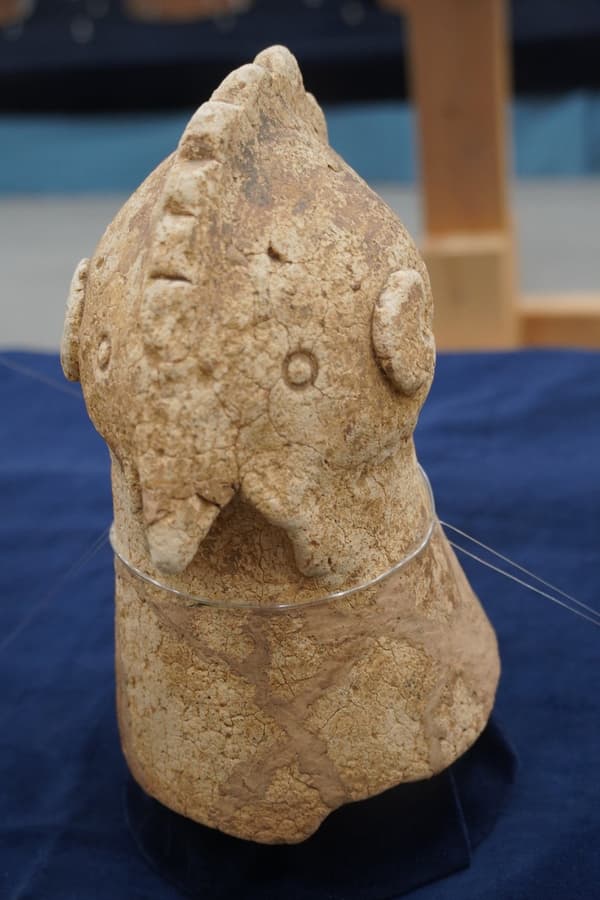
Doyama Kofun is one of Shizuoka Prefecture's largest keyhole-shaped tombs, built in the middle of the Kofun period.
This exhibition presents around 100 selected pieces from the artifacts excavated at Doyama Kofun, all designated as prefectural cultural properties. The lineup includes short armor (tanko) and shields, large figural haniwa shaped like ceremonial parasols held over people of high status, and iron weapons and farming tools boasting one of the widest varieties and largest quantities found anywhere in the prefecture.
Highlight 2: Artifacts That Trace Iwata Before and After Doyama Kofun
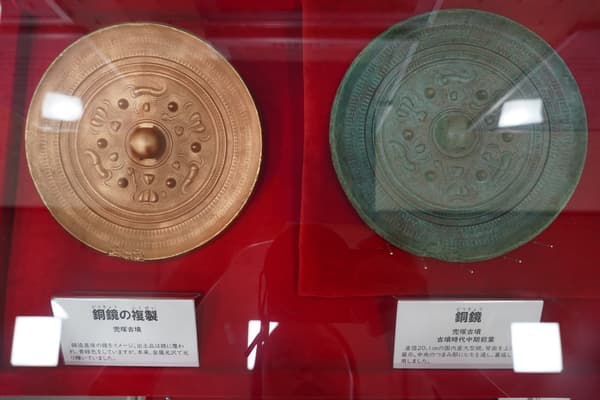
Recent surveys have revealed that Kabutozuka Kofun is one of the largest circular tombs in the Tokai region, and a large bronze mirror has been excavated there. The mirror is thought to have come from the Yamato court, centered in what is now the Kinki region, pointing to a connection between the local ruling clan in Iwata and the Yamato court at the time.
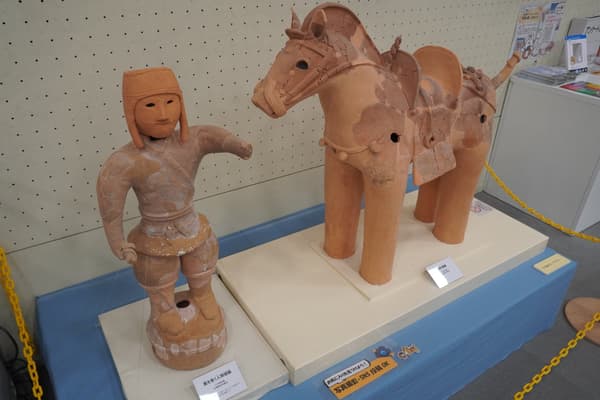
Futagozuka Kofun, meanwhile, has yielded numerous figural haniwa, including decorated horses, a figure leading a horse, and dogs and human figures. These varied haniwa are thought to have been arranged together to depict scenes from the life of the person buried there.
Highlight 3: One of the Tokai Region's Largest Finds — 126 Pieces of Sue Ware From Koshikizuka Kofun on Limited-Time Display
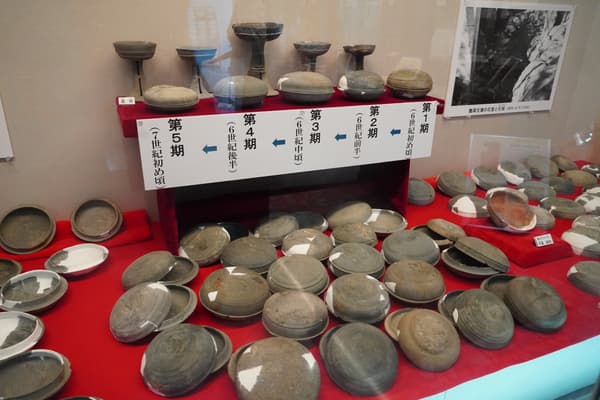
Alongside the exhibition, 126 pieces of sue ware excavated from the horizontal stone chamber of Koshikizuka Kofun are on special display.
Koshikizuka Kofun is a circular tomb built around the early 6th century and is the first known example in Shizuoka Prefecture to use a horizontal stone burial chamber. Inside the chamber is the only stone sarcophagus found in the city, and numerous grave goods have been discovered there, including mirrors, armor, gilt-bronze horse tack, and haniwa. The tomb is believed to be the grave of a leading chieftain who represented western Shizuoka Prefecture at the time.
Discover the Town Where the "King of Totoumi" Rests, This Summer
Around 1,600 years ago, Iwata was a political and cultural center significant enough to support the construction of massive kofun.
This summer's exhibition offers a chance to experience the Kofun-period history of Iwata up close, alongside the latest research findings.
Exhibition: "Iwata's Giant Kofun — From Kabutozuka to Doyama"
| Dates | Through Sunday, August 30 · 9:00 AM to 5:00 PM Closed Mondays and Friday, August 28 |
| Location | Exhibition Room, Iwata City Central Library (3599-5 Mitsuke, Iwata City) |
| Notes | Free admission |
Special Display: "Sue Ware From Koshikizuka Kofun"
| Dates | Through Sunday, August 30 · 8:30 AM to 5:00 PM Closed Friday, August 11 |
| Location | Iwata City Buried Cultural Properties Center (3678-1 Mitsuke, Iwata City) |
| Notes | Free admission |
A Stamp Rally Is Also Underway
To mark the 40th anniversary of the Buried Cultural Properties Center's opening, a quiz rally is being held. Participants who collect stamps during the event period can receive commemorative gifts based on how many they've collected. Admission is free at all participating facilities.
The claims "one of Shizuoka Prefecture's largest keyhole-shaped tombs (Doyama Kofun)," "one of the Tokai region's largest circular tombs (Kabutozuka Kofun)," and "one of the Tokai region's largest quantities of finds (Koshikizuka Kofun)" are based on Iwata City's own research, as of July 30, 2026.