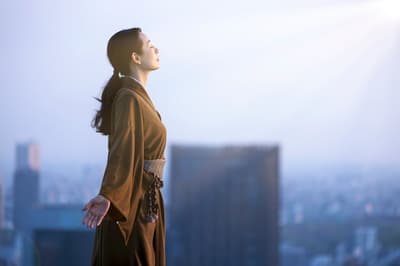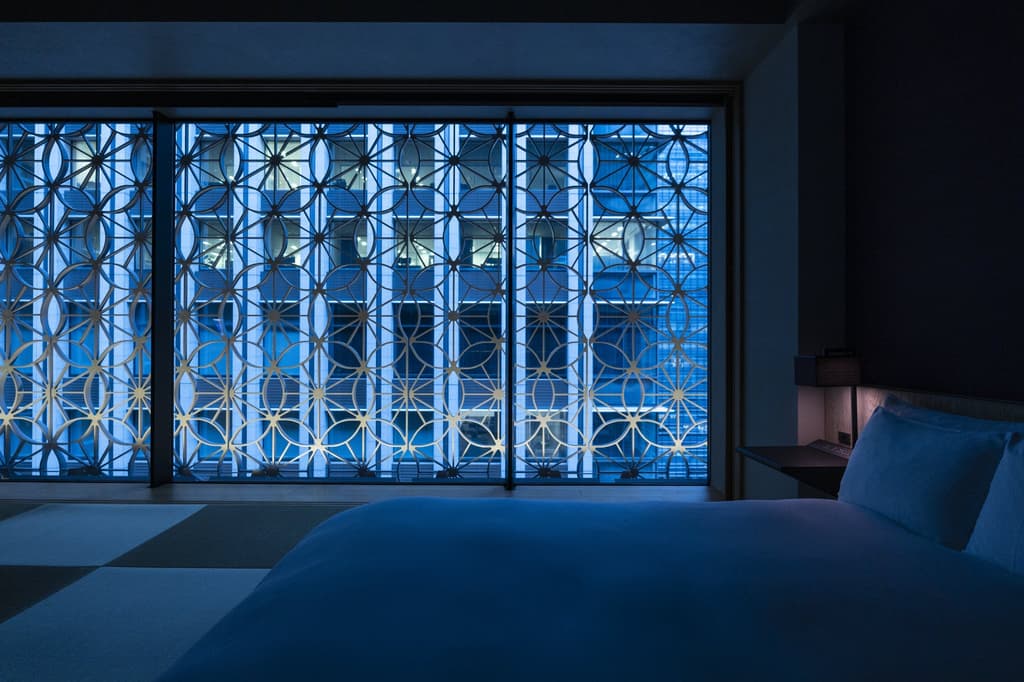
From February 1 to March 14, 2027, Hoshinoya Tokyo, the "tower-style Japanese inn" in Otemachi, is offering the signature stay program "Encountering the Signs of Early Spring at a Japanese Inn in the Heart of the City" in celebration of its 10th anniversary. The 2-night, 3-day program takes guests away from the bustle of central Tokyo to feel the delicate change of seasons that is unique to Japan. It includes "flower-box making" (お花箱づくり) that carefully captures the season, a "tea moment" (お茶のひととき) to savor early spring, and a "floating bath in the spring light" (春光の浮遊浴) that wraps guests in comfortable warmth. It is a stay for enjoying moments of early spring with all five senses.
Background
Since opening in 2016, Hoshinoya Tokyo has offered a "tower-style Japanese inn" stay in the middle of Otemachi, in the heart of the city, immersing guests in the scent of tatami, the warmth of a hot spring, and traditional Edo culture. For this program, the inn focused on the beauty of the "subtle differences" felt in the moment when winter turns to spring: the rich flavor of late-winter ingredients alongside the first tastes of spring, and the warmth of sunlight falling through cold, clear air. Drawing together the hospitality aesthetic it has cultivated over 10 years, it has created a new stay limited to one group per day, where guests are freed from the noise of the city and tune in to the signs of the season.
The 3-Day Program
Day 1: Check In Away From the Bustle, Greeted by Late-Winter Decor
At the main entrance, the scent of sandalwood and late-winter seasonal decor (shitsurai, 室礼) welcome guests. After arriving, guests warm up with carefully selected sencha served by the staff in the Ochanoma (お茶の間) tea-room lounge on the guest-room floor. Tasting how the flavor of the same tea leaves changes across three infusions at different temperatures is a moment that awakens the five senses. White magnolia (*1) arranged in the guest room, a sign that winter is ending, quietly marks the start of the stay.
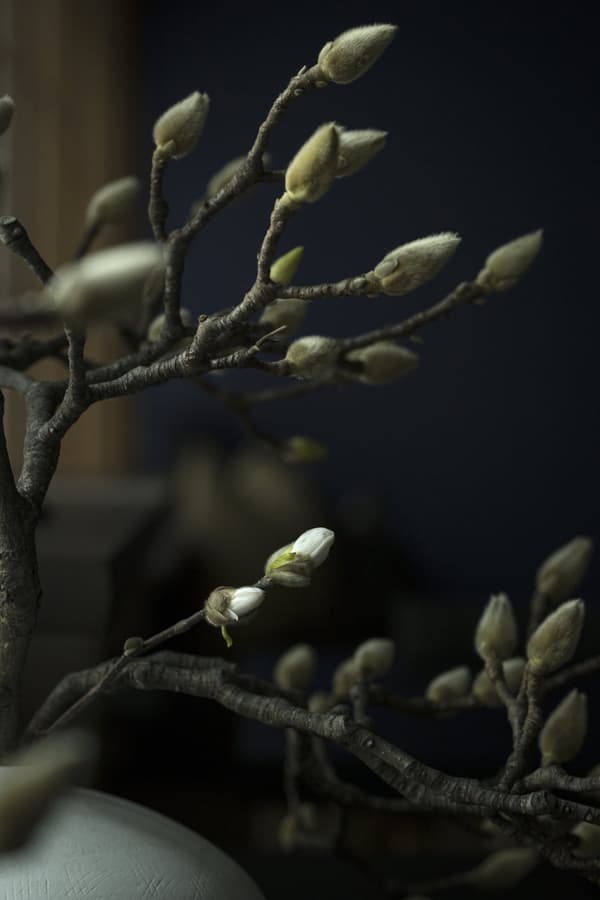
Late-winter decor welcoming guests in the guest room
*1: The type of flower varies depending on the time of year.
Day 1: "Hatsugoromo no Negima Nabe" (初衣のねぎま鍋) Dinner in the Guest Room to Warm the Body
After warming up from the cold in the natural hot spring on the top floor, in the clear winter air, guests enjoy "negima nabe" (ねぎま鍋), a traditional dish that originated in Edo, in their guest room. Thin slices of fatty tuna (toro) are quickly dipped in broth and eaten with plenty of finely shredded leek (shiraga-negi). The dish carries Edo wisdom into the present day. Tasting toro, which gains fat and richer flavor in winter, together with seasonal leeks warms the body to the core.
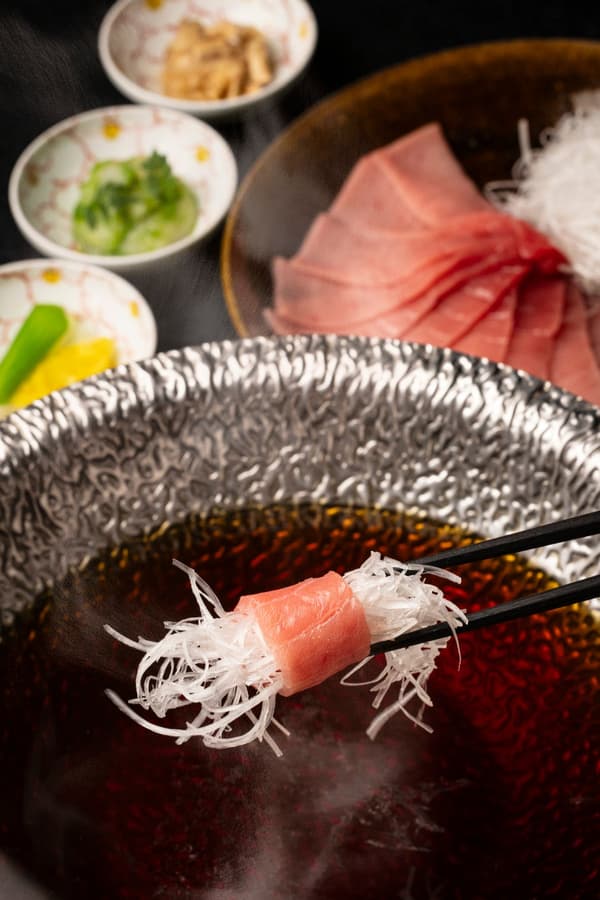
Negima nabe, carried into the present day
Day 2: "Sky Morning Practice" Overlooking Tokyo and the "Awakening Breakfast"
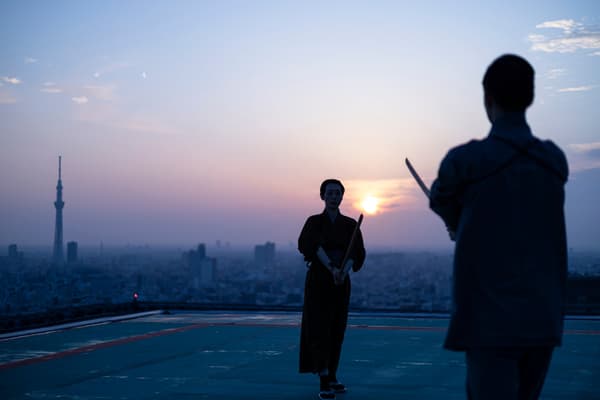
Sky morning practice (天空朝稽古) in the clear air
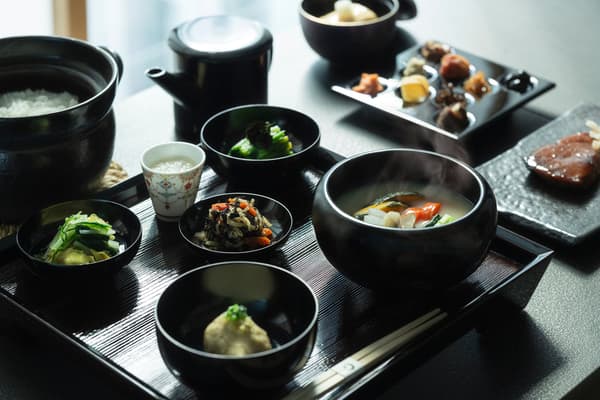
Awakening Breakfast (めざめの朝食) to set body and mind in order
The next morning, in crisp, taut air, guests take part in a swordsmanship practice on the rooftop of the building, supervised by an instructor of Hokushin Itto-ryu (北辰一刀流), one of the three great schools of Edo. After putting on hakama and swinging a sword while imagining the people of Edo long ago, guests head to the hot spring to warm their chilled bodies slowly. Breakfast then follows the Japanese-inn style based on the five flavors, five colors, and five methods (五味・五色・五法), centered on root vegetables and other warming winter ingredients that set the body in order from the inside. Giving themselves over to the comfortable stay arranged by the staff, guests feel their five senses sharpen.
Day 2: "Flower-Box Making" That Weaves the Calendar
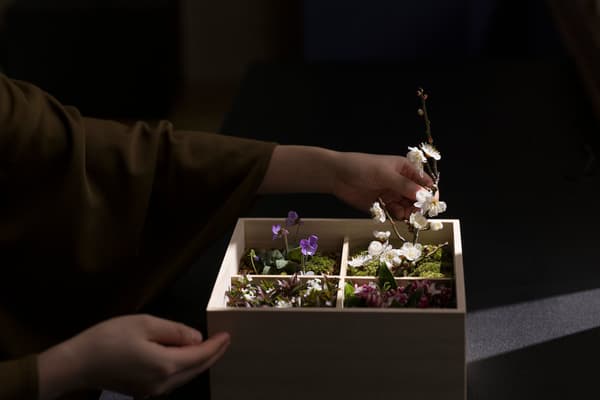
An experience that captures the season
After a light lunch, guests try "flower-box making" (お花箱づくり) under the guidance of a flower-arrangement artist, arranging seasonal flowers inside a paulownia-wood box. Guests choose plants that are moving from winter to spring and arrange them carefully in the box. Even while surrounded by the high-rise buildings of the city center, it is a rich moment of feeling the breath of spring in the palm of the hand and appreciating the subtle differences between seasons.
Day 2: Dinner Tasting the Gradation of Seasons, "Japanese Home Cooking That Is No Longer Made" (もう作られなくなった日本の家庭料理)
Dinner in the main dining room is a creative course meal enjoyed without formality, barefoot after a bath. Through dishes that make generous use of winter's seasonal ingredients, leading to a dish of spring, guests feel the passing of the seasons with all five senses over a single meal. Away from the city views and crowds, it is a time to focus on the food in a private room. Stepping on from the previous night's winter warmth, the course weaves together the lingering richness of winter and the flavors of budding spring, making guests feel that the footsteps of spring are close at hand. It is an indulgent evening.
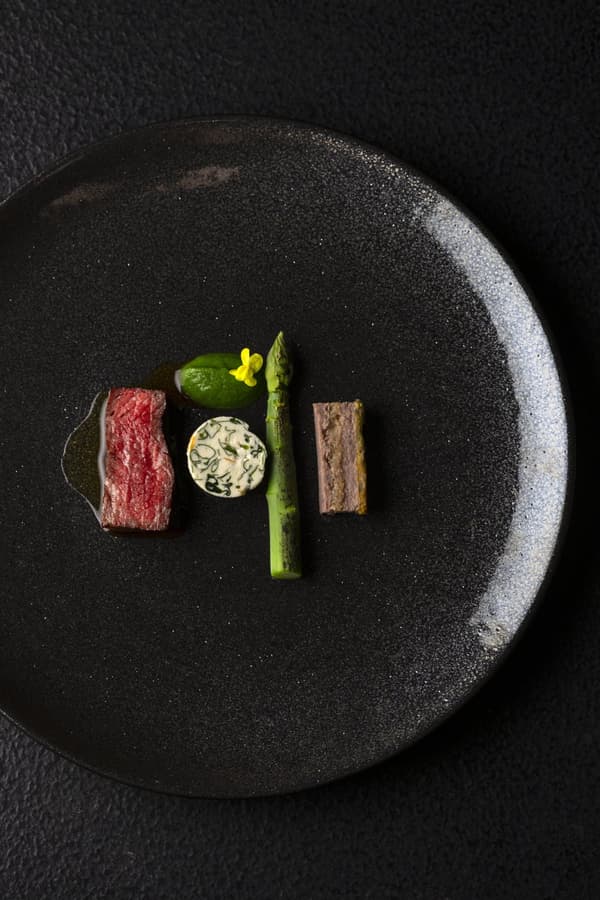
A main dish with a sense of spring
Day 3: "Tea Moment" in a Mountain Retreat in the City
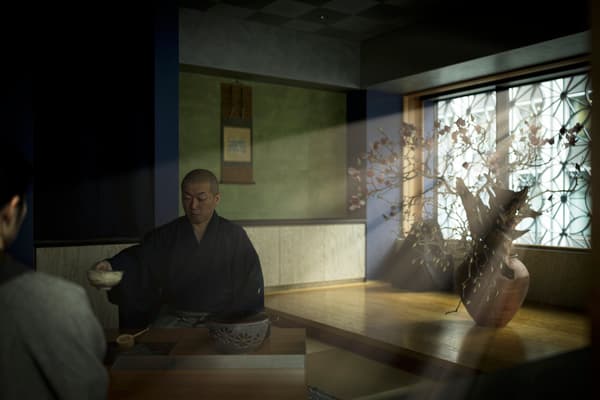
A tea moment to savor early spring
The final morning begins with a "tea moment" (お茶のひととき) in which the guest room is turned into a tea room, an occasion to enjoy the season. Under the hospitality of a teacher from Mushakoji-senke (武者小路千家) (*2), guests become absorbed in a once-in-a-lifetime encounter (ichigo ichie, 一期一会) while enjoying utensils and Japanese sweets that suggest early spring. The guest room where they have been staying is specially transformed into a tea room, a space like another world. It is a time to face tea with a fresh frame of mind. At the breakfast that follows, guests taste the first ingredients of spring, such as nanohana (rape blossoms) and wild mountain vegetables. Letting the faint bitterness of seasonal vegetables circulate through the body, guests naturally release body and mind from winter into spring.
*2: One of the "San-Senke" (three Sen families), whose founding ancestor is Sen no Rikyu.
Day 3: "Floating Bath in the Spring Light" in the Gentle Air
To close the stay, guests take a "floating bath" (浮遊浴) in a private open-air bath, immersing themselves in highly saline water drawn from 1,500 m underground. Feeling the soft daytime air and gazing at a sky where clouds drift slowly, guests are wrapped in the comfort of spring that is just around the corner. The flowers arranged at the entrance have begun to gently open, and guests check out keeping in mind the faint turning of the seasons and the arrival of spring.
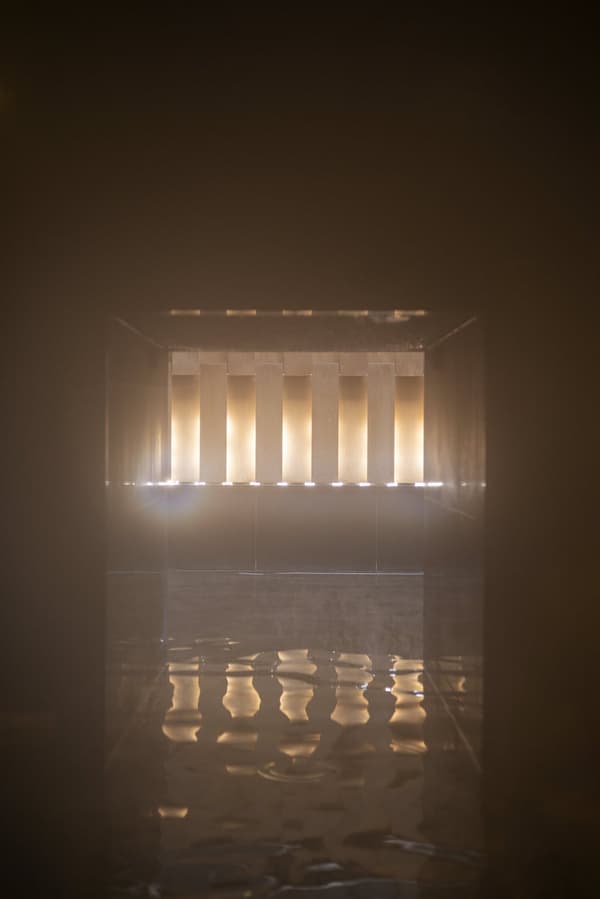
A large communal bath where the indoor and open-air baths are connected
Sample Schedule
Day 1
- 5:30 PM: Check-in
- 6:30 PM: Hot spring bath
- 8:00 PM: Dinner ("Hatsugoromo no Negima Nabe")
Day 2
- 6:00 AM: Sky morning practice (天空朝稽古)
- 7:00 AM: Hot spring bath
- 8:30 AM: Breakfast ("Awakening Breakfast")
- 10:00 AM: Time to doze (まどろみのとき)
- 1:00 PM: Lunch ("Budding Soup and Brown Rice Onigiri")
- 3:00 PM: "Flower-box making" that weaves the calendar
- 5:00 PM: Hot spring bath
- 7:00 PM: Dinner ("Japanese Home Cooking That Is No Longer Made")
Day 3
- 8:30 AM: "Tea moment" to enjoy the season
- 10:00 AM: Breakfast ("Awakening Breakfast")
- 11:30 AM: Floating bath in the spring light
- 1:00 PM: Check-out
"Encountering the Signs of Early Spring at a Japanese Inn in the Heart of the City" Overview
- Period: February 1 to March 14, 2027
- Duration: 2 nights, 3 days
- Price (per person): ¥345,540 for 1 participant, ¥230,990 per person for 2 participants, ¥192,810 per person for 3 participants (all prices include tax and service charge; accommodation fee separate)
- Included: "Hatsugoromo no Negima Nabe" dinner, "Japanese Home Cooking That Is No Longer Made" course dinner, "Awakening Breakfast," "Budding Soup and Brown Rice Onigiri" lunch, sky morning practice, flower-box making, tea moment, floating bath in the spring light
- Capacity: 1 group per day (1 to 3 guests)
- Reservations: Via the official website (https://hoshinoresorts.com/ja/hotels/hoshinoyatokyo/), at least 21 days in advance
- Eligibility: Hoshinoya Tokyo guests
- Notes: Parts of the content may change or be canceled depending on weather and circumstances.
About Hoshinoya Tokyo
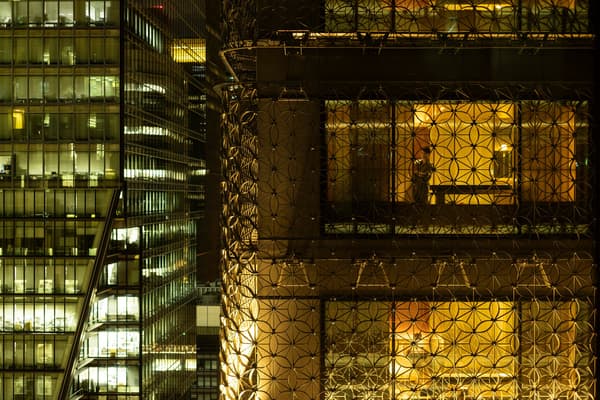
Exterior of Hoshinoya Tokyo
Hoshinoya Tokyo is a "tower-style Japanese inn" that continues to evolve with the times. The tower, with two basement floors and 17 floors above ground, combines a tatami-floored entrance, guest rooms that pair traditional Japanese design with modern comfort, an "Ochanoma" tea-room lounge on each floor, and a hot spring on the top floor. It offers seasonally themed decor that follows the Japanese calendar, experiences that bring Japanese culture closer, and the hospitality of a Japanese inn. It has received numerous awards in hotel rankings and awards such as The World's 50 Best Hotels and Condé Nast Traveler.
- Address: 1-9-1 Otemachi, Chiyoda-ku, Tokyo 100-0004
- Rooms: 84 rooms; check-in 3:00 PM, check-out 12:00 PM
- Rate: From ¥228,000 per night per room (tax and service charge included, no meals)
- Access: 10-minute walk from the Marunouchi North Exit of Tokyo Station; 2-minute walk from Exits A1 and C2c of Otemachi Station on the Tokyo Metro
- Website: https://hoshinoresorts.com/ja/hotels/hoshinoyatokyo/