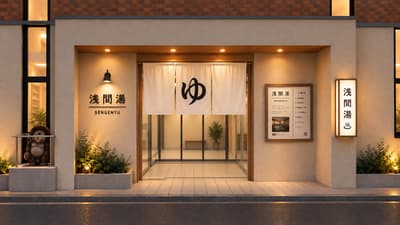
From December 21, 2026 to February 2, 2027, Hoshinoya Tokyo, a Japanese inn (ryokan) in Otemachi, is holding the "Ichiyo Raifuku (*1) Hot Spring Good-Luck Stay," a program that draws on Edo culture to cleanse the mind and body and welcome good fortune. Guests lose themselves in a sword dance (kenbu) on a site that was once home to samurai residences to ward off misfortune, then soak in a strongly saline hot spring to purify themselves. The next day, a "Kaiun Deep Breathing" session 160 m above ground and a breakfast of azuki-bean porridge (azuki-gayu) help restore balance from the inside. Before departure, guests braid an Edo kumihimo cord while making a wish. It is a special stay aimed at raising one's fortune ahead of a new milestone.
*1: Just as winter ends and spring arrives, the phrase means that a bad situation turns for the better and good luck comes around.
Three Highlights of the "Ichiyo Raifuku Hot Spring Good-Luck Stay"
Highlight 1: Shake Off the Year's Misfortune With Kenbu, a Natural Hot Spring, and Negima Nabe
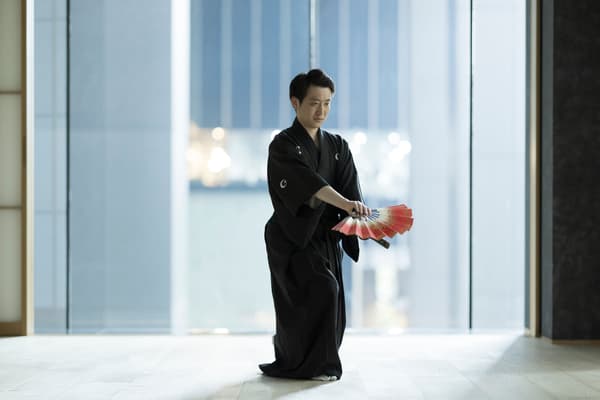
Kenbu, the sword dance said to ward off misfortune
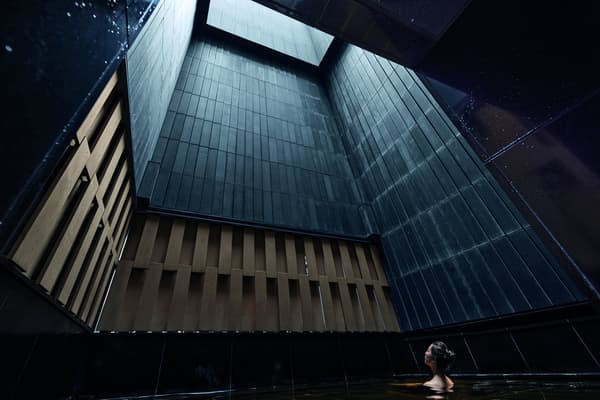
Bathing in the hot spring to cleanse the mind and body
Otemachi was lined with samurai residences in the Edo period, and in keeping with that setting, guests try kenbu, a traditional performing art that samurai practiced to focus the mind. Under the direct guidance of a master from the Hokushin Itto-ryu (北辰一刀流) Gekkenkai (撃剣会) (*2), guests push their concentration to the limit in earnest practice, shaking off the year's accumulated stagnation along with the sword and returning to a state of no thought.
After practice, guests head to Otemachi Onsen, a highly saline hot spring drawn from 1,500 m underground and located on the top floor. Soaking in a salt-water spring, long believed to have purifying power, washes away bad energy together with sweat from deep within the body. For dinner, guests enjoy negima nabe, a dish that carries Edo wisdom. It pairs green onion (negi), long believed to have the power to ward off evil, with tuna (maguro), whose red flesh symbolizes good fortune. It is a way to take in nourishment in keeping with long-held auspicious traditions and get ready for a refreshing morning.
*2: A modern martial-arts organization that carries on the techniques and spirit of a swordsmanship school that flourished as one of the three great dojo of Edo.
Highlight 2: Restore Balance With "Kaiun Deep Breathing" 160 m Above Ground and Nourishing Azuki-Bean Porridge
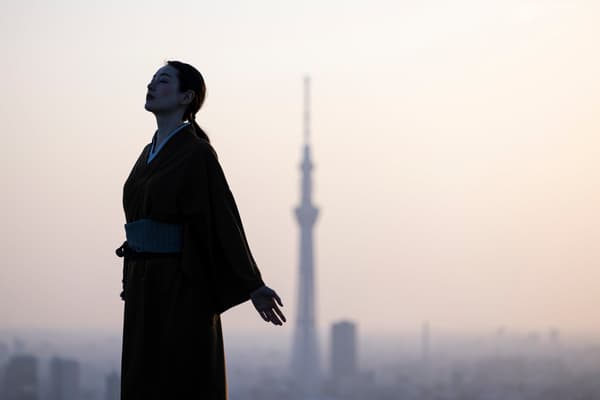
Circulating energy calmly on the rooftop
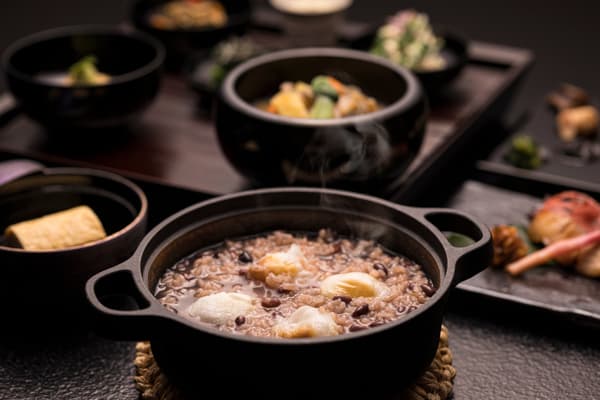
Azuki-bean porridge to warm the body
The morning after warding off bad energy is for quietly restoring balance and letting fresh energy flow through the body. In the early morning, guests perform "Kaiun Deep Breathing" on the rooftop, 160 m above ground, facing the sun rising over the eastern horizon and drawing fresh air through the whole body. Guests then return to Otemachi Onsen for a morning soak, spending a calm time wrapped in the warmth of the water in stillness and facing themselves. Breakfast is azuki-bean porridge (azuki-gayu), a dish enjoyed as an auspicious meal in the Edo period. The gentle, warming porridge builds up energy from the inside.
Highlight 3: Put a Wish Into a Handmade Kumihimo Cord
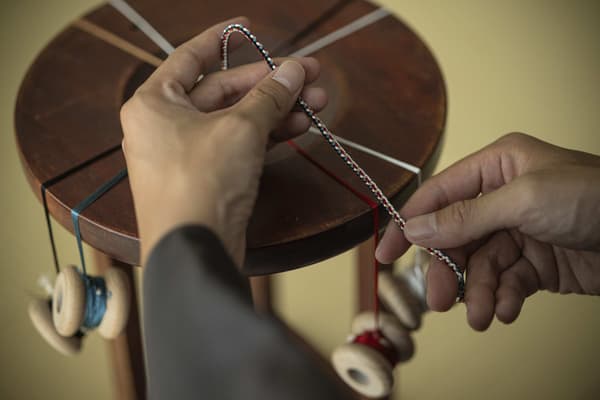
Carefully braiding a kumihimo cord
To close the stay, guests make their own original kumihimo (braided cord) as a charm infused with their wishes, carrying on the craft culture of Edo. Under the guidance of Ryu Kobo (龍工房), a long-established workshop in Nihonbashi, Tokyo, with more than 130 years of history, guests braid the threads in one by one. The work is a special time for clearing away distracting thoughts and sharpening the mind. Kumihimo has long been said to "tie bonds," and the finished piece can be taken home as a bracelet. After checking out, guests can also visit a shrine recommended by the staff, a place long popular since the Edo period for winter prayers for good fortune. Wearing the kumihimo they made, guests can spend the time ahead of a new milestone feeling refreshed.
Sample Stay Schedule
Day 1
- 3:00 PM: Check-in
- 4:00 PM: Kenbu practice
- 5:30 PM: Hot spring bath
- 7:00 PM: Dinner (negima nabe)
Day 2
- 6:50 AM: Sky deep breathing (天空深呼吸)
- 8:00 AM: Hot spring bath
- 9:00 AM: Breakfast (azuki-bean porridge)
- 10:00 AM: Kumihimo-making experience
- 12:00 PM: Check-out
- 1:00 PM: Shrine visit on your own
"Ichiyo Raifuku Hot Spring Good-Luck Stay" Overview
- Period: December 21, 2026 to February 2, 2027 (some dates excluded)
- Duration: 1 night, 2 days
- Capacity: 1 group per day (up to 2 people)
- Price: ¥63,050 for 1 person, ¥106,100 for 2 people (tax and service charge included, accommodation fee separate)
- Included: Kenbu practice, dinner (negima nabe), breakfast (azuki-bean porridge), Kaiun Deep Breathing, kumihimo making
- Reservations: Via the official website (https://hoshinoresorts.com/ja/hotels/hoshinoyatokyo/), at least 14 days in advance
- Eligibility: Hoshinoya Tokyo guests
- Notes: The schedule and content may change in some cases depending on circumstances.
About Hoshinoya Tokyo
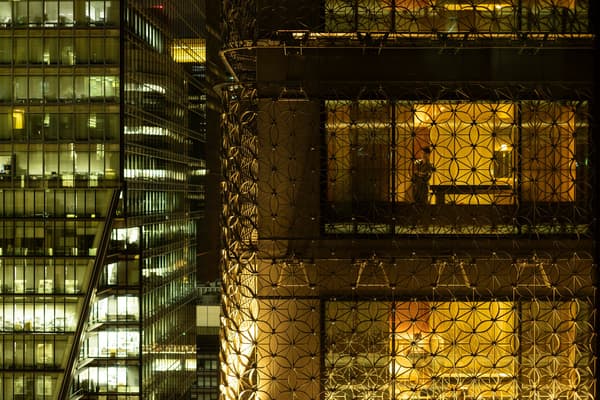
Exterior of Hoshinoya Tokyo
Hoshinoya Tokyo is a "tower-style Japanese inn" that continues to evolve with the times. The tower, with two basement floors and 17 floors above ground, combines a tatami-floored entrance, guest rooms that pair traditional Japanese design with modern comfort, an "Ochanoma" tea-room lounge on each floor, and a hot spring on the top floor. It offers seasonally themed decor that follows the Japanese calendar, experiences that bring Japanese culture closer, and the hospitality of a Japanese inn. It has received numerous awards in hotel rankings and awards such as The World's 50 Best Hotels and Condé Nast Traveler.
- Address: 1-9-1 Otemachi, Chiyoda-ku, Tokyo 100-0004
- Rooms: 84 rooms; check-in 3:00 PM, check-out 12:00 PM
- Rate: From ¥228,000 per night per room (tax and service charge included, no meals)
- Access: 10-minute walk from the Marunouchi North Exit of Tokyo Station; 2-minute walk from Exits A1 and C2c of Otemachi Station on the Tokyo Metro
- Website: https://hoshinoresorts.com/ja/hotels/hoshinoyatokyo/