Hosted by the Agency for Cultural Affairs as part of the Living Culture Creation and Strategic Development Project, the "Calligraphy and Washi Paper Project in Hinohara" explores the intersection of traditional Japanese culture—calligraphy and washi paper—with contemporary thought and technology through ethical initiatives. The project was implemented in Hinohara Village, Tokyo, and has held touring exhibitions in Tokyo's Daikanyama and Kyoto, generating significant attention at each location.
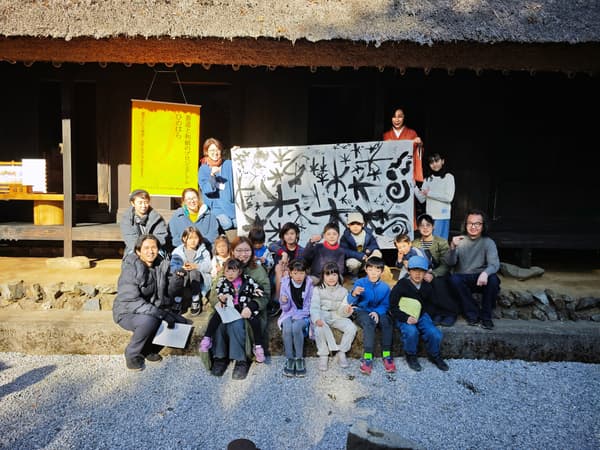
Calligraphy school led by calligrapher Rieko Kawabe at Kobayashi Family Residence, an Important Cultural Property in Hinohara Village. (Rieko Kawabe is in the upper right)
Project Objectives
The project aims to evolve cultural practices rooted in daily life—such as calligraphy and washi paper that have supported "Japaneseness"—into sustainable values in a human-centered super-smart society (Society 5.0).
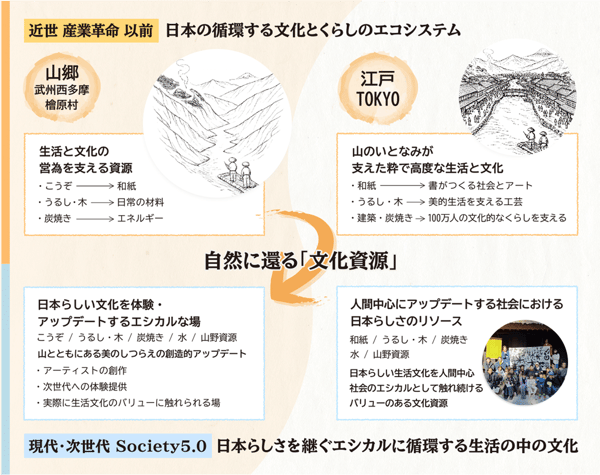
In an era where digitalization is advancing and the act of "writing" itself is diminishing from daily life, the project reexamines the aesthetic, physicality, and philosophical values that calligraphy has embodied, exploring new forms to connect Japanese culture's "sho" (calligraphy) to the future. Drawing inspiration from the ecosystem of calligraphy, paper, and people that has circulated between Edo/Tokyo and the mountains of Musashi Province, the project was set in Hinohara Village, Tokyo, where this circulation still thrives. Calligrapher Rieko Kawabe, who creates "holistic beauty" from tradition centered on calligraphy, served as creative director and revived the role of literati—cultural trendsetters in Japanese daily life—by forming the "Five Contemporary Literati." The project developed practical collaborative initiatives involving experts, artists, craftspeople, local residents, and children who will carry on the next generation, centering on the calligraphy and washi paper creations of these five contemporary literati.
Through education programs at various locations within the village, including the Important Cultural Property "Kobayashi Family Residence," and creative work and exhibitions at "Arts Camp Hinohara"—a century-old folk house art center surrounded by forests containing raw materials for washi paper—the project visualized a cultural circulation model of "making, learning, and experiencing" calligraphy and washi paper. It represents an attempt to update the ethical and sustainable Japanese cultural ecosystem for the future from the field of calligraphy.
Long-term Exhibition and Cultural Experience in the Mountain Village
As part of the Agency for Cultural Affairs' Living Culture Creation and Strategic Development Project, a cultural experience event combining exhibitions and creative activities centered on the traditional Japanese arts of "calligraphy" and "washi paper" was held in the mountain spaces of Hinohara Village, Tokyo, from late November to December 2025. This initiative reinterprets local cultural resources from a contemporary perspective and connects them to the future, utilizing the platform of "Tsukuru! Akigawa Art Stream" (organized by Creative Cluster Inc.), an art festival now in its fifth year spanning from Hinohara Village to Akiruno City. Within spaces resonating with the natural environment, exhibitions focusing on the materiality, physicality, and spatiality of calligraphy were developed. During the exhibition period, programs were implemented that allowed visitors not only to view works but also to make washi paper from kozo (paper mulberry) growing in the mountains, practice calligraphy in various locations and styles while moving their bodies, and engage in dialogue about tradition and the future from this mountain environment. These programs provided opportunities for visitors to experientially reconsider the culture of "calligraphy."
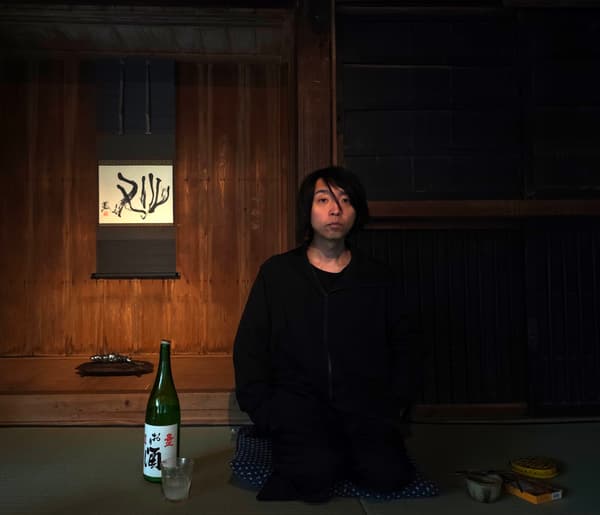
"Divine-Human Communion: Nuru Lecture's Direct Meeting - Computational Nature" exhibited at Arts Camp Hinohara, with Yoichi Ochiai.
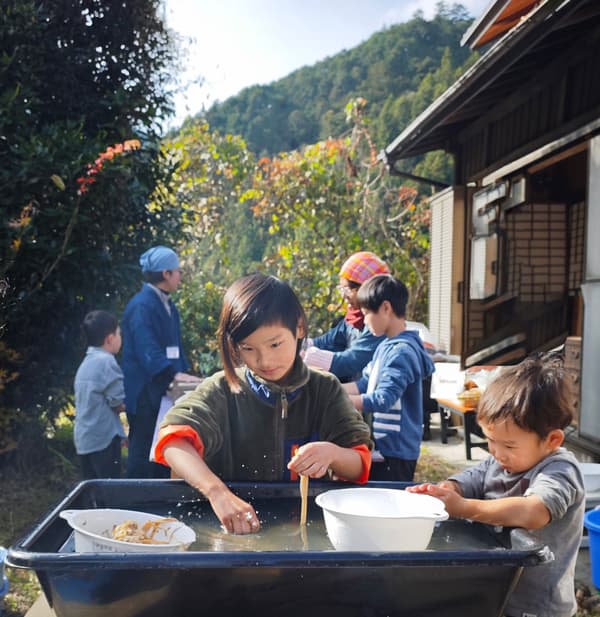
Hinohara Village project where participants made paper from mountain plants and wrote calligraphy.
Connecting Mountain Village Initiatives to the City: Related Exhibition and Lecture Talk Held at Daikanyama Tsutaya Books T-SITE on January 16, 2026
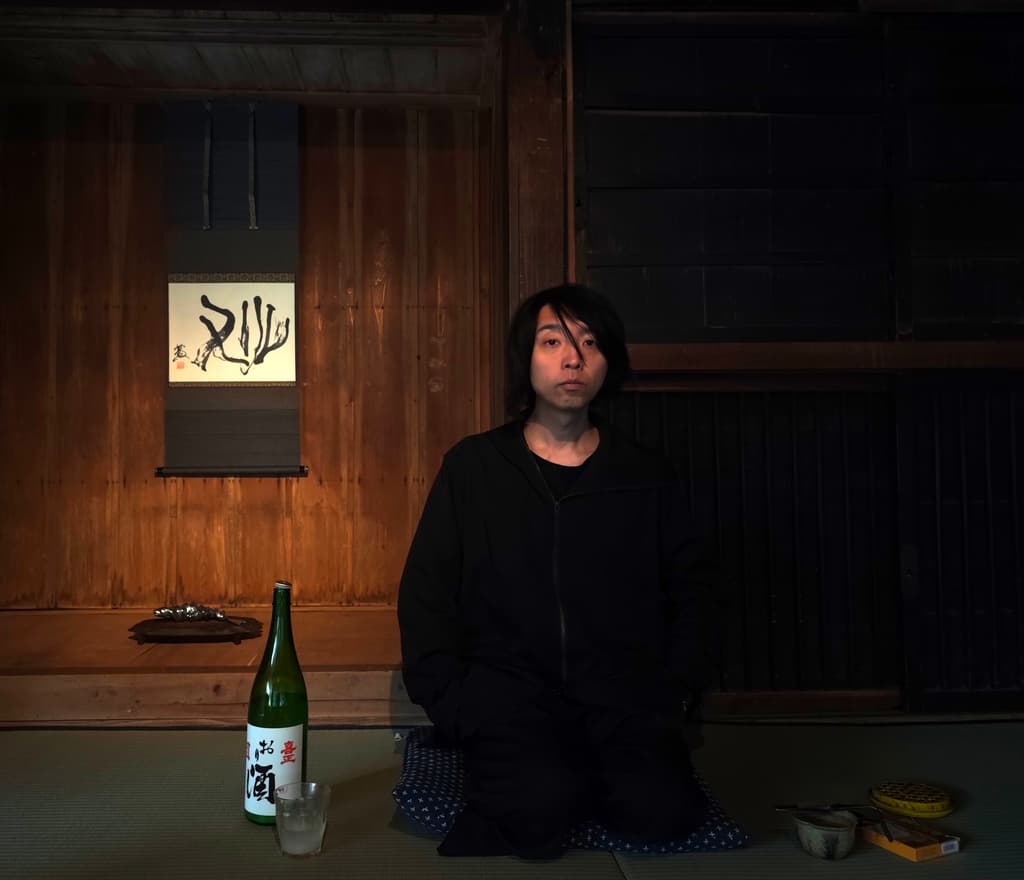
In Daikanyama, a hub for urban culture, an exhibition was held that re-edited the concepts developed in Hinohara Village within an urban context. On the opening day, media artist Yoichi Ochiai, one of the "Five Contemporary Literati" participating in the project, delivered a lecture talk. Drawing on his creative experience in the project, Ochiai discussed with project curator Tomohiro Okada the possibilities of "living culture" and "calligraphy" in the digital nature era, addressing how the traditional expression of calligraphy can hold a future in the age of technology and the importance of viewing cultural inheritance as "renewal" rather than mere "preservation."
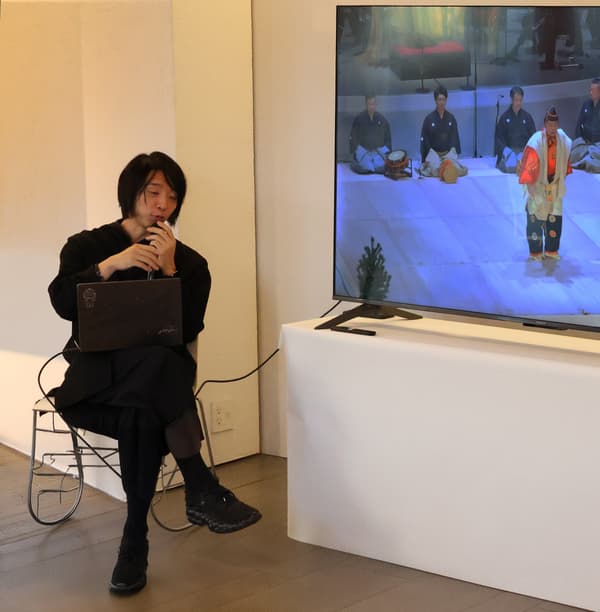
From Yoichi Ochiai's lecture talk: "As long as humans continue to want to express themselves, cultural forms will continue."
The venue also displayed multiple calligraphic artworks created by the "Contemporary Literati" including Ochiai, as well as outcomes from workshops led by Kawabe, showcasing attempts to reinterpret "calligraphy" not merely as written expression but as something that traverses space, body, material, and thought.
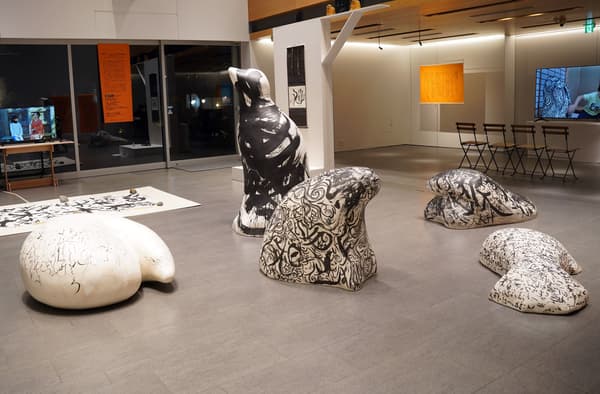
Three-dimensional calligraphy work featuring the "Wolf" motif on Hinohara washi paper, created by Rieko Kawabe and four other "Contemporary Literati"
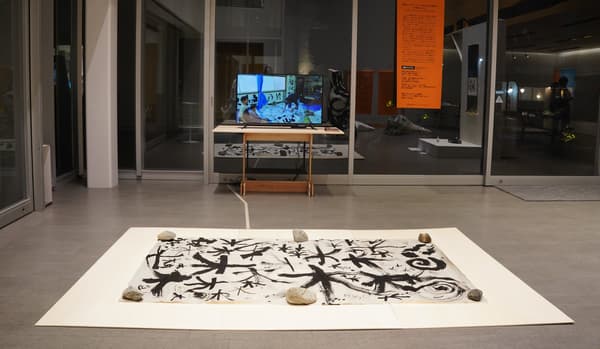
Outcome work from the "Calligraphy School" written by children and Rieko Kawabe on large specially-made Hinohara washi paper
Exhibition Components
● Three-Dimensional Calligraphy Works by Contemporary Literati Using Hinohara Washi
Using Hinohara washi paper revived by Haruka Kitamura, part-time lecturer at Kyoto Institute of Technology, from remaining resources, calligrapher Rieko Kawabe served as creative director alongside contemporary literati including poet Mizuki Misumi, multi-creator KiNG, and 13-year-old stage artist Motohide Takanashi. The collection of works where calligraphy rises as three-dimensional forms based on the village's "Wolf" legend emphasized the materiality and presence beyond calligraphy's readability, demonstrating new possibilities for washi paper.
● Calligraphy and Spatial Installation by Yoichi Ochiai
An exhibition centered on calligraphy works created by media artist Yoichi Ochiai during his stay in Hinohara Village while engaging with the local natural environment and atmosphere. The works incorporated AI to materialize possibilities for carrying the ambient presence in Japanese culture inspired by mountain traditions into the future, along with calligraphy written on Hinohara washi paper. An "archive" exhibition of the spatial installation featuring AI-generated sound environments creating "presence" produced in Hinohara was presented, as the timeless experience of these works can only be obtained in Hinohara Village (also including the Kyoto exhibition).
● Documentary Video Introducing the Project Background and Production Process
A documentary film recording everything from the project's conception to production and on-site trial and error was screened. As an Agency for Cultural Affairs project, it visualized the intentions and processes behind launching this initiative, serving as a guide for visitors to deepen their understanding.
● Results Exhibition from Education Program "Calligraphy School"
An education program called "Calligraphy School" was implemented, offering a comprehensive experience from washi papermaking to calligraphy expression. Outcome works written by children on large Hinohara washi paper specially created for this purpose under Rieko Kawabe's leadership were exhibited, demonstrating the possibilities for inheriting and renewing calligraphy culture through the reciprocal process of viewing and practicing.
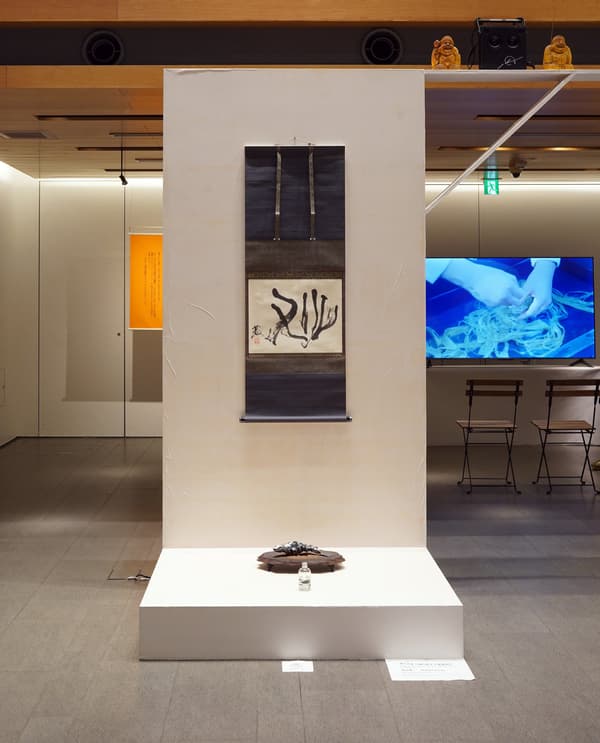
Yoichi Ochiai, "Divine-Human Communion - Nuru Lecture's Direct Meeting - Computational Nature" (Archive Exhibition)
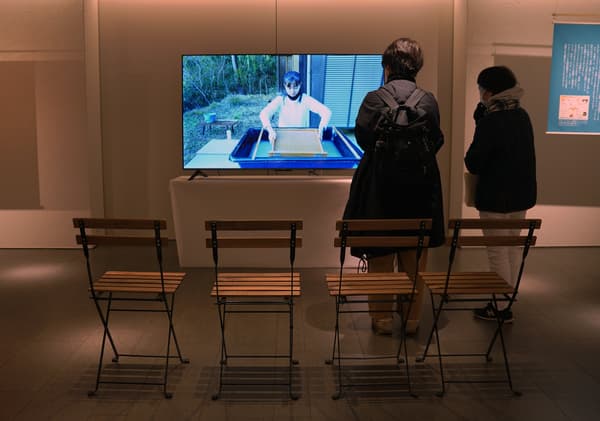
Many visitors from Japan and abroad spent extended time viewing the project documentary video (Video production: Hirofumi Nakamoto)
Visitor Comments (Excerpts)
"There were many different forms of characters, and it made me want to write calligraphy myself—it was fun!" "So cool!" (Elementary school students)
"The beauty of paper and calligraphy born from Japan's natural and handcraft environments was beautiful. It would be wonderful if visitors to Japan could experience (environments like this project)" (Guide for affluent travelers: Israel)
"I'm an artist who creates contemporary works from tradition, and the expression of writing calligraphy on three-dimensional washi paper forms expresses Japanese beauty very referentially" (Artist: South Korea)
"I was drawn to the free calligraphy expressions, felt encouraged, and wanted to write" (Multiple women and men from their 20s to 50s)
Project Overview
Project Name: Calligraphy and Washi Paper Project in Hinohara
Organizer: Agency for Cultural Affairs
Implementation/Operation: C.D.I. Co., Ltd.
Venues: Hinohara Village, Tokyo / Daikanyama, Tokyo (Shibuya Ward) / Kyoto City
Exhibition Period: Hinohara Village | Late November to mid-December 2025
[Exhibition "Five Contemporary Literati Exhibition"]
Daikanyama | January 16–18, 2026 / Kyoto (Umekoji Park) | February 13–15, 2026
January 16 Daikanyama Lecture Talk Speakers:
Yoichi Ochiai (Media Artist), Tomohiro Okada (Curator)
Creative Director: Rieko Kawabe
Curation: Tomohiro Okada
In cooperation with: Tsukuru! Akigawa Art Stream 2025 (Creative Cluster Inc.)
Future Developments
The project outcomes will tour from Tokyo to Kyoto for further dissemination and popularization.
The exhibition introduced in this release will be held in Kyoto as the "Five Contemporary Literati Exhibition Kyoto" with the same content and artwork composition as Tokyo's Daikanyama exhibition. By sharing this living culture calligraphy promotion model between regions, the initiative will expand efforts toward social implementation of calligraphy culture nationwide.
Dates and Venue
Umekoji Park West Side Midori-no-Yakata
(56 Kankiji-cho, Shimogyo-ku, Kyoto City, Kyoto)
February 13 (Fri), 2026, 10:00 AM to 5:00 PM
February 14 (Sat), 2026, 10:00 AM to 5:00 PM
February 15 (Sun), 2026, 10:00 AM to 4:30 PM
Kyoto Exhibition Inquiries
Calligraphy and Washi Paper Project in Hinohara Office (Kyoto)
TEL: 075-253-0660 (Within CDI / Mon–Fri 10:00 AM to 5:00 PM)
Project ZINE Available Online
The project also distributes online a ZINE titled "Akigawa Ethical Creative Report" that compiles sustainable possibilities in Japanese living culture woven through the project.
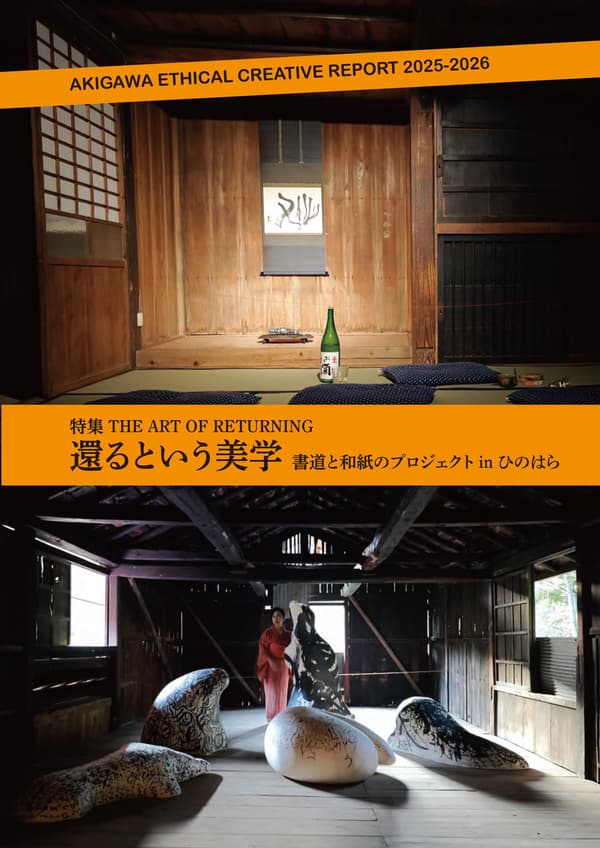
Featured as "Special Feature: The Aesthetics of Returning - Calligraphy and Washi Paper Project in Hinohara," it introduces the project's background, philosophy, and practical content.
Distribution URL:
https://artdemo.creativecluster.jp/zine/aec2025_zine.pdf
It can also be downloaded from the project special website:
https://shodobunka2025.creativecluster.jp/
Furthermore, the knowledge and know-how gained from this project will continue to be utilized in the Nishitama region centered on Hinohara Village.
In the Akigawa basin area where the "Calligraphy and Washi Paper Project in Hinohara" was developed, the project outcomes will be incorporated as content for the art festival "Tsukuru! Akigawa Art Stream (https://artstream.tokyo/)," entering its sixth year in fiscal 2026, with ongoing sustainable development planned.
In fiscal 2025, over 40 cultural content pieces including this project were created through co-creation between local residents, artists, creators, specialists, and other "contemporary literati."
Based on know-how from education programs creating culture that circulates between "mountains" and "cities," networks with literati, inspiration moving from mountain papermaking to expression, and calligraphy learning connecting generations, development will continue from fiscal 2026 onward while incorporating new elements.
Related Links
- Project Special Website "Calligraphy and Washi Paper Project in Hinohara"
https://shodobunka2025.creativecluster.jp/
- ZINE "Akigawa Ethical Creative Report"
Special Feature: The Aesthetics of Returning - Calligraphy and Washi Paper Project in Hinohara
(PDF distribution)
https://artdemo.creativecluster.jp/zine/aec2025_zine.pdf
- "Tsukuru! Akigawa Art Stream"
- Daikanyama Tsutaya Books T-SITE Event Page
https://store.tsite.jp/daikanyama/event/t-site/52164-1802220110.html