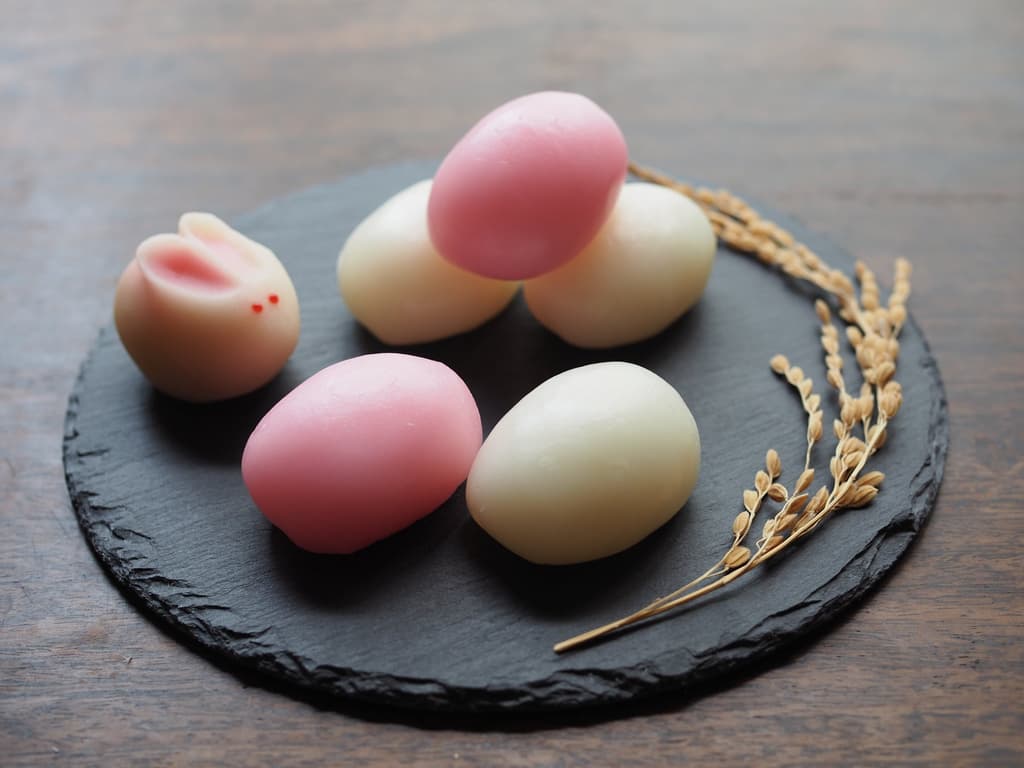
Hidden inside a rabbit's belly is a round, full moon for Jugoya, Japan's night of mid-autumn moon-viewing. Okamedo, a wagashi shop founded in 1950 and headquartered in Toyohashi, Aichi, is marking Chushu no Meigetsu on September 25 (Fri), 2026, with a limited-quantity release of "Tsukimi Usagi" — a set of wagashi built around the imagery of Jugoya.
The centerpiece is "Tsukiusagi," a jonamagashi shaped like a rabbit gazing up at the moon. A white nerikiri paste wraps a homemade yellow "kimi-an" filling, and each rabbit has its ears carved by hand by a craftsperson.
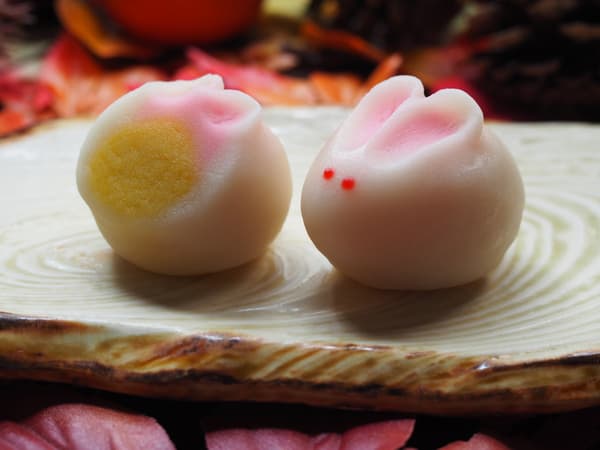
At a glance it's an endearing rabbit, but cut it in half and a yellow "moon" appears from inside the white rabbit.
The idea: a rabbit cradling a full moon in its belly, a scene from Jugoya captured in a single wagashi.
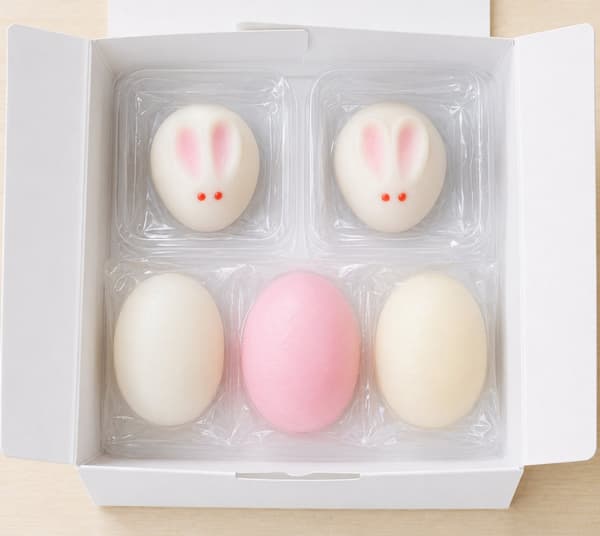
The set also includes red-and-white suama in a plump, rounded rice-bale shape, evoking the offerings traditionally placed out on Jugoya night.
The price is ¥1,690 (tax included) per box, sold in limited quantities at Okamedo's directly operated stores while supplies last.
Cutting It Open Reveals the "Moon" — Jugoya in a Single Wagashi
Chushu no Meigetsu in 2026 falls on Friday, September 25.
Wanting people to enjoy Japan's seasons and traditions through wagashi, Okamedo shaped the "moon and rabbit" that symbolize Jugoya into a single jonamagashi.
The "Tsukiusagi" at the heart of Tsukimi Usagi is made from nerikiri paste — white koshi-an made from white kidney beans, blended with soft mochi.
Wrapped inside is a homemade yellow kimi-an.
From the outside it's a white rabbit. Cut it in half, however, and a vivid yellow appears from within, giving the cross-section the look of a full moon peeking out from the rabbit's belly. It's designed to be enjoyed not just visually, but also for the moment of cutting it open, when Jugoya comes through as well.
*The kimi-an filling contains egg.
Ears Carved One by One — A "Tsukiusagi" Shaped by Hand
The Tsukiusagi isn't finished simply by being set in a mold.
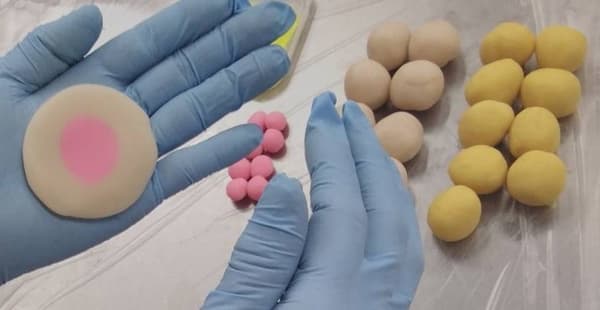
Inside the white nerikiri paste, a pale pink nerikiri paste is worked in first, and the yellow homemade kimi-an is wrapped inside that.
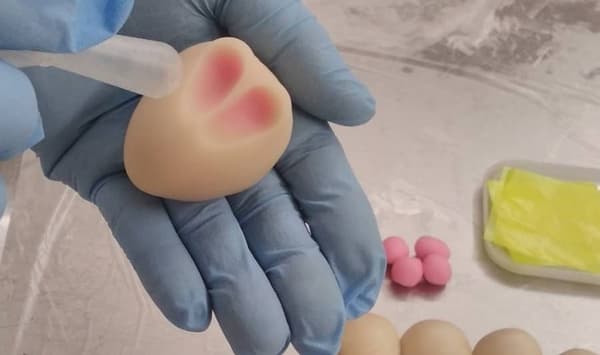
After shaping it into an egg form, a craftsperson carves the ears by hand, one at a time, using an original tool.
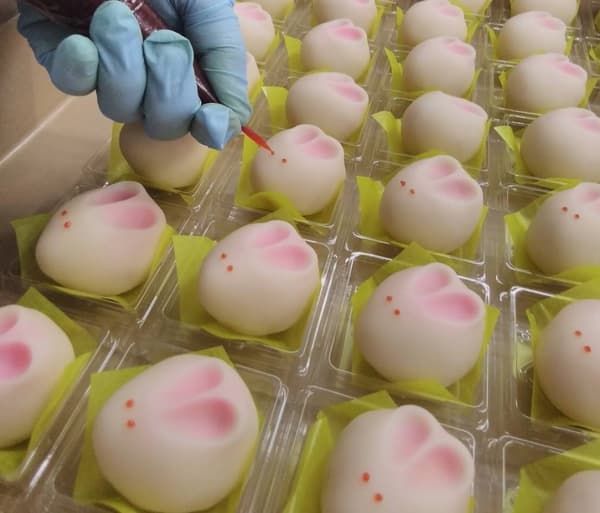
Carving into the white surface reveals the pale pink underneath, forming the rabbit's ears. Small eyes are then added with red yokan to complete each piece.
Though shaped the same way, each one comes out with slightly different ear angles and expressions.
Each is a small Jugoya rabbit, born one by one from a craftsperson's hands.
A Small Jugoya Scene Made With Red-and-White Suama
Alongside the "Tsukiusagi," the set is filled out with white and pale-pink red-and-white suama.
Suama is a wagashi made from rice flour, with a gentle sweetness and a chewy, mochi-like texture.
Shaped into small, plump rice bales, it evokes the tsukimi dango traditionally offered on Jugoya night.
Open the box and the rabbit sits alongside the red-and-white suama, bringing a small Jugoya scene straight to the table.
Looking up at the moon while enjoying wagashi with family — Tsukimi Usagi is meant to deliver that kind of autumn evening in Japan.
Wagashi as a Reason to Look Up at the Sky Together
Wagashi is a food culture that does more than just taste good — it's also a way of noticing the seasons.
Cherry-blossom wagashi bring a sense of spring; chestnut sweets signal that autumn has arrived.
And on Jugoya, gathered around Tsukimi Usagi, families can say to one another,
"It's Jugoya today,"
"Let's go look at the moon,"
and look up at the sky together.
Okamedo hopes to deliver that kind of time spent enjoying the seasons, through wagashi.
A Comment From Representative Director Mori Takahiko
"With this Tsukimi Usagi, I wanted people to enjoy more than just an adorable rabbit — I wanted the experience of cutting it open, and the yellow 'moon' appearing from inside, to express Jugoya as well.
I hope wagashi like this becomes a moment where people notice, 'oh, it's Jugoya today,' and look up at the sky together with their families. I'd like to keep passing on the enjoyment of Japan's seasons and traditions to the next generation through wagashi."
Product Information
- Product name: Jugoya-limited "Tsukimi Usagi"
- Price: ¥1,690 (tax included)
- Contents: Tsukiusagi (nerikiri, with homemade kimi-an filling), red-and-white suama
- Jugoya date: September 25 (Fri), 2026
- Sold at: Okamedo directly operated stores
- Quantity: Limited quantities, while supplies last
- Allergen note: The kimi-an filling in the Tsukiusagi contains egg